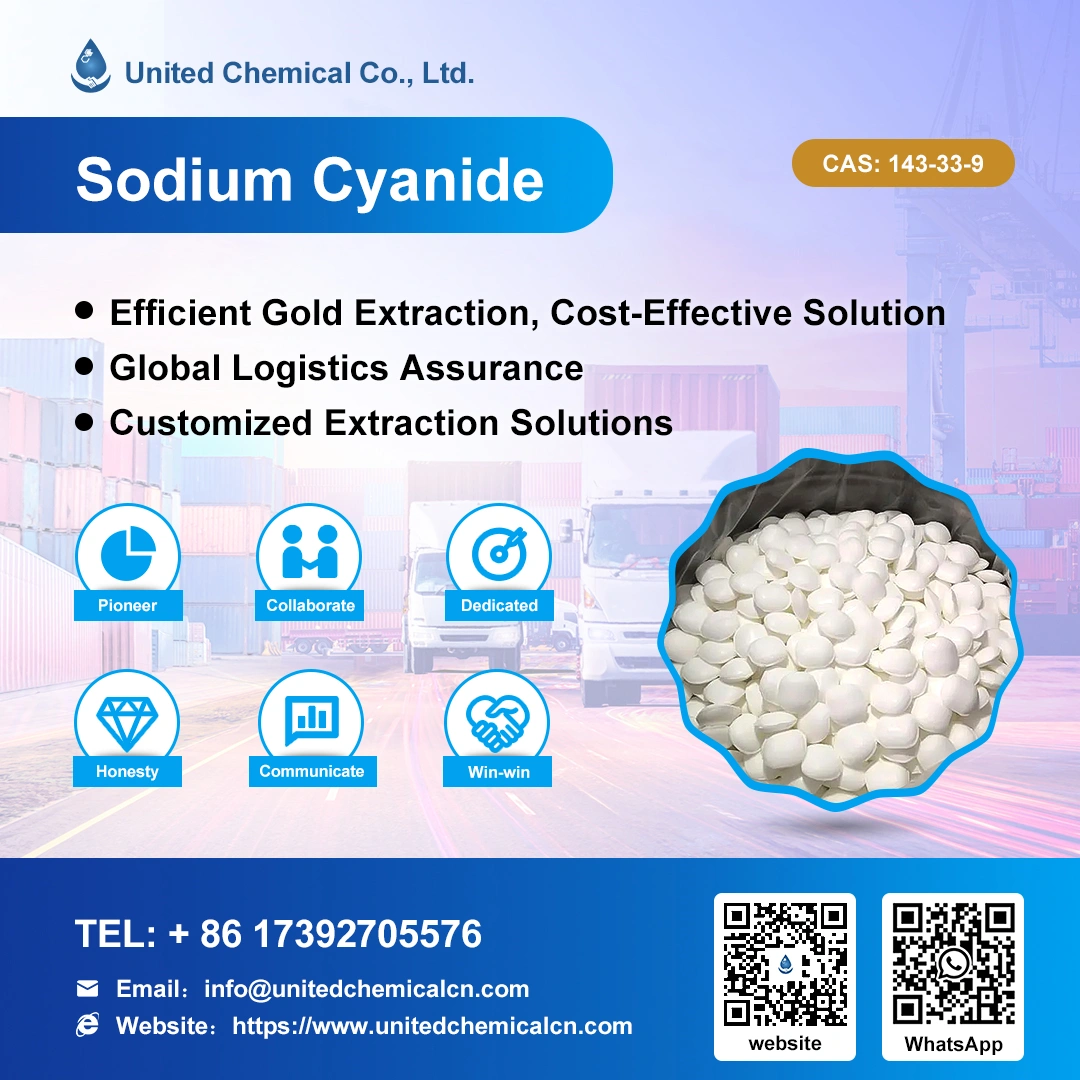

Kukunda Matambudziko eVMS Ore muNyanga yeAfrica: Zvishandiso zveGoridhe zveEritrea
Eritrea is rapidly cementing its position as a powerhouse in the Horn of Africa’s mining sector. With world-class operations like the Bisha polymetallic mine (zinc-copper-gold-silver) and the Koka gold deposit (Zara Mining Share Company), the nation's geological wealth is undeniable. However, Eritrean metallurgy is not without its extreme technical hurdles. The dominant Volcanogenic Massive Sulfide (VMS) deposits and the harsh local environment require highly specialized chemical solutions.
Metallurgists operating in Eritrea face three distinct, severe challenges. First, the mineralogy: VMS deposits are notorious for high concentrations of soluble copper and zinc. These secondary metals act as aggressive "cyanicides," consuming vast amounts of Sodium Cyanide before the gold can be leached, drastically inflating OPEX. Second, environmental constraints: Eritrea’s arid climate means water is precious. The Eritrean National Mining Corporation (ENAMCO) enforces rigorous zero-harm policies regarding Tailings Storage Facilities (TSF) to protect scarce groundwater. Third, Red Sea logistics: Cargo arriving at the Port of Massawa faces summer temperatures exceeding 45°C. The subsequent inland transport across rugged, mountainous terrain to remote mine sites demands chemical packaging that is virtually indestructible and highly heat-resistant.
United Chemical has engineered a specific portfolio of gold extraction reagents to conquer these Eritrean challenges. By minimizing base-metal interference, securing high-heat logistics, and providing eco-compliant alternatives, we empower your plant to achieve peak recovery rates while drastically lowering total chemical consumption.
Flagship Gold Recovery Products Tailored for Eritrea
AuCyan™ Sodium Cyanide NaCN (≥98.3%)
When processing Eritrean copper-gold ores, low-grade cyanide is an economic liability. Soluble copper minerals (like chalcocite and covellite) will rapidly bind with weak cyanide, leaving nothing for the gold. Additionally, the extreme heat of Massawa port requires uncompromising stability.
Conquering Cyanicides in VMS Ores: Guaranteed at an elite ≥98.3% purity, AuCyan™ delivers an overwhelming concentration of active free cyanide (CN-). This intense chemical gradient allows metallurgists to overpower the copper-cyanide complexation phase, ensuring sufficient active lixiviant remains to rapidly dissolve the gold, ultimately reducing overall dosing rates.
Red Sea Heat-Resistant Packaging: We package AuCyan™ in UN-certified, heavy-gauge steel drums with double-sealed inner polymer bags. It is engineered to withstand Massawa's scorching summer sun and the violent vibrations of highland transport, ensuring 100% dry, uncompromised product upon arrival.
AuCarb™ Gold Recovery Coconut Shell Activated Carbon (≥99% Kuoma)
In polymetallic circuits where slurries are highly viscous and densely loaded, inferior activated kabhoni will abrade and shatter. When carbon breaks down, the gold it carries is lost forever to the tailings.
Hyper-Kinetics in Complex Slurries:AuCarb™ features a precision-engineered macroporous structure that specifically targets the [Au(CN)₂]⁻ complex, maintaining rapid adsorption velocities even in slurries crowded with competing base-metal complexes.
Unbreakable in CIL/CIP: Thermally activated from elite Kozi Shells to a staggering ≥99% hardness, AuCarb™ is virtually immune to attrition. It withstands the aggressive mechanical shearing of Eritrean agitation tanks, completely eliminating gold losses from carbon fines.
AuLeach™ Gold Leaching Agent (GDA) - Isina Ngozi
In Eritrea’s arid environment, groundwater is a critical national asset. ENAMCO enforces strict ESG standards on mining ventures. A hazardous cyanide leak is an existential threat to community relations and operational licenses.
Zero-Harm Tailings Management:AuLeach™ is globally certified as a low-toxicity, non-hazardous gold extraction agent. By replacing NaCN, it ensures your TSF (Tailings Storage Facility) water poses no threat to local aquifers, vastly simplifying environmental compliance and audits.
Rapid Massawa Customs Clearance: Because it is not classified as Class 6.1 Dangerous Goods, AuLeach™ avoids the severe regulatory bottlenecks, specialized permits, and armed escort requirements at the Port of Massawa, reaching your plant weeks ahead of schedule.
Mastering Red Sea Logistics: CIF Port of Massawa
Importing chemicals into the Horn of Africa requires meticulous planning. Delays at the port due to incorrect paperwork or compromised cargo due to extreme heat can halt a multi-million-dollar extraction plant.
Direct Red Sea Routing: We secure highly competitive CIF/CFR terms directly to the Port of Massawa. We partner with specialized maritime carriers experienced in handling Class 6.1 Dangerous Goods through the high-temperature zones of the Red Sea.
Magwaro Asina Kukanganiswa: We ensure 100% compliance with both Chinese export controls and Eritrean import regulations. Our flawless Commercial Invoices, COAs, and Material Safety Data Sheets (MSDS) guarantee immediate handover to your local clearing agents.
Prove the Performance on Your Polymetallic Ores
Do not let high copper content inflate your cyanide costs. We invite Chief Metallurgists and Plant Managers across Eritrea to request complimentary laboratory samples. Run direct kinetic bottle-roll tests on your specific VMS ores and let the recovery data speak for itself.
Kumbira Sampuli dzeLab dzeMahara Iye ZvinoFrequently Asked Questions: Gold Metallurgy in Eritrea
1. Why is cyanide consumption so high in Eritrean VMS deposits?
Volcanogenic Massive Sulfide (VMS) deposits, typical in Eritrea, contain high levels of soluble copper and zinc. These base metals react violently with cyanide, creating stable complexes (like Cu(CN)₃²⁻) and consuming the reagent before it can leach gold. This is known as the "cyanicide" effect.
2. How does AuCyan™ solve the high-copper problem in gold ores?
By guaranteeing an ultra-high purity of ≥98.3%, AuCyan™ NaCN minimizes inert impurities and delivers a massive spike of active free cyanide (CN-). This ensures that even after the copper has consumed a portion of the reagent, there is still a potent concentration left to rapidly complex and dissolve the gold, lowering total dosage needs.
3. Is AuLeach™ compliant with ENAMCO environmental regulations?
Yes. Water protection is vital in Eritrea's arid climate. Mumiriri weAuLeach™ Gold Leaching is 100% non-hazardous and low-toxicity. By utilizing AuLeach™, mines can ensure their Tailings Storage Facilities (TSF) do not contaminate scarce groundwater, fully aligning with ENAMCO’s strict ESG directives.
4. Sei United Chemical package NaCN for the extreme heat of Massawa?
Temperatures at the Port of Massawa can exceed 45°C. AuCyan™ is packed in UN-certified, heavy-gauge steel drums containing multiple heat-sealed interior polymer liners. This design prevents thermal expansion ruptures and totally blocks moisture ingress, keeping the chemical dry and potent during inland transit.
5. Can AuCarb™ withstand high-density CIL agitation in polymetallic circuits?
Absolutely. Polymetallic slurries are often dense and abrasive. AuCarb™ Coconut Shell Activated Carbon is thermally activated to an extreme hardness of ≥99%. It refuses to shatter or break down into fine dust during violent agitation, preventing the catastrophic loss of gold-loaded fines to the tailings.
6. Does AuLeach™ clear customs faster at the Port of Massawa?
Yes. Sodium cyanide (Class 6.1) requires complex security clearances, police escorts, and hazardous storage permits at Massawa. Because AuLeach™ is certified non-hazardous, it is processed as standard industrial cargo, eliminating regulatory bottlenecks and arriving at your site much faster.
7. Do Eritrean mines need to modify equipment to use AuLeach™?
No capital expenditure is necessary. AuLeach™ is formulated as a direct drop-in substitute for sodium cyanide. You simply dose it into your existing agitation tanks or vat leaching circuits using your current pumps, and continue using your standard AuCarb™ for adsorption.
8. How does AuCarb™ compete with high copper levels during adsorption?
When high levels of copper-cyanide complexes are present, they compete with gold for space in the carbon pores. AuCarb™ is engineered with a hyper-optimized macroporous structure that highly favors the linear [Au(CN)₂]⁻ complex, ensuring gold is adsorbed rapidly even in crowded, polymetallic solutions.
9. Can we request a test sample for our mine site in Eritrea?
Yes, we actively encourage it. Eritrean metallurgical engineers can request Mienzaniso Yemahara Yekuyedza of AuCyan™, AuCarb™, or AuLeach™. We will coordinate shipping to your facility so you can run baseline bottle-roll tests and prove the OPEX savings and recovery gains on your own ore.
- Random Content
- Hot content
- Hot wongororo zvemukati
- Flexible Mutengi uye Supplier Relations Nyanzvi (Nzvimbo: Nigeria)
- Ammonium Chloride 99.5% Mining Collector
- Magneto Electric Detonator (Anti kurasika ikozvino)
- Calcium Peroxide 60% Assay Yellowish Tablet
- Chikafu Giredhi Inorema Chiedza Chinowedzerwa Calcium Carbonate Powder Granular 99%
- Cobalt Sulphate Heptahydrate
- Triethanolamine (TEA)
- 1Yakaderedzwa Sodium Cyanide (CAS: 143-33-9) yeMigodhi - Yemhando yepamusoro & Yemakwikwi Pricing
- 2Sodium Cyanide 98.3% CAS 143-33-9 NaCN gold dressing agent Inokosha kuMigodhi Chemical Industries
- 3China's New Regulations paSodium Cyanide Exports uye Nhungamiro yeVatengi Venyika
- 4Sodium Cyanide (CAS: 143-33-9) Chitupa chekupedzisira chemushandisi (chiChinese neChirungu shanduro)
- 5International Cyanide (Sodium cyanide) Management Code - Gold Mine Acceptance Standards
- 6China fekitari Sulfuric Acid 98%
- 7Anhydrous Oxalic acid 99.6% Industrial Grade
- 1Sodium Cyanide 98.3% CAS 143-33-9 NaCN gold dressing agent Inokosha kuMigodhi Chemical Industries
- 2Kuchena Kwepamusoro · Kushanda Kwakagadzikana · Kudzoreredza Kwepamusoro - sodium cyanide yemazuva ano goridhe leaching
- 3Zvokudya Zvokudya Zvokudya Zvinowedzera Sarcosine 99% min
- 4Sodium Cyanide Import Regulations & Kutevedzera - Kuve nechokwadi Chekuchengetedza uye Inopindirana Kupinza muPeru
- 5United ChemicalChikwata Chekutsvagisa Chinoratidza Chiremera Kuburikidza neData-Rinotyairwa Insights
- 6AuCyan™ Sodium Cyanide Inoshanda Zvakanyanya | 98.3% Yakachena Yekuchera Goridhe Pasirose
- 7Digital Electronic Detonator (Kunonoka nguva 0 ~ 16000ms)


Online meseji kubvunza
Wedzera mhinduro: