AuCarb™ Series · Engineering Grade
AuCarb™ AC50: Kolefnið sem ákvarðar hversu mikið af uppleystu gulli þínu skilar sér í raun til útskilnaðarsúlunnar.
By the time your ore reaches the adsorption tanks, you have already paid for the cyanide, the grinding, the oxygen and the labour. From that point on, the only thing between that dissolved gold and your bullion is a bed of coconut shell carbon. AuCarb™ AC50 Gold Recovery Coconut Shell Activated Carbon (≥99% Hardness) is the engineering grade built to hold that line — specified at 99% ball-pan hardness, attrition ≤1.5%, K-value ≥26 kg/t and R-value ≥50% on a 6×12 mesh cut, for CIP, CIL, CIC, Heap leaching and Vat leaching circuits running in continuous duty.
K-gildi (gullgeta)
≥26 kg/t
R-gildi (aðsogshraði)
≥ 50%
Three Failures That Cost Gold Plants the Most — and How AC50 Is Specified Against Each One
Gold losses downstream of the leach tanks are almost never a chemistry problem. They are mechanical. The carbon either breaks, blinds, or loads too slowly — and in all three cases the gold you already dissolved ends up in the tailings instead of the elution column. AC50 is specified around those three failure modes rather than around a headline adsorption number.
Failure 01 · Fracture
Carbon that breaks under agitation
In an agitated CIL tank, carbon particles collide continuously. A soft carbon fractures, and every fragment that passes the inter-stage screen carries loaded gold out of the circuit. AC50 is held at ≥99% hörku í kúlulaga pönnu with attrition at ≤1.5% — roughly half the loss rate typical of general-purpose carbon.
Failure 02 · Slow Kinetics
Carbon that loads too slowly
A low R-value forces longer residence time. The last adsorption tank then runs below its potential and the final tail grade creeps up. AC50 is specified at R-value ≥50% og K-value ≥26 kg/t, so the circuit reaches equilibrium sooner and the tail tanks still capture what earlier tanks missed.
Failure 03 · Screen Blinding
Carbon that blinds the screens
Flat "platelet" particles are the main cause of inter-stage screen clogging. Each manual clean-up is downtime you never recover. AC50 holds platelet content ≤5.0% on a uniform 6×12 mesh cut, keeping pulp flow steady across the adsorption train.
Six Benchmarks, Side by Side With Typical Industry Carbon
Published so your metallurgists can verify them, not take them on trust. The right-hand column is the range we typically see in general-purpose gold recovery carbon currently offered into CIP and CIL circuits.
| Breytu | AuCarb™ AC50 | Dæmigert iðnaðarsvið | Rekstraráhrif |
|---|
| Hörku kúlulaga pönnu | ≥ 99% | 95% - 97% | Fewer fines, less loaded gold leaving the circuit |
| Útfall (AARL) | ≤1.5% | ≤3.0% | Lower annual carbon replacement volume |
| K-value (gold capacity) | ≥26 kg/t | 20 – 22 kg/t | Higher loaded-carbon grade before elution |
| R-value (adsorption rate) | ≥ 50% | 35% - 45% | Faster equilibrium, lower final tail grade |
| Algjör aska | ≤3.0% | 5% - 8% | Cleaner micropores, better reactivation behaviour |
| Platelet content | ≤5.0% | 8% - 10% | Less screen blinding, fewer manual clean-ups |
Figures tested to ASTM and A.A.R.L. methods. Batch-specific values are stated on the Certificate of Analysis issued with each shipment.
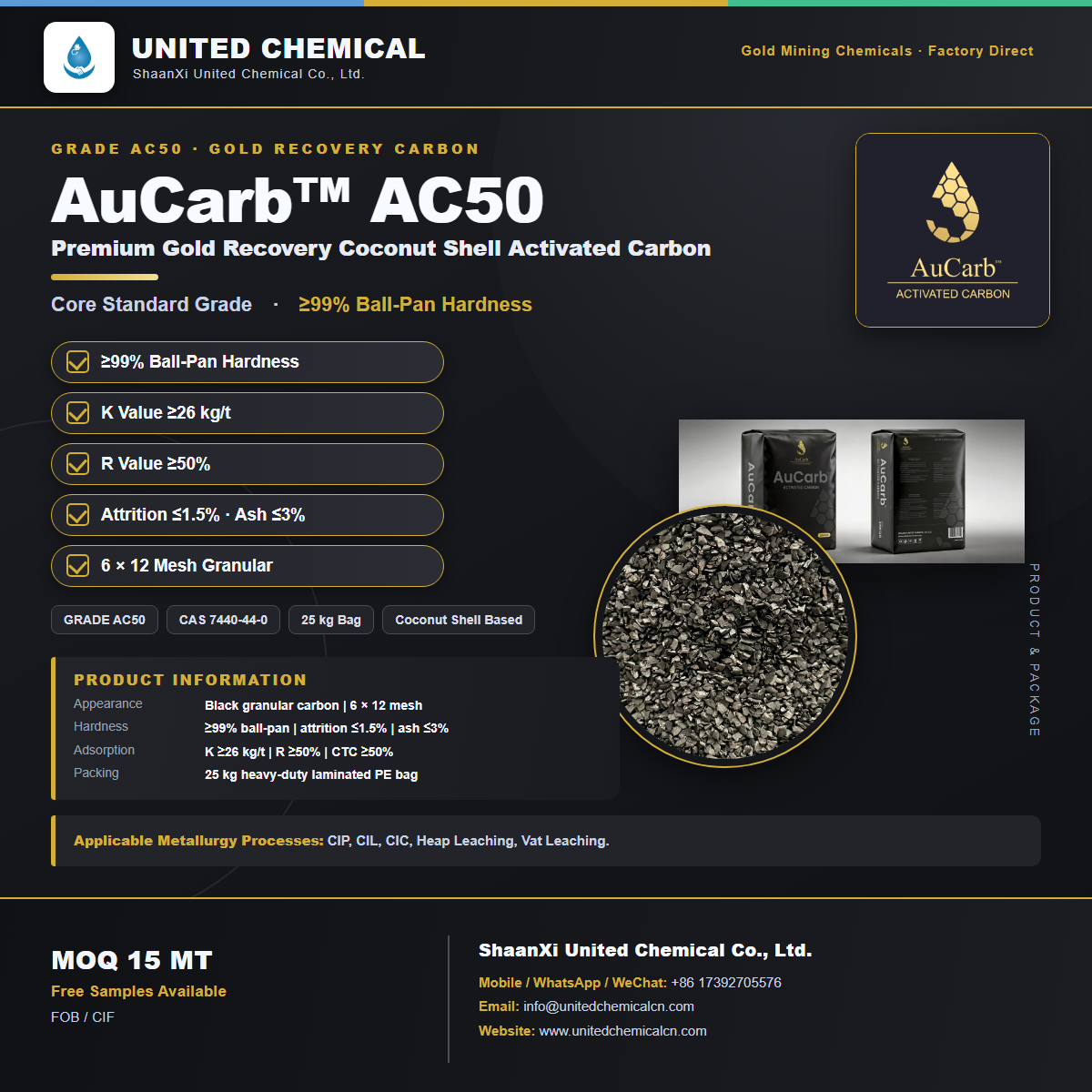
Complete Technical Data Sheet — AuCarb™ AC50
The full specification, not a summary. Every line below is a contractual figure you can hold us to on the Certificate of Analysis.
| Property | Guaranteed Value | Prófunaraðferð | Hvers vegna það skiptir máli |
|---|
| Agnastærð | 6×12 möskva | ASTM D2862 | Standard cut for CIP / CIL tank screens |
| Hörku kúlulaga pönnu | ≥ 99% | ASTM D3802 | Structural integrity under agitation |
| Slag | ≤1.5% | AARL | Long-term durability, carbon consumption rate |
| Platelet content | ≤5.0% | AARL | Screen blinding and pulp-flow stability |
| K-value (gold capacity) | ≥26.0 kg/t | AARL | Equilibrium loading before elution |
| R-value (adsorption rate) | ≥ 50.0% | AARL | Kinetic speed of gold uptake |
| CTC activity | ≥ 50% | ASTM D3467 | Internal pore volume available for adsorption |
| Bútanvirkni | ≥ 19.5% | ASTM D5742 | Secondary measure of microporosity |
| Heildaröskuinnihald | ≤3.0% | ASTM D2866 | Inert residue; affects reactivation life |
| Moisture (as packed) | ≤5.0% | ASTM D2867 | Stability in long sea transit and storage |
| Sýnileg þéttleiki | 0.48 – 0.55 g/ml | ASTM D2854 | Bed volume and tank charge calculations |
| Grunnefni | Kókosskel | - | Hard, high-density precursor for gold circuits |
Sourced from mature, high-density coconut shell and activated by high-temperature steam. Full COA, TDS and MSDS are issued per batch on request.
Where AC50 Sits in the Four-Grade Range
AC50 is the engineering grade — the value point of the range. If your plant operates a standard CIP or CIL train and buys carbon on a continuous replacement schedule, this is usually the grade that gives the best cost per ounce recovered. The other three grades exist for specific conditions, and the table makes the trade-off explicit.
| Grade | best Fyrir | Hörku | K / R Value | Size |
|---|
| BC1100 | Heap leaching, CIC columns | ≥ 98.5% | - | 6×12 möskva |
| AC50 ÞESSI SÍÐA | CIP, CIL, CIC, heap and vat leaching in standard duty | ≥ 99% | ≥26 / ≥50% | 6×12 möskva |
| AC55 | High-throughput CIP / CIL | ≥ 99% | ≥28 / ≥55% | 6×12 möskva |
| AC60 | Premium CIP / CIL, maximum loading | ≥ 99% | ≥30 / ≥60% | 8×16 / 6×12 mesh |
Not sure which grade your circuit needs? Start with the AuCarb™ selection guide, or send your tank volume, pulp density and target loaded-carbon grade and we will size it with you. Individual grade pages: BC1100, AC55, AC60.
How the Carbon Actually Captures Gold
No mystique — it is a three-step physical process, and every one of the AC50 specifications maps to a step in it.
01
Diffusion to the surface
The gold-cyanide complex, [Au(CN)₂]⁻, moves from the pulp to the outer surface of the granule. Faster with a clean, high-surface-area cut — which is why low ash and uniform 6×12 mesh matter here.
02
Pore entry and adsorption
The complex travels into the microporous network and adsorbs onto the internal surface. This is where CTC activity and K-value determine how much gold a single granule can hold.
03
Retention through the circuit
The loaded granule must survive agitation and screen separation until it reaches elution. Hardness ≥99% and attrition ≤1.5% are what keep the gold in the circuit instead of in the fines.
Five Leaching Methods AC50 Is Built to Serve
AC50 is not a single-circuit product. The same 6×12 mesh engineering grade is stocked for plants running any of the five main gold recovery routes, each with its own reason for choosing it.
Kolefni í trjákvoðu (CIP)
The most attrition-heavy circuit. AC50's hardness and low platelet content are the direct answer to inter-stage screen wear and fines generation in agitated tanks.
Kolefni í útskolun (CIL)
Leaching and adsorption in the same vessel. A competitive R-value keeps uptake ahead of the leaching front, so gold is captured as it dissolves rather than after.
Kolefni í dálki (CIC)
Clarified solution through packed columns. Uniform particle size matters most here — a tight 6×12 cut keeps pressure drop predictable and avoids channelling.
Hrúguskolun
Solution collected from the pad and passed through carbon beds. AC50's high capacity per tonne lets a smaller carbon inventory handle a large heap flow.
VSK útskolun
Batch or semi-continuous vat operation. Consistent batch-to-batch hardness is what keeps vat cycles predictable when the carbon is reused across many runs.
For circuit-level engineering guidance, see Málmvinnsluforrit og Carbon Performance Benchmarks.
Should You Actually Buy AC50?
Honest answer: not always. AC50 is the right grade when the following are true. If they are not, one of the other three grades will serve you better, and we will say so.
CHOOSE AC50 IF
You run a standard CIP or CIL train and replace carbon continuously, and you want premium-grade hardness at a sensible cost per tonne.
CHOOSE AC55 / AC60 IF
Your feed grade is high or your residence time is tight, and you need the fastest possible kinetics and the highest loading per granule.
CHOOSE BC1100 IF
You operate heap leaching or CIC columns where a coarser, highest-iodine carbon and a lower price per tonne matter more than peak kinetics.
Packaging, Ordering and Shipping Terms
Everything your procurement team needs to build the landed cost before you ask for a quotation.
| Liður | Detail |
|---|
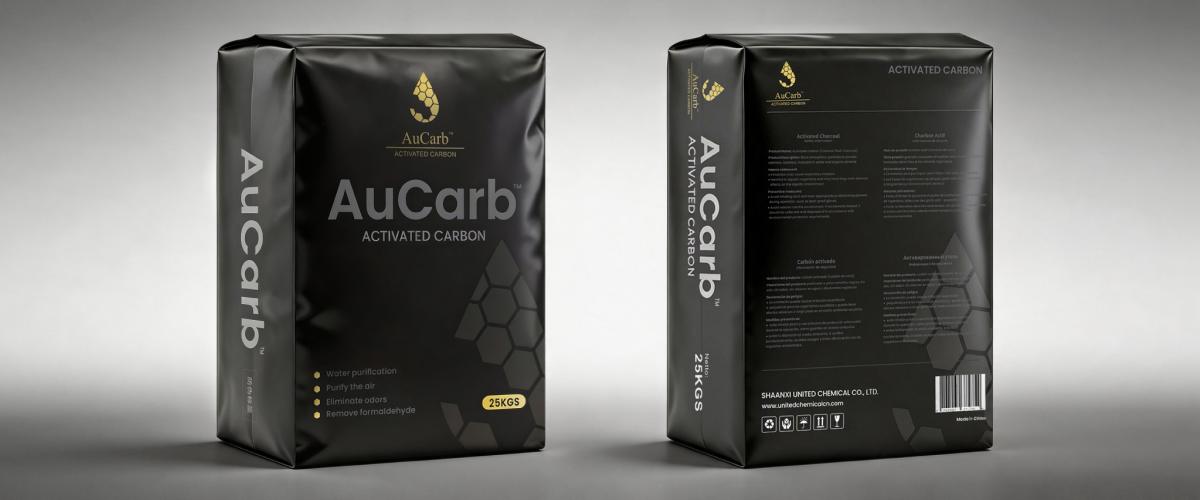
| Venjulegar umbúðir | 25 kg heavy-duty laminated PE bags, or 500 kg jumbo bags for bulk dosing |
| Lágmark röð | 1×20' FCL, approximately 15 MT for AuCarb™ AC50 depending on packaging format |
| Verslunarskilmálar | FOB or CIF, major Chinese ports |
| Hættuflokkun | General cargo — not a dangerous good, no Class 6.1 permit chain required |
| Documentation | COA, TDS, MSDS, packing list, commercial invoice, certificate of origin; third-party inspection (SGS or BV) available at buyer's request |
| Free test samples | Available for AuCarb™ activated carbon, so your metallurgists can test against your own ore before a purchase order |
Exact loading tonnage, transit time and payment terms are confirmed on the quotation, since they depend on destination port and packaging mix. For background on our African spot-stock capability, see the Tanzania and Mozambique warehouse announcement.
Complete the Circuit: The Golden Triangle
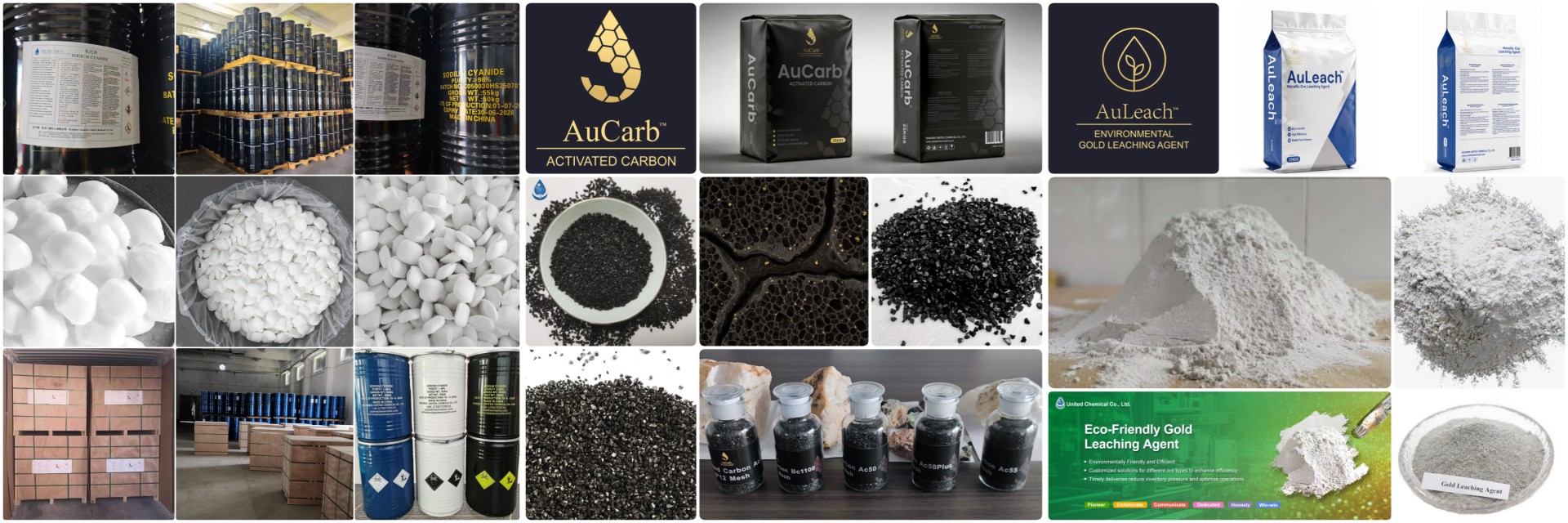
Carbon only half-solves the problem. The gold has to be dissolved first, and in some jurisdictions the dissolution step itself has to clear a regulatory bar that sodium cyanide cannot. United Chemical supplies all three reagents factory-direct, so the leaching agent, the adsorbent and the alternative route stay compatible and ship together.
Leaching Benchmark
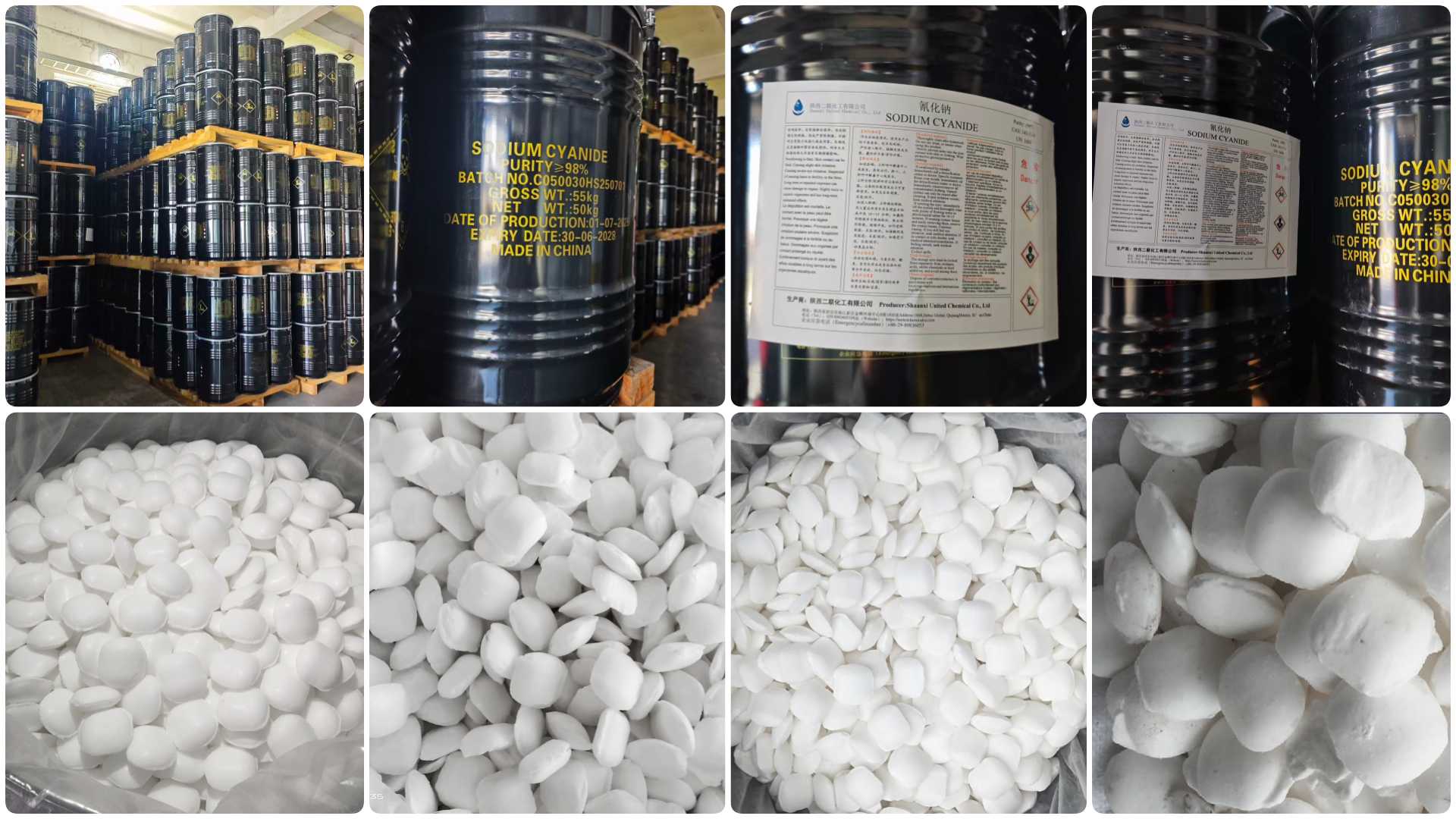
High-purity briquettes for traditional cyanidation. UN 1689, Class 6.1 — supply requires a verified import permit and End-User Certificate.
Skoða vöru →Recovery Guarantee
Four grades — BC1100, AC50, AC55, AC60 — covering every gold recovery method. This is the grade you are reading about.
View full range →Non-Hazardous Alternative
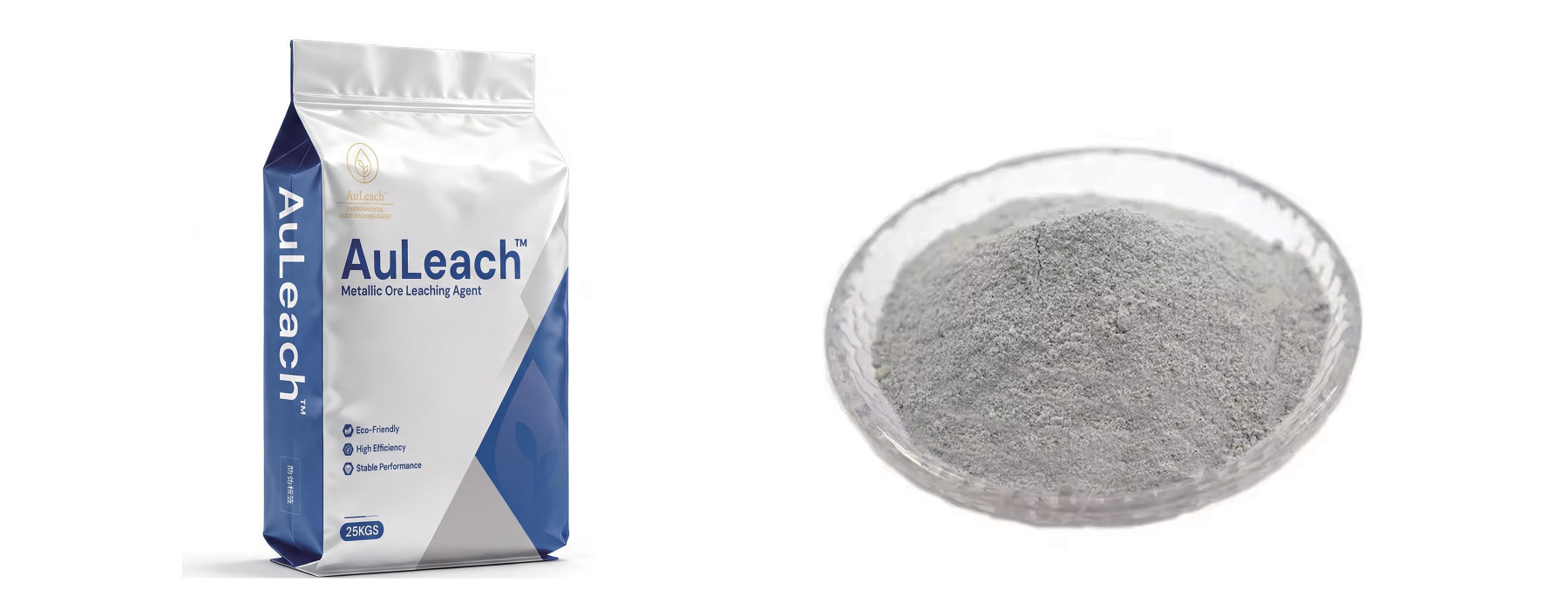
A drop-in alternative for heap, vat and CIL/CIP circuits, shipped as general cargo. Built for markets where a cyanide permit is slow or unavailable.
Skoða vöru →See how the three fit together on the Yfirlit yfir Gullna þríhyrninginn, Eða combined Sodium Cyanide + Activated Carbon + Gold Leaching solution.
Test AC50 on Your Own Ore Before You Commit a Container
We would rather you validate the carbon on your own pulp than take a specification sheet on faith. Free laboratory test samples of AuCarb™ activated carbon are available to metallurgists and plant managers — send us your ore type, circuit configuration and target loading, and we will match the mesh and grade.
Commercial supply starts at 1×20' FCL under FOB or CIF terms. Quotation, COA and TDS issued on request.
Algengar spurningar
The questions buyers actually ask before a first order, answered without marketing language.
1. What is AuCarb™ AC50, and where does it sit in your range?
AC50 is the engineering grade of our four-grade coconut shell activated carbon range, positioned between the coarse BC1100 and the higher-kinetics AC55 and AC60. It is a 6×12 mesh granular carbon specified at ≥99% ball-pan hardness, K-value ≥26 kg/t and R-value ≥50%, intended for standard-duty CIP, CIL, CIC, heap and vat leaching circuits where premium hardness at a controlled cost per tonne is the priority.
2. How do I choose between AC50, AC55 and AC60?
Choose by what is limiting your circuit. If you are replacing carbon continuously on a standard CIP or CIL train and the constraint is budget, AC50 is usually the best value. If your feed grade is high, or your residence time is tight and the tail tanks are not capturing the last of the gold, step up to AC55 (K-value ≥28 kg/t, R-value ≥55%) or AC60 (≥30 kg/t, ≥60%). Higher grades cost more per tonne but load more gold per granule, so the comparison should be cost per ounce recovered, not cost per tonne.
3. Is 6×12 mesh right for my circuit, or do I need 8×16?
6×12 mesh is the standard cut for CIP and CIL tank circuits and for most heap and vat operations, because it balances surface area against screen retention. 8×16 is a finer cut that raises adsorption kinetics and is typically used in CIC columns or high-grade circuits where faster uptake justifies a tighter screen. If your inter-stage screens are specified for 6×12, staying with 6×12 avoids re-screening. Tell us your screen aperture and we will confirm the cut.
4. What does ≥99% ball-pan hardness actually mean in operation?
Ball-pan hardness measures how well a carbon granule resists abrasion under a standard mechanical test (ASTM D3802). A 99% figure means very little of the carbon breaks down into fines during that test. In an agitated tank, that translates into fewer fragments small enough to pass the safety screen — and since fragments carry adsorbed gold with them, higher hardness means less loaded gold leaving the circuit as fine carbon.
5. What is the difference between K-value and R-value?
K-value is the equilibrium loading capacity — how much gold, in kg per tonne of carbon, a granule can hold once it has reached equilibrium. R-value is the adsorption rate — how quickly it gets there. A high K-value with a low R-value gives you good final loading but a slow circuit; a high R-value fills the granule faster and lets you run shorter residence times. AC50 targets both: K ≥26 kg/t and R ≥50%.
6. What is the iodine number of AC50?
For gold recovery carbon we specify on CTC activity and butane activity rather than iodine number, because those track the pore volume that actually adsorbs the gold-cyanide complex. AC50 is guaranteed at CTC ≥50% and butane activity ≥19.5%. Iodine number, where required, is reported per batch on the Certificate of Analysis using ASTM D4607. If your plant specification requires a minimum iodine figure, tell us and we will confirm the batch value before shipment.
7. Why does ash content matter?
Ash is inert mineral residue left in the carbon. It occupies pore space that would otherwise adsorb gold, and it accumulates through reactivation cycles, shortening the useful life of each batch. AC50 is held at ≤3.0% total ash, well below the 5–8% range common in general-purpose carbon, which supports cleaner pores and better performance after thermal reactivation.
8. What is platelet content, and why does ≤5% matter?
Platelets are flat, flake-shaped particles produced during carbon manufacture. They are the main cause of inter-stage screen blinding in CIP and CIL circuits, because they lodge in the screen apertures and restrict pulp flow. Every screen clean-up is production downtime. AC50 is controlled to ≤5.0% platelet content against a typical industry 8–10%, which keeps flow through the adsorption train steady.
9. How many times can AC50 be thermally reactivated?
AC50 is designed for multiple thermal reactivation cycles, and its low ash content is one of the reasons it holds up well across them. The exact number of cycles and the activity recovery per cycle depend on your kiln conditions, the organic load in your circuit and your acid-washing regime, so we do not quote a fixed figure. Reactivation yield is measured and reported per batch; we can share typical circuit data for comparable operations on request.
10. Can you supply acid-washed or water-washed carbon?
Yes. Acid washing removes inorganic foulants such as calcium and magnesium scale that build up on carbon in hard-water circuits, and it is the usual treatment before reactivation. Water washing is available for less demanding applications. Tell us your circuit water chemistry and whether the carbon will be reactivated in-house, and we will specify the appropriate pre-treatment. See our regeneration and reactivation guide fyrir bakgrunn.
11. What is the actual tonnage in a 1×20' FCL, and how is it packed?
Approximately 15 MT of AuCarb™ AC50 per 20-foot container, depending on whether you take 25 kg bags or 500 kg jumbo bags; bulk density of 0.48–0.55 g/ml means the container tends to cube out before it weighs out. We confirm the exact loading figure in the quotation so your freight cost per tonne is transparent. Packaging is heavy-duty laminated PE bags designed to keep moisture ≤5.0% through long sea transit.
12. What are your lead times and payment terms?
Standard 1×20' FCL orders are typically produced and packed within two weeks, then loaded at a major Chinese port. Total door-to-port timing depends on the sailing schedule to your destination. Payment terms are confirmed per order and per destination; both T/T and L/C are accepted for qualified buyers. Because these vary by market, we quote them explicitly rather than publish a single figure.
13. Can I get a free test sample?
Yes. Free laboratory test samples of AuCarb™ activated carbon are available to metallurgists and plant managers so you can validate performance on your own ore before placing an order. Send us your ore type, circuit configuration and target loaded-carbon grade and we will dispatch a sample matched to your mesh requirement. Test samples are also available for AuLeach™ Gold Leaching Agent (GDA).
14. Will AC50 work on high-clay or high-silver ores?
High-clay pulps are the most punishing environment for carbon because the clay both abrades the granules and blinds the screens, which is exactly where AC50's ≥99% hardness and ≤5.0% platelet content earn their keep. High-silver ores are a different issue: silver competes with gold for adsorption sites and can load the carbon heavily, so the carbon dose and elution frequency usually need to be re-sized. Send us an assay and we will advise on grade and dosage rather than guess.
15. Do you provide COA, TDS, MSDS and third-party inspection?
Yes. A Certificate of Analysis, Technical Data Sheet and Material Safety Data Sheet are issued with every batch, and third-party inspection by SGS or BV is available at the buyer's request. Every batch is tested to ASTM and A.A.R.L. methods and is traceable. If your procurement requires pre-shipment inspection or a specific test protocol, tell us at quotation stage and we will build it into the order.
Related Technical Resources
United Chemical Co, Ltd
Jinhui Global, Qujiang District, Xi'an, Shaanxi héraði, Kína
Mobile / WhatsApp: +86 173 9270 5576 | Email: info@unitedchemicalcn.com | Web: unitedchemicalcn.com
Focus: Gold Mining & Precious Metal Extraction Solutions