

UNITED CHEMICAL · טכנולוגיית מוצר · 27 בנובמבר 2026
השמיים פחמן you replace is not the carbon you lose
Fines carry gold out of the circuit, and they rarely appear on the purchase order.
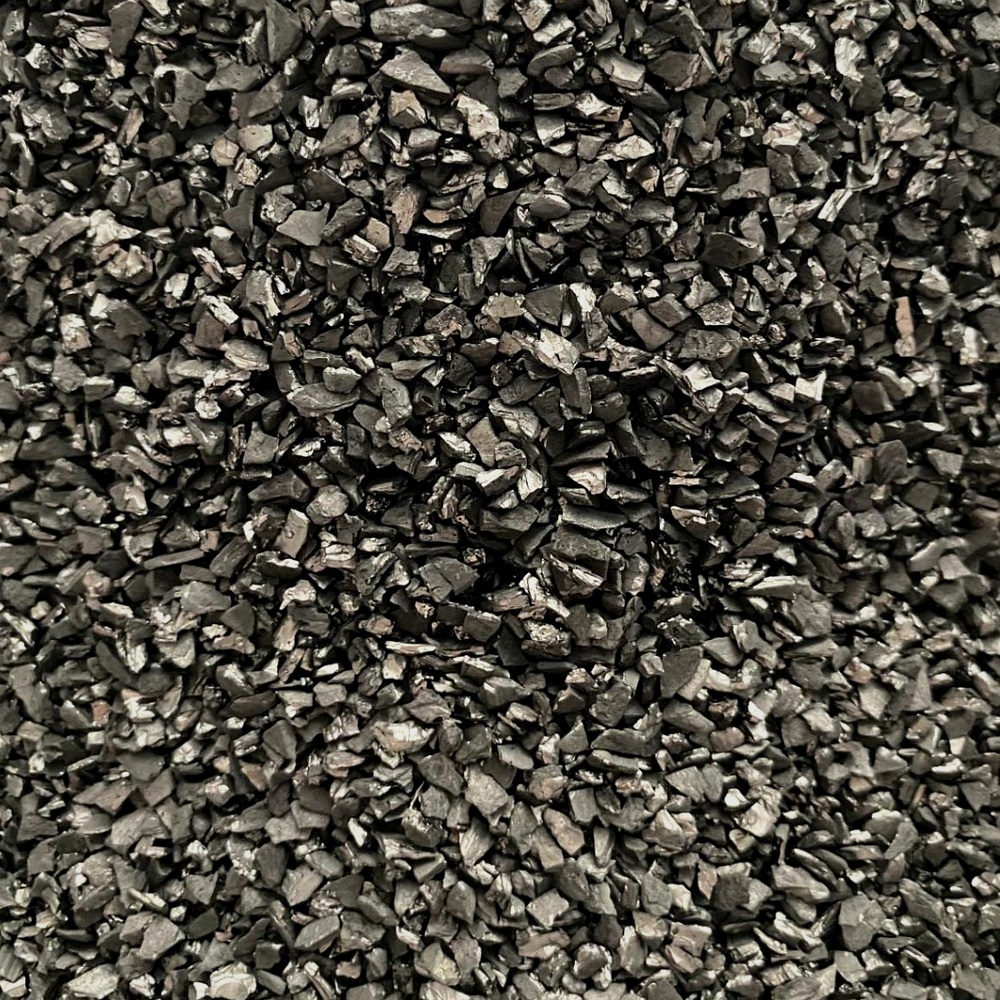
Activated carbon is consumed two ways. It leaves as loaded carbon after elution, and it grinds into fines that report to tailings carrying adsorbed gold. The second loss is rarely budgeted. Ball-pan hardness and AARL attrition predict it; mesh size and platelet count predict how fast it happens in a given circuit. This guide uses פחם פעיל AuCarb™ Gold Recovery קליפת קוקוס (קשיות ≥99%) as the worked example.
1. Three steps from solution to loaded carbon
Film diffusion — the [Au(CN)₂]⁻ complex crosses the solution boundary layer around each granule. Agitation controls this step.
Pore diffusion — the complex travels into internal pores. Granule size and pore structure control this step.
ספיחה על פני השטח — the complex binds to active sites. Surface chemistry and total area control this step.
2. Why hardness is a recovery parameter
A granule that breaks in a stirred tank shortens diffusion paths but creates gold-bearing fines that escape the adsorption circuit. In an abrasive ore, moving from a marginal product to one at ball-pan hardness ≥99% with AARL attrition ≤1.5% cuts fines generation directly. The AC50 verified data set is: 6×12 mesh, ball-pan ≥99%, AARL attrition ≤1.5%, platelet ≤5.0%, K ≥26 kg/t, R ≥50%, CTC ≥50%, butane ≥19.5%, ash ≤3.0%, moisture ≤5.0%, bulk density 0.48–0.55 g/mL. Iodine value is deliberately omitted — published figures conflict, so CTC and butane activity are the auditable measures.
משולש הזהב - שלושה מוצרים, ספק אחד
AuCyan™ נתרן ציאניד NaCN (≥98.3%) · פחם פעיל לקליפת קוקוס משחזור זהב AuCarb™ (קשיות ≥99%) · סוכן שטיפה של זהב AuLeach™ (GDA) – לא מסוכן
3. Worked calculation: the cost of fines
A 2,000 t/day CIL plant carries 12 tonnes of carbon with a 30-day cycle. At 1.5% attrition per cycle it loses about 180 kg per cycle, or 2.2 tonnes a year. At 3.0% it loses roughly 4.3 tonnes — a difference of 2.1 tonnes of carbon. If those fines carry even 200 g/t of gold, the annual gold difference is about 420 g. At any reasonable gold price, the hardness premium paid for the better carbon is smaller than the gold saved.
1.5% attrition: ≈ 2.2 t/year make-up carbon
3.0% attrition: ≈ 4.3 t/year make-up carbon
4. K and R are not the same number
K value is the adsorption rate constant — how fast gold loads. R value is equilibrium capacity — how much it holds. A high K with modest R suits short contact time. A high R suits a circuit that runs carbon to heavy loading before elution. Buying on either alone is a common and expensive mistake. Run bottle-roll loading on your own ore, set the K/R target from your contact time, then buy the lowest grade that reaches it.
5. ארבע דרגות, ארבע עבודות
| ציון | מעגל | הגדרת מפרט |
|---|---|---|
| BC1100 | שטיפת ערימה / פחמן בעמודה | פעילות גבוהה עבור תמיסות באיכות נמוכה יותר |
| AC50 | Standard CIP/CIL | 6×12 mesh, K ≥26, R ≥50%, CTC ≥50% |
| AC55 | CIP/CIL בעל עומס גבוה יותר | K ≥28 ק"ג/טון, R ≥55% |
| AC60 | CIP/CIL פרימיום | K ≥30 ק"ג/טון, R ≥60%, 8×16 או 6×12 |
6. התחדשות ומחזור חיים
Loaded carbon is eluted and thermally regenerated before returning to the circuit. Every cycle imposes thermal and mechanical stress. Platelets and weak granules are preferentially lost in handling and regeneration. A carbon at ball-pan hardness ≥99% with platelet ≤5.0% typically sustains more cycles before make-up is required. Packing is שקיות PE למינציה חזקות במשקל 25 ק"ג, with a batch תעודת מקוריות, TDS ו MSDS. מספר ההזמנה המומלץ הוא 1×20' FCL ≈ 15 MT תחת FOB / CIF מונחים; United Chemical משרתת יותר מ-77 מדינות.
5b. Screening and fines recovery
Attrition control does not end at the carbon specification. Screen condition determines whether a broken granule is removed cleanly or ground further and carried forward. A worn screen with oversized apertures passes loaded fines into the tailings stream; a blinded screen holds carbon in the tank too long and increases grinding. The practical routine is to log screen aperture, inspect panels on a fixed schedule and sample the carbon size distribution in the circuit monthly. If the proportion of sub-millimetre material is rising while make-up carbon is on budget, the problem is mechanical rather than metallurgical. Equally, gold-bearing fines caught on a screen are not lost; they should be routed to the elution circuit where the recovery economics justify it. This is why hardness and attrition numbers belong in an operating dashboard, not only in the purchase order.
7. שאלות נפוצות
שאלה 1 - מה המשמעות של קשיות ≥99% בפועל?
Ball-pan hardness ≥99% means the granule resists mechanical breakdown to a defined standard, reducing fines.
Q2 — Which mesh size?
6×12 for agitated CIP/CIL, 8×16 where finer loading is needed, BC1100 for columns and heap.
שאלה 3 - האם אתם מפרסמים את ערך היוד?
No — CTC and butane activity are the auditable pore measures because published iodine figures conflict.
שאלה 4 - מה מגיע עם כל אצווה?
תעודת זהות, TDS ו-MSDS של אצווה בשקיות PE למינציה כבדות של 25 ק"ג.
שאלה 5 - מהו ה-MOQ?
1×20' FCL ≈ 15 MT, FOB או CIF.
Q6 — Can I test before buying?
כן - דוגמיות חינם של AuCarb™ ו-AuLeach™ לבדיקות מעבדה עצמאיות.
Measure your attrition loss
Tell us your circuit type, screen aperture and ore abrasiveness. We propose a grade, a K/R target and a test protocol.
צרו איתנו קשר · AC50 · AC55 · AC60 · סקירה כללית של משולש הזהב
וואטסאפ +86 173 9270 5576 info@unitedchemicalcn.com
- תוכן אקראי
- תוכן חם
- תוכן ביקורת חם
- חומצה גופרתית במפעל בסין 98%
- חומצה גופרתית 98% כיתה תעשייתית
- צינור הלם פלסטיק (VOD≧1600m/s)
- ברזל סולפט כיתה תעשייתית 90%
- האם לריאגנטים לציפה יש השפעות סביבתיות?
- 1נתרן ציאניד מוזל (CAS: 143-33-9) לכרייה - איכות גבוהה ותמחור תחרותי
- 2נתרן ציאניד 98.3% CAS 143-33-9 NaCN חומר הלבשת זהב חיוני לתעשיות כימיות כרייה
- 3התקנות החדשות של סין על יצוא נתרן ציאניד והדרכה לקונים בינלאומיים
- 4נתרן ציאניד (CAS: 143-33-9) תעודת משתמש קצה (גרסה סינית ואנגלית)
- 5ציאניד בינלאומי (נתרן ציאניד) קוד ניהול - תקני קבלת מכרה הזהב
- 6חומצה גופרתית במפעל בסין 98%
- 7חומצה אוקסלית נטולת מים 99.6% כיתה תעשייתית
- 1נתרן ציאניד 98.3% CAS 143-33-9 NaCN חומר הלבשת זהב חיוני לתעשיות כימיות כרייה
- 2טוהר גבוה · ביצועים יציבים · התאוששות גבוהה יותר - נתרן ציאניד לשטיפת זהב מודרנית
- 3United Chemicalצוות המחקר של מפגין סמכות באמצעות תובנות מבוססות נתונים
- 4ציאניד נתרן בעל ביצועים גבוהים AuCyan™ | טוהר 98.3% לכריית זהב עולמית
- 5נפץ אלקטרוני דיגיטלי (זמן השהייה 0 ~ 16000ms)
- 6מפיץ צינור הלם בעל חוזק גבוה, דיוק גבוה
- 7נפץ חשמלי בתעשייה










יעוץ מסרים מקוון
הוסף תגובה: