
Three Belts, Three Problems: Specifying Gold Recovery Reagents Across West Asia
Ti bijih Tethyan anu ngandung arsenik tinggi di Iran dugi ka tumpukan batu bara kualitas handap di Türkiye sareng ledakan pangwangunan munggaran di Kaukasus, Asia Kulon teu gaduh hiji metalurgi—tapi gaduh tilu. ShaanXi United Chemical Co., Ltd. suplai Natrium Sianida AuCyan™ NaCN (≥98.3%) for the permitted cyanidation route, Karbon Aktif Batok Kalapa Pamulihan Emas AuCarb™ (Karasa ≥99%) pikeun nyimpen emas anu leyur di jero sirkuit, sareng Agen Pelindian Emas AuLeach™ (GDA) – Henteu Bahaya for plants where a dangerous-goods route is the longest item on the schedule.
West Asia Gold Mining Overview: Tethyan Metallogenic Belt & Key Markets
West Asia is one of the most active gold processing corridors linking Europe, Central Asia, and the Middle East, anchored by industrial mining jurisdictions in Iran, Türkiye, and Azerbaijan. Across the Tethyan Metallogenic Belt, operators run large-scale Carbon-in-Leach (CIL), Carbon-in-Pulp (CIP), Carbon-in-Column (CIC), Heap leaching, and Vat leaching plants treating porphyry, epithermal, skarn, and Carlin-type gold deposits. A specification that is ideal in one of these markets can be the wrong answer in the next one—the deciding factors are ore mineralogy, process water chemistry, winter temperatures, and the permit chain around each plant.
In Iran, major CIL and heap leach operations across the Sanandaj-Sirjan Zone and Urumieh-Dokhtar arc (including Zarshuran, Aq-Darreh, Muteh, Sari Gunay, and the newer Shadan deposit) contend with arsenic sulfides, hard plateau groundwater, cold highland winters, and Class 6.1 maritime documentation workflows into Bandar Abbas. In Türkiye, large-scale Anatolian circuits span low-grade open-pit heap leaching at Kışladağ, high-volume CIL/heap processing at Çöpler, and high-grade epithermal flotation at Efemçukuru. In Azerbaijan and the neighboring Caucasus, established CIL and heap leach operations such as Gedabek sit alongside new developments like AzerGold's Soyudlu (Zod) deposit, where flowsheet and reagent choices are being fixed ahead of commissioning.
United Chemical supplies West Asian buyers across 77 + nagara strictly under FOB (palabuhan muat utama Cina) atanapi CIF maritime terms, with factory Minimum Order Quantities defined plainly by product: AuCarb™ 15 MT, AuCyan™ 18 MT, sarta AuLeach™ 28 MT. Every shipment is backed by factory-issued quality and export documentation, including a batch Certificate of Analysis (COA), TDS, and MSDS.
1. Three Belts, Three Different Reagent Questions
Each West Asian belt presents a distinct operational bottleneck that dictates whether leaching purity, karbon attrition resistance, or common-chemical clearance drives plant economics.
Tethyan Arsenic, Cai Teuas & Dokumentasi
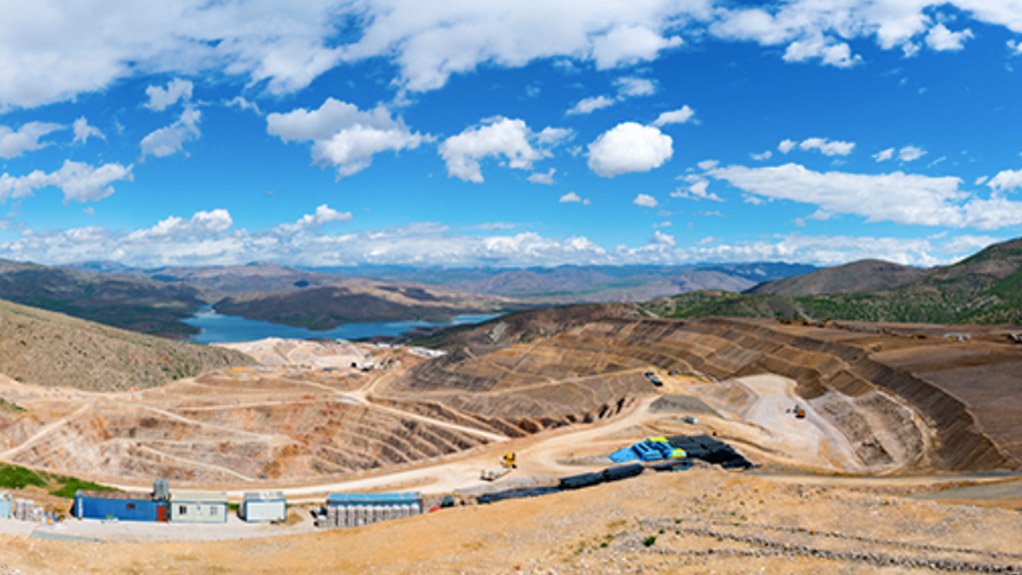
Zarshuran near Takab, Aq-Darreh, Muteh, Sari Gunay, and Shadan sit on the Sanandaj-Sirjan Zone and Urumieh-Dokhtar arc. Arsenic sulfides and fine disseminated gold consume reagent and passivate surfaces; central-plateau plants recirculate high-calcium water; northwestern highland operations lose kinetics in winter. Class 6.1 import permits and Bandar Abbas vessel slots are major scheduling factors.
Low-Grade Heap Pads Beside High-Grade Underground Ore
Kışladağ di Propinsi Uşak nyaéta tambang lindi tumpukan terbuka anu ageung kalayan rata-rata sakitar 0.66 g/t, kalayan aglomerasi bijih utuh sareng kapasitas karbon-dina-kolom tambahan anu dijadwalkeun dugi ka 2026–2027. Çöpler ngajalankeun tugas CIL/tumpukan volume luhur, sedengkeun Efemçukuru di İzmir nyaéta tambang handapeun taneuh epitermal kualitas luhur anu ngahasilkeun konsentrat flotasi. Para pembeli nungtut kamurnian anu konsisten, patuh kana perizinan anu ketat, sareng karbon anu karasana luhur.
Operating Polymetallic Circuits & New Flowsheets
Established mines such as Gedabek process gold-copper and polymetallic ores through CIL and heap leaching circuits requiring steady kinetics and durable carbon. Meanwhile, AzerGold's Soyudlu deposit in Kalbajar—the same mineralised system known as Sotk on the Armenian side—carried out its first blasting in September 2026, with metallurgical tests pointing to flotation as the required first stage.
2. Named Operations and What They Actually Ask of a Reagent
These are operating or development projects across West Asia, not hypothetical examples. The right-hand column identifies where our reagents enter metallurgical evaluation.
| operasi | nagara | rute | Metallurgical Constraint | Produk anu aya patalina |
|---|---|---|---|---|
| Zarshuran / Takab | Iran | Adsorpsi CIL / karbon | Arsenic sulfides, cyanicide consumption, fine gold | AuCyan™ or AuLeach™ + AuCarb™ AC50/AC55 |
| Muteh / Shadan | Iran | CIL, heap leach & oxide/sulfide expansion | Hard plateau water scaling; dual ore types requiring separate tests | AuCyan™ / AuLeach™ + AuCarb™ AC50 anu ngandung pangotor rendah |
| Kışladağ (Kisladag) | Türkiye | Open pit, heap leach, ADR / CIC | Low grade (~0.66 g/t), large solution flow, agglomeration upgrade | AuCarb™ BC1100 / AC50 (6×12 bolong) pikeun kolom |
| Çöpler & Efemçukuru | Türkiye | CIL/tumpukan & flotasi epitermal volume luhur | High-throughput reagent consistency, attrition & concentrate handling | AuCyan™ + AuCarb™ AC55/AC60 & flotation support |
| Gedabek | Azerbaijan | CIL & heap leaching | Polymetallic gold-copper mineralization and continuous agitation | AuCyan™ (≥98.3%) + AuCarb™ AC50/AC55 |
| Soyudlu (Zod) / Sotk | Azerbaijan / Armenia | New build, flotation first stage | Lembar aliran keur diropéa; uji coba réagen sateuacan commissioning pabrik | Technical samples + metallurgical evaluation |
Project details are drawn from public operator disclosures and industry reporting. Reagent pairings are engineering starting points; final selection and dosage must be confirmed by bottle-roll and column testing on your site ore.
3. Segitiga Emas: Réagen Inti & Spésifikasi Lengkep pikeun Asia Kulon
The three products serve distinct stages—conventional cyanidation leaching, gold adsorption recovery, and a Non-Hazardous common-chemical leaching alternative—selected independently according to your ore, water, and permit structure.
01. AuCyan™ Natrium Sianida NaCN (≥98.3%)
Barang Bahaya Kelas 6.1 (UN 1689 · MOQ 18 MT)AuCyan™ Natrium Sianida ≥98.3% — Patokan Kamurnian pikeun Sianidasi Industri anu Diidinan
Posisi: High-purity solid briquette Natrium Sianida dirancang pikeun pabrik CIL, CIP, CIC, Heap leaching, sareng Vat leaching skala sedeng dugi ka ageung anu diidinan.
Poin Penjualan Inti: ≥98.3% High Purity | Ultra-Low Insolubles (0.02% Typical) | UN-Certified Briquette Packaging
AuCyan™ Sodium Cyanide NaCN (≥98.3%) is a high-purity solid briquette leaching reagent manufactured to exceed GB/T 19306-2003 superior-grade benchmarks for established cyanidation circuits. Valid hazardous-chemical import permits, End-User Certificates (EUC), and compliance due diligence are mandatory prerequisites before production is scheduled.
Where hard, high-calcium groundwater is recirculated—as on Iran's central plateau—or where polymetallic sulfide feeds across Anatolia and the Lesser Caucasus challenge leach liquor stability, AuCyan™ maintains strong free sianida activity while its controlled NaOH (0.13% typical), low Na₂CO₃ (0.18% typical), and ultra-low insolubles (0.02% typical) help control alkalinity to inhibit scaling in pumps, heat exchangers, and heap leach emitters. UN-certified briquette packaging protects solid stability through Gulf humidity at discharge ports and continental temperature swings inland.
≥98.3% Standar Kamurnian Luhur: High active NaCN concentration sustains free cyanide ions (CN⁻) across leach tanks and heap pads, supporting consistent gold and silver dissolution kinetics.
Controlled Alkalinity & Scale Inhibition: Tightly managed NaOH and low carbonate/insoluble levels limit calcium carbonate precipitation and protect dosing pumps, pipelines, and irrigation nozzles.
Compliant Hazmat Delivery: Disadiakeun dina kemasan anu disegel pabrik anu disertipikasi PBB dina istilah palabuhan régional FOB Cina atanapi CIF kalayan COA bets, TDS, sareng MSDS.
Technical Specification: The 98.3% Purity Standard (GB/T 19306-2003)
| Uji Item | Standar (GB/T 19306-2003) | AuCyan™ Typical | Éfék Operasional & Sirkuit |
|---|---|---|---|
| Natrium Sianida (NaCN) | ≥ 98.0% | 98.3% | Supports strong free cyanide activity and dissolution kinetics. |
| Natrium Hidroksida (NaOH) | ≤ 0.5% | 0.13% | Ngontrol alkalinitas pikeun nyegah scaling sareng hidrolisis prématur. |
| Natrium Karbonat (Na₂CO₃) | ≤ 0.5% | 0.18% | Limits carbonate scale buildup in hard or saline process water. |
| Kelembapan (H₂O) | ≤ 0.9% | 0.3% | Preserves briquette stability across maritime transit and storage. |
| Zat teu leyur | ≤ 0.05% | 0.02% | Protects slurry pumps, lines, heat exchangers, and drip emitters. |
prosés: Carbon-in-Pulp (CIP), Carbon-in-Leach (CIL), Carbon-in-Column (CIC), Heap leaching, Vat leaching. · MOQ: 18 MT (No free sample) · Technical hub →
02. Karbon Aktif Cangkang Kalapa Pamulihan Emas AuCarb™ (Karasa ≥99%)
General Cargo · Free Sample Available · MOQ 15 MTAuCarb™ Coconut Shell Activated Carbon — Precision Adsorption & Minimal Attrition Loss
Posisi: Four purpose-built coconut-shell Karbon karbon diaktipkeun grades covering heap leaching, CIC columns, and high-shear CIP/CIL tanks.
Poin Penjualan Inti: Karasa Bal-Panci ≥99% | Kinetika Adsorpsi Gancang (K ≥26–30 kg/t, R ≥50–60%) | Gesekan Saeutik (≤1.5% dina AC50)
AuCarb™ nyaéta karbon aktif tina batok kalapa anu karasa luhur (≥99%) anu diuji dumasar kana metode metalurgi ASTM Amérika (kalebet karasa bal-pan ASTM D3802) sareng AARL. Karasa anu luhur sareng gesekan anu handap ngajaga denda karbon anu dieusi emas tetep aya di jero sirkuit tinimbang kaleungitanana ngalangkungan saringan antar tahapan ka tailing. Dipak sacara ketat di 25 kg heavy-duty laminated PE bags.
Finely ground Carlin-type ore in the Takab belt and abrasive quartz-sulfide slurries around Muteh and Gedabek punish weak carbon. Attrition at ≤1.5% (AC50), hardness ≥99% (AC50/AC55/AC60), and platelet content ≤5% keep loaded carbon intact on inter-stage screens through repeated elution and thermal regeneration cycles. On large low-grade heap pads such as Kışladağ, a tight 6×12 mesh cut keeps column pressure drop predictable across high solution flows.
Karasa Ultra-Luhur & Résistansi Gesekan: Special hardening and de-dusting deliver ≥99% ball-pan hardness and ≤1.5% attrition (AC50), minimizing loaded-carbon fines loss.
Engineered Pore Architecture (High K & R Values): Balanced micro- and meso-pores promote fast diffusion and firm entrapment of gold complexes, raising eluted gold grade.
Susunan Kelas Lengkep: Pilih BC1100 kanggo Heap leaching/CIC, AC50 atanapi AC55 kanggo CIP/CIL standar, sareng AC60 kanggo pabrik CIL industri tugas tinggi.
AuCarb™ Series: Complete Core Parameters Comparison Table
| Parameter Nguji | AuCarb™ BC1100 | AuCarb™ AC50 | AuCarb™ AC55 | AuCarb™ AC60 |
|---|---|---|---|---|
| Circuit Positioning | Tumpukan Limbah / CIC | CIP / CIL / CIC / Heap | CIP / CIL / CIC | CIP / CIL Tugas Tinggi |
| Kapadetan semu | 0.40 - 0.50 g / ml | 0.48 - 0.55 g / ml | 0.45 - 0.55 g / ml | 0.45 - 0.55 g / ml |
| Ball-Pan Hardness (ASTM) | ≥ 98.5% | ≥ 99% | ≥ 99% | ≥ 99% |
| Platelet Content (A.A.R.L.) | ≤ 5% | ≤ 5% | ≤ 5% | ≤ 5% |
| Gesekan (AARL) | ≤ 2% | ≤ 1.5% | ≤ 2% | ≤ 2% |
| Total Kandungan Ash | ≤ 5% | ≤ 3% | ≤ 3% | ≤ 3% |
| Moisture (As Packed) | ≤ 10% | ≤ 5% | ≤ 5% | ≤ 5% |
| Kapasitas Adsorpsi (Nilai K) | - | ≥ 26 kg/t | ≥ 28 kg/t | ≥ 30 kg/t |
| Laju Adsorpsi (Nilai R) | - | ≥ 50% | ≥ 55% | ≥ 60% |
| Angka Iodin (Ref. Brosur) | ≥ 1100 mg/g | - | - | - |
| Aktivitas Butana | - | ≥ 19.5% | ≥ 21% | ≥ 23% |
| Kagiatan CTC | - | ≥ 50% | ≥ 55% | - |
Bungkusan & Standar: Standard 6×12 mesh or 8×16 mesh in 25 kg heavy-duty laminated PE bags; tested to ASTM and A.A.R.L. methods.
sumberdaya:Coconut Shell Carbon Category · Pituduh Pilihan AuCarb™ · Bandingkeun Kelas → · MOQ: 15 MT (Sampel gratis sayogi).
03. AuLeach™ Gold Leaching Agent (GDA) – Non-Hazardous
Bahan Kimia Umum Anu Henteu Bahaya · Sampel Gratis Sadia · MOQ 28 MTAuLeach™ Gold Leaching Agent (GDA) — Common-Chemical Drop-In Alternative
Posisi: A Non-Hazardous common-chemical leaching reagent that operates in existing CIP, CIL, CIC, Heap leaching, and Vat leaching flows without equipment modification.
Poin Penjualan Inti: General Cargo Common Chemical | Zero Circuit Redesign | Broad Oxide, Sulfide & Tailings Applicability
AuLeach™ Gold Leaching Agent (GDA) – Non-Hazardous is a drop-in alternative for plants where dangerous-goods documentation or vessel space is the critical path. It ships and clears as a common chemical (confirm against batch MSDS and local authority requirements) and runs with standard lime or caustic soda alkalinity control.
For Iranian and regional plants waiting on Class 6.1 hazardous-cargo slots or import licences, a common-chemical route removes the longest lead-time item from the schedule. Its applicability across oxide ores, primary ores, high-sulfur and high-arsenic gold ores, gold concentrates, and cyanide tailings makes it a practical candidate for Tethyan feeds—provided dosage is validated by bottle-roll testing and circuit temperature stays above 10 °C, or is heated during highland winters.
CAPEX Peralatan Nol: Operates directly in existing agitation tanks, heap pads, and carbon adsorption circuits with standard pH 10.5–12 alkalinity control.
Streamlined General-Cargo Logistics: Declared Non-Hazardous, easing vessel booking, port storage, and inland road distribution compared to Class 6.1 dangerous goods.
Closed-Loop Solution Reuse: Both pregnant and lean solutions can be recycled in production, pairing cleanly with AuCarb™ coconut-shell activated carbon downstream.
Inpormasi & Spésifikasi Téknis AuLeach™
| parameter | spésifikasi | Catetan Operasional |
|---|---|---|
| Klasifikasi Hazard | Henteu Bahaya (Bahan Kimia Umum) | Confirm against batch MSDS and local import authority before ordering. |
| Penampilan & Kapadetan | White to grey-white solid powder · 1.20–1.35 g/cm³ | Dissolves in alkaline water at ambient temperature. |
| Active Concentration & Dosage | 30% active · Indicative 0.5–1.0 ‰ (500–1000 g/t) | Validate exact dosage via bottle-roll or column testing on your ore. |
| Operational pH & Temperature | pH 10.5–12 (target 11 ± 1) · Best above 10 °C | Maintain alkalinity with lime or caustic soda; heat or extend retention in winter. |
| Packaging & MOQ | Net 25 kg heavy-duty laminated PE bag · MOQ 28 MT | Free laboratory sample available for qualified technical evaluation. |
prosés: Heap leaching, Vat leaching, Carbon-in-Pulp (CIP), Carbon-in-Leach (CIL), Carbon-in-Column (CIC). · MOQ: 28 MT · Reagent details →
4. Selection Logic by Circuit Stage
Plants do not stack all three products—they select the right reagent for each independent circuit stage and regulatory constraint. This is the decision framework we apply when a plant sends an ore assay and flowsheet.
| Faktor Kaputusan | AuCyan™ | AuCarb™ | AuLeach™ |
|---|---|---|---|
| Tahap Prosés | Conventional cyanide leaching | Gold adsorption (CIP / CIL / CIC) | Alternative common-chemical leaching |
| MOQ Pabrik | 18 MT | 15 MT | 28 MT |
| carana ngumpulan | Kelas 6.1, PBB 1689 | Kargo umum | Non-Hazardous common chemical |
| Sampel Lab Gratis | Teu disadiakeun | kasadia | kasadia |
| Idin & minuhan | Import permit + EUC required before scheduling | Impor komérsial standar | Konfirmasi aturan kimia umum sacara lokal |
| Pilih Iraha | Permits are in place and the plant is built around cyanidation | Dissolved gold must be captured with minimal fines loss | Permit lead time or DG vessel space is the binding constraint |
Perbandingan lengkep ngeunaan Tinjauan Segitiga Emas jeung Combined Circuit Solution.
5. Ports, Trade Terms & Documentation for West Asia Deliveries
Kutipan ngan ukur mangpaat upami biaya pendaratan sareng jadwal pangiriman réalistis. Ieu mangrupikeun istilah komérsial sareng pengiriman anu kami sebutkeun ka pembeli Asia Kulon, anu dinyatakeun sateuacanna.
| Commercial Item | Standard Specification & Policy |
|---|---|
| Syarat Perdagangan (Incoterms) | Strictly FOB from major Chinese loading ports, or CIF to the buyer's nominated regional seaport via ocean container freight. |
| Regional Gateways | Bandar Abbas / Shahid Rajaee for Iran; Mersin and İzmir for Türkiye; Poti and Baku corridors for Azerbaijan and the Caucasus. Final discharge port is confirmed on the quotation. |
| MOQ Pabrik | AuCarb™ 15 MT · AuCyan™ 18 MT · AuLeach™ 28 MT. Exact container loading tonnage is confirmed in the quotation so freight cost per tonne is transparent. |
| bungkusan | AuCarb™ sareng AuLeach™: 25 kg heavy-duty laminated PE bags. AuCyan™: UN-certified briquette packaging (50 kg steel drums or 1,000 kg reinforced wooden boxes with inner PE liners). |
| Import Prerequisites | AuCyan™ supply requires verified legal import permits, an End-User Certificate (EUC) issued by the relevant authority, and compliance due diligence before scheduling. Build this into the project timeline. |
| Lead Time & Payment | Production and packing typically take ~2 weeks, with indicative total delivery lead time of 4–6 weeks depending on sailing schedule and destination. Payment via L/C, D/P, or T/T at buyer's cost, confirmed at quotation. |
| Quality & Export Documents | Factory-issued batch COA, TDS, MSDS, packing list, commercial invoice, and certificate of origin. |
| Laboratory Test Samples | Sampel laboratorium gratis karbon aktif AuCarb™ sareng AuLeach™ GDA pikeun validasi bijih. AuCyan™ natrium sianida samples are not supplied. |
Inland road carriage from the discharge port to the mine is arranged by the buyer's nominated local agent. Because import rules evolve, confirm current documentation requirements with your local clearing agent before scheduling shipment.
Run the Test on Your Ore Before You Commit a Shipment
Send us your ore assay, circuit configuration, destination port, and primary operational constraint—arsenic, hard water, winter temperature, or permit lead time. We will return a grade recommendation, batch COA, written quotation, and free laboratory samples of AuCarb™ or AuLeach™ so your metallurgists can validate recovery locally.
Laboratory Sample & Order Policy: Free test samples are provided strictly for Karbon Aktif Batok Kalapa Pamulihan Emas AuCarb™ jeung Agen Pelindian Emas AuLeach™ (GDA) – Henteu Bahaya. Samples of Natrium Sianida AuCyan™ NaCN (≥98.3%) are not provided.
* Commercial bulk orders start at factory MOQs of AuCarb™ 15 MT, AuCyan™ 18 MT, and AuLeach™ 28 MT under FOB or CIF ocean freight terms.
Frequently Asked Questions — West Asia Gold Reagents
Direct technical, regulatory, and shipping answers compiled from the questions our engineers receive most frequently from West Asian gold plants.
1. Which countries does this West Asia supply page cover?
Diréktori Asia Kulon kami ngawengku Iran, Türkiye, sareng Azerbaijan. Armenia and Georgia are catalogued under the Russia, CIS & Central Asia branch of our site even though they sit geographically in the Caucasus—both are cross-linked on this page so you can reach them directly. Saudi Arabia, Oman, Yemen, and the UAE sit under our Middle East branch.
2. Which Iranian deposits should I match against these reagents?
Rujukan industri utama nyaéta Zarshuran caket Takab di Azerbaijan Kulon, Aq-Darreh, Muteh, Sari Gunay, sareng pamanggihan Shadan anu langkung énggal di Khorasan Kidul. Emas ogé kapanggih salaku produk sampingan tina sistem tambaga Sarcheshmeh sareng Sungun. Bijih anu ngandung arsenik sareng butiran halus tina sabuk Takab meryogikeun padamelan ngagulung botol sateuacan dosis ditangtukeun; urang henteu ngukur program réagen ngan ukur dina géologi.
3. What is required before ordering AuCyan™ Sodium Cyanide NaCN (≥98.3%) for West Asia?
Sodium cyanide is a Class 6.1 dangerous good (UN 1689), so supply requires verified legal import permits, an End-User Certificate (EUC) issued by the relevant authority, and compliance due diligence. We schedule production only after that documentation is confirmed, because permit approval is usually the longest part of the procurement timeline.
4. How does AuLeach™ help where permit lead time or DG vessel space is the constraint?
AuLeach™ Gold Leaching Agent (GDA) is declared Non-Hazardous and ships as a common chemical, avoiding the Class 6.1 dangerous-goods documentation chain that slows cyanide shipments. It drops into existing CIP, CIL, CIC, Heap leaching, and Vat leaching circuits without equipment modification at pH 10.5–12 (target 11 ± 1; indicative dosage 0.5–1.0 ‰), subject to local common-chemical import rules.
5. Which carbon suits a large low-grade heap operation like Kışladağ?
For heap leaching and CIC column duty, we normally start with AuCarb™ BC1100 or AC50 in 6×12 mesh. Distribusi ukuran partikel anu pageuh ngajaga turunna tekanan kolom tetep bisa diprediksi dina aliran larutan anu luhur, sareng kapasitas per ton anu luhur ngamungkinkeun inventaris karbon anu langkung ipis pikeun nanganan masalah ieu—utamina relevan sasarengan sareng aglomerasi bijih utuh sareng pamutahiran CIC anu diperluas dugi ka taun 2026–2027.
6. Azerbaijan's Soyudlu (Zod) project uses flotation—do your products fit?
Public technical work on Soyudlu indicates flotation as the required first processing stage, while gold leaching and carbon adsorption follow downstream once a leach circuit is defined. For established Azerbaijan mines like Gedabek running CIL and heap leaching, AuCyan™ and AuCarb™ apply immediately; for greenfield flowsheets like Soyudlu, send assay data for a technical review before fixing specifications.
7. How much do cold highland winters affect leaching kinetics?
Leaching performance is strongest when ambient or circuit temperatures remain above 10 °C, and dissolution kinetics slow markedly as winter temperatures drop. Plants in northwestern highlands normally heat agitated circuits or plan longer retention cycles during winter. Consistent reagent purity ensures temperature is the only variable you are managing—not fluctuating reagent quality.
8. My process water is hard and high in calcium. What should I control?
Maintain free cyanide activity and control alkalinity with carefully dosed, low-impurity NaOH to inhibit scaling, while avoiding excess carbonate introduction. AuCyan™ carries typical NaOH of 0.13%, Na₂CO₃ of 0.18%, and insolubles at 0.02%, helping limit scale in pumps, heat exchangers, and drip emitters. Carbon ash also matters—AuCarb™ AC50 is held at ≤3.0%.
9. High-arsenic ore: should I select AuCyan™ or AuLeach™?
Neither should be chosen on assay numbers alone—run a side-by-side bottle-roll test on your actual ore feed. High-purity AuCyan™ (≥98.3%) provides established dissolution chemistry for permitted plants, while Non-Hazardous AuLeach™ GDA is applicable to high-sulfur and high-arsenic feeds. We supply free laboratory samples of AuLeach™ GDA so your lab can benchmark it directly against your plant's permitted Natrium sianida suplai.
10. Kumaha carana milih antara AuCarb™ BC1100, AC50, AC55, sareng AC60?
Choose by what limits your circuit. BC1100 serves conventional heap leaching and CIC columns; AC50 (≥99% hardness, K ≥26 kg/t, R ≥50%, attrition ≤1.5%) is the engineering workhorse for standard CIP/CIL trains; AC55 raises capacity to ≥28 kg/t and R ≥55%; and AC60 targets K ≥30 kg/t and R ≥60% for high-duty CIL plants. Always compare cost per ounce recovered, not only price per tonne.
11. What are the factory Minimum Order Quantities (MOQ) and packaging formats?
MOQ pabrik ditetepkeun pikeun unggal produk: AuCarb™ 15 MT, AuCyan™ 18 MT, sareng AuLeach™ 28 MT. AuCarb™ and AuLeach™ are packed strictly in 25 kg heavy-duty laminated PE bags; AuCyan™ uses UN-certified briquette packaging (50 kg steel drums or 1,000 kg reinforced wooden boxes). Container stowage capacity is distinct from commercial MOQ and is confirmed transparently in every quotation.
12. Which ports and shipping terms do you use for West Asia?
We quote strictly FOB from major Chinese loading ports or CIF to your nominated regional seaport via ocean container freight. Common discharge points include Bandar Abbas / Shahid Rajaee for Iran, Mersin and İzmir for Türkiye, and Poti or Baku corridors for Azerbaijan and the Caucasus. Inland carriage from the discharge port to the mine is arranged by the buyer's local agent.
13. Dupi abdi tiasa nyuhunkeun conto laboratorium gratis sateuacan pangadaan komérsial?
Muhun—conto uji laboratorium gratis sayogi kanggo karbon aktif AuCarb™ sareng AuLeach™ Gold Leaching Agent (GDA) – Henteu Bahaya pikeun validasi bijih anu mumpuni. Bagikeun jinis bijih anjeun, setelan sirkuit, sareng tingkat pemuatan target supados kami tiasa ngirimkeun bolong sareng tingkat anu pas. Sampel AuCyan™ Sodium Cyanide henteu disayogikeun; Pasokan AuCyan™ dimimitian dina pesenan komérsial (18 MT MOQ) dina ijin impor sareng EUC anu valid.
14. What quality documents, lead time, and payment terms should I plan for?
Pesenan standar biasana diproduksi sareng dipak dina dua minggu, kalayan total waktos pangiriman indikatif 4-6 minggu gumantung kana jadwal kapal sareng palabuhan tujuan. COA, TDS, sareng MSDS batch anu dikaluarkeun ku pabrik ngiringan unggal kiriman. Sarat pamayaran anu ditampi kalebet L/C, D/P, sareng T/T kalayan biaya anu ditanggung ku pembeli, anu dikonfirmasi dina kutipan.
15. Sabaraha nagara anu ngalakukeun United Chemical ekspor ka?
ShaanXi United Chemical Co., Ltd. nyayogikeun operasi pertambangan di 77+ nagara, with established maritime supply routes across Africa, Latin America, Central Asia, Southeast Asia, the Middle East, and West Asia. We publish verifiable operational numbers so technical and procurement teams can audit our track record directly.
Jinhui Global, Distrik Qujiang, Xi'an, Propinsi Shaanxi, Cina
Mobile / WhatsApp: + 86 17392705576 · E-mail: info@unitedchemicalcn.com · Web: unitedchemicalcn.com
Focus: Gold Mining & Precious Metal Extraction Solutions · Serving 77+ Countries
© 2026 ShaanXi United Chemical Co., Ltd. Sadaya hak disimpen. | Sarat of Service | Taros Kami
- Eusi acak
- Eusi panas
- Eusi ulasan panas
- Octyl Hydroxamic Acid
- Asam Alkil Hidroksamat 60%
- Natrium dibutilditiophosphate
- Pikeun pengobatan cai, pamrosésan mineral, polimér polyacrylamide kationik
- Ngawasaan pamakéan réagen flotation: ningkatkeun akurasi deteksi komposisi mineral
- Napigasi Robah: Arah Kahareup Industri Kimia
- Tolyltriazole (TTA)
- 1Diskon Natrium Sianida (CAS: 143-33-9) pikeun Pertambangan - Kualitas Luhur & Harga Kalapa
- 2Natrium Sianida 98.3% CAS 143-33-9 NaCN agén panglapis emas Ésénsial pikeun Industri Kimia Pertambangan
- 3Peraturan Anyar Cina ngeunaan Ékspor Natrium Sianida sareng Pitunjuk pikeun Pembeli Internasional
- 4Natrium Sianida (CAS: 143-33-9) Sertipikat pangguna akhir (Vérsi Cina sareng Inggris)
- 5Kode Manajemén Sianida Internasional (Natrium sianida) - Standar Penerimaan Tambang Emas
- 6Pabrik Cina Asam Sulfat 98%
- 7Asam oksalat anhidrat 99.6% Kelas Industri
- 1Natrium Sianida 98.3% CAS 143-33-9 NaCN agén panglapis emas Ésénsial pikeun Industri Kimia Pertambangan
- 2Purity High · Performance Stabil · Pamulihan Luhur — natrium sianida pikeun leaching emas modern
- 3United ChemicalTim Panaliti Némbongkeun Otoritas Ngaliwatan Wawasan Didorong Data
- 4Natrium Sianida Kinerja Tinggi AuCyan™ | Kamurnian 98.3% pikeun Pertambangan Emas Global
- 5Detonator Éléktronik Digital(Waktu tunda 0~ 16000ms)
- 6Kakuatan luhur, High-precision Shock Tube Detonator
- 7industri Detonator Listrik


Konsultasi pesen online
Tambahkeun komentar: