
Ṣíṣẹ́gun àwọn ohun ọ̀gbìn tí kò lágbára ní Adágún Victoria Goldfields: Àwọn ohun èlò ìwakùsà tó ti ní ìlọsíwájú fún ìwakùsà ní ìlà-oòrùn Áfíríkà
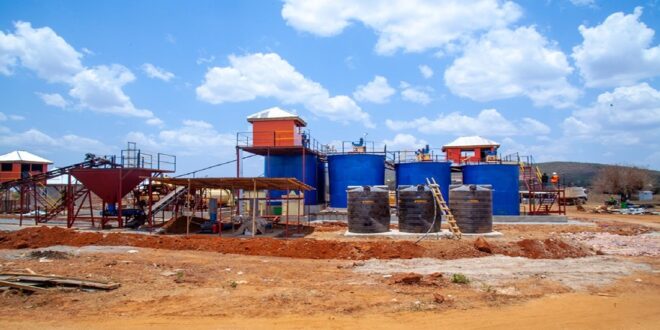
The East African mining sector, anchored heavily by Tanzania’s prolific Lake Victoria Greenstone Belt and expanding into the promising highlands of Ethiopia and Kenya, represents one of the world's most dynamic gold districts. Hosting Tier-1 assets like the Geita Gold Mine, North Mara, Bulyanhulu, and upcoming projects like Tulu Kapi, the region’s potential is staggering. However, as near-surface oxide deposits deplete, East African metallurgists are increasingly forced to process deeper, highly complex, and refractory sulfide ores.
Processing these deep-seated East African ores introduces three critical challenges for CIL/CIP plant managers. First, the severe "preg-robbing" nature of local erogbaaceous ores, which naturally adsorb leached gold before it can be recovered. keji, heightened environmental scrutiny around the shared waters of Lake Victoria, where the risk of cyanide tailings discharge is heavily penalized. kẹta, the grueling inland logistics corridors from the Ports of Dar es Salaam and Mombasa, where thousands of kilometers of rough, unpaved roads demand chemical packaging that can withstand intense vibration and humidity.
United Chemical has developed a targeted suite of metallurgical reagents engineered explicitly to overcome these East African hurdles. By optimizing leaching kinetics, dominating the adsorption race, and providing ESG-compliant alternatives, we ensure your plant maintains maximum recovery yields despite complex geology and harsh geography.
Flagship Gold Recovery Products Tailored for East Africa
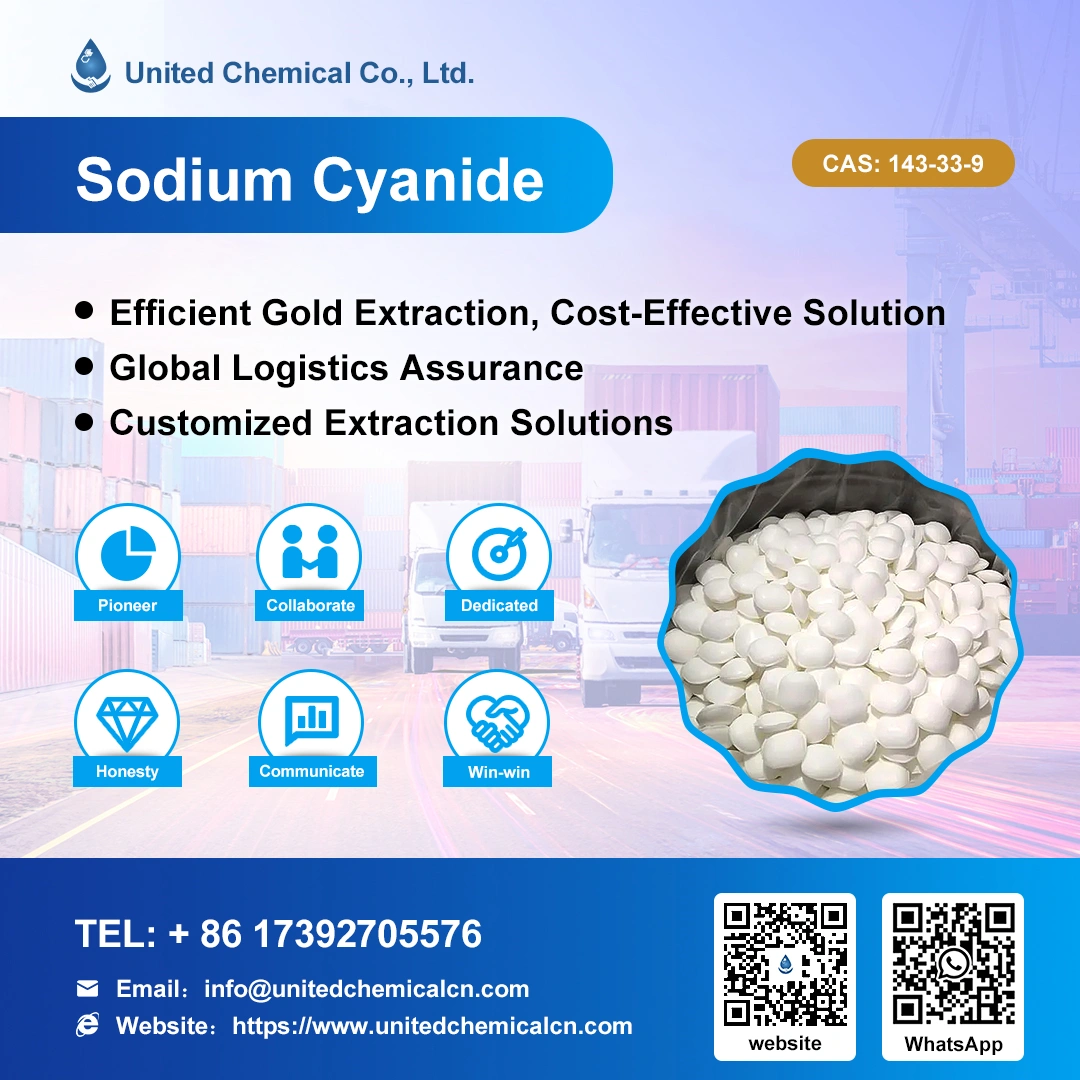
AuCyan™ Sódíọ̀mù Cyanide NaCN (≥98.3%)
Transporting dangerous goods from Dar es Salaam to remote Tanzanian or Rwandan mine sites requires absolute packaging integrity. Sub-standard drums will rupture on rough inland roads. Furthermore, the high base-metal content (like copper) in some East African greenstone ores rapidly consumes low-grade cyanide. AuCyan™ ó yanjú àwọn ìṣòro méjèèjì.
Extreme Purity for Refractory Ores: Guaranteed at ≥98.3% purity, AuCyan™ ensures a highly concentrated generation of active free cyanide (CN-). This aggressive kinetic profile is required to effectively penetrate and leach gold encapsulated in the pyritic and arsenopyritic matrices typical of the Lake Victoria belt.
Rift Valley Logistics Armor: We utilize UN-certified, heavy-gauge steel drums with double-sealed internal polymer liners. Whether navigating the Central Corridor or facing equatorial humidity, AuCyan™ arrives at your mixing circuit dry, safe, and fully potent.
AuCarb™ Gold Recovery Shell Coconut Shell Activated Carbon (≥99% Lile)
When processing carbonaceous "preg-robbing" ores found in Tanzania and Ethiopia, your introduced Kamẹra ti a ṣiṣẹ must out-compete the naturally occurring carbon in the ore. If your carbon's adsorption rate is sluggish, the natural ore will steal the gold, sending it permanently to the tailings dam.
Dominating the Adsorption Race:AuCarb™ features a meticulously engineered macroporous network. It boasts hyper-fast adsorption kinetics, instantly capturing the bulky [Au(CN)₂]⁻ complex before the preg-robbing native carbon can react, drastically improving total recovery.
Zero Attrition in High-Shear CIL: Manufactured from elite Akara Igbons and thermally activated to a staggering ≥99% hardness, AuCarb™ resists degradation in aggressive, high-density slurry agitation, preventing gold-laden carbon fines from escaping your screens.
📊 AuCarb™ Series: Àtẹ Ìfiwéra Lóye Àwọn Pàtàkì Àkọ́kọ́
Láti mú kí iṣẹ́ yíyàn tó rọrùn láti yan tó bá ẹ̀rọ irin pàtó rẹ mu, a ti ṣe àkópọ̀ àwọn ìlànà ìmọ̀-ẹ̀rọ pàtàkì ti àwọn onírúurú AuCarb™ mẹ́rin wa.
| Ìdánwò Àkọ́kọ́ | AuCarb™ BC1100 | AuCarb™ AC50 | AuCarb™ AC55 | AuCarb™ AC60 |
|---|---|---|---|---|
| Ipò Ṣíṣe Àtúnṣe Ọjà | Ìwọ̀n Owó Gíga/Iṣẹ́ Àkójọpọ̀ | Ọjà tó jọra: Jacobi G208S | Ọjà tó jọra: Jacobi G209S | Àṣàyàn tó ga jùlọ fún Ìwọ̀n Ńlá / Afiwera: Jacobi G210S |
| Iwuwo ti o han gbangba | 0.40 - 0.50 g / milimita | 0.48 - 0.55 g / milimita | 0.45 - 0.55 g / milimita | 0.45 - 0.55 g / milimita |
| Líle Bọ́ọ̀lù-pọ́n | ≥ 98.5% | ≥ 99% | ≥ 99% | ≥ 99% |
| Akoonu Platelet | ≤ 5% | ≤ 5% | ≤ 5% | ≤ 5% |
| Wiwọle | ≤ 2% | ≤ 1.5% | ≤ 2% | ≤ 2% |
| Apapọ eeru akoonu | ≤ 5% | ≤ 3% | ≤ 3% | ≤ 3% |
| ọrinrin | ≤ 10% | ≤ 5% | ≤ 5% | ≤ 5% |
| Agbara fifamọra (Iye K) | / | ≥ 26 Kg/t | ≥ 28 Kg/t | ≥ 30 Kg/t |
| Oṣuwọn fifamọra (Iye R) | / | ≥ 50% | ≥ 55% | ≥ 60% |
| Nọmba iodine | ≥ 1100 mg/g | / | / | / |
| Iṣẹ́ Butane | / | ≥ 19.5% | ≥ 21% | ≥ 23% |
| CTC (Iṣẹ́ Carbon Tetrachloride) | / | ≥ 50% | ≥ 55% | / |
* Awọn Ilana Iṣe: Ó bá àwọn ìlànà ASTM ti Amẹ́ríkà àti àwọn ìlànà ìdánwò iwakusa inú AARL mu. Ọjà náà ti kọjá àyẹ̀wò ẹni-kẹta, a sì lè pèsè àwọn àpẹẹrẹ ìdánwò tí a bá béèrè fún.
Agent AuLeach™ Gold Leaching (GDA) - Kii ṣe Ewu
Operating a gold mine near the Lake Victoria basin or within Ethiopia’s agricultural highlands brings intense ESG (Environmental, Social, and Governance) oversight. Cyanide spills are an existential threat to operations here. AuLeach™ provides the ultimate eco-friendly extraction alternative.
Safeguarding Sensitive Ecosystems: As a completely non-hazardous, low-toxicity lixiviant, AuLeach™ ensures that your Tailings Storage Facility (TSF) remains environmentally compliant, drastically reducing the catastrophic liabilities associated with groundwater contamination.
Eliminating Port Bottlenecks: Because it is not classified as Class 6.1 Dangerous Goods, AuLeach™ clears customs at Dar es Salaam and Mombasa in days, not weeks. It eliminates the need for expensive armed escorts and specialized toxic storage permits across East African borders.
Mastering the East African Transit Corridors: CIF Dar es Salaam & Mombasa
Supply chain continuity is the lifeblood of a remote CIL plant. Delays at the port or ruined stock due to poor transport can halt multi-million-dollar operations. United Chemical provides end-to-end logistical mastery for East Africa.
Iṣatunṣe Iṣalaye: We offer secure CIF terms to the Ibudo Dar es Salaam (Tanzania) for rapid access to the Lake Victoria goldfields, and the Ibudo Mombasa (Kenya) for seamless overland transit to Kenya and landlocked Ethiopian/Ugandan projects.
Flawless Documentation: Chemical imports in East Africa require stringent pre-export verification (such as PVOC/CoC). We handle all specialized SGS/Bureau Veritas inspections at origin, ensuring your local clearing agents face zero friction upon vessel arrival.
Prove the Performance on Your East African Ores
We don't just sell chemicals; we provide metallurgical certainty. We invite Plant Managers and Chief Metallurgists across Tanzania, Ethiopia, and Kenya to request complimentary laboratory samples. Run direct kinetic bottle-roll and adsorption tests in your own site lab and witness the data.
Beere fun Awọn Ayẹwo Lab Ọfẹ NisinsinyiFrequently Asked Questions: Gold Metallurgy in East Africa
1. How does AuCarb™ combat preg-robbing in Tanzanian greenstone ores?
Many ores in the Lake Victoria Greenstone Belt contain natural carbon that "robs" gold during leaching. Erogba AuCarb™ ti a mu ṣiṣẹ is engineered with a highly optimized macroporous structure that delivers extreme adsorption kinetics. It loads the [Au(CN)₂]⁻ complex significantly faster than the native ore carbon, ensuring the gold ends up in your elution circuit, not your tailings.
2. Is AuLeach™ GDA safe for operations near the Lake Victoria basin?
Egba. Aṣojú Ìfàmọ́ra Wúrà AuLeach™ is globally certified as non-hazardous. For mines operating near environmentally sensitive areas like Lake Victoria, replacing toxic Iṣuu soda Cyanide with AuLeach™ drastically reduces the ecological risk of TSF (Tailings Storage Facility) overflow, ensuring strict ESG compliance and protecting local water sources.
3. What makes AuCyan™ suitable for the long inland transit from Dar es Salaam?
Inland transport across East Africa can subject cargo to intense vibrations on unpaved roads and high equatorial humidity. Our AuCyan™ NaCN is secured in heavy-duty UN-certified steel drums with multiple heat-sealed interior polymer liners, guaranteeing zero moisture ingress or physical rupture during the grueling journey to your mine site.
4. Does AuLeach™ require new equipment if we are currently using NaCN?
No capital expenditure is required. AuLeach™ is designed as a direct drop-in replacement for iṣuu soda cyanide. East African plant managers can introduce AuLeach™ into their existing agitation tanks, heap leach pads, or vat leaching setups using their current dosing pumps and carbon adsorption circuits.
5. How does the ≥98.3% purity of AuCyan™ improve leaching in refractory sulfide ores?
East African sulfide ores often require aggressive leaching conditions. Lower-grade cyanide introduces impurities that react with base metals (like copper or iron), wasting the chemical. The guaranteed ≥98.3% purity of AuCyan™ ensures a high concentration of active free cyanide (CN-), delivering faster dissolution kinetics and lowering overall reagent consumption.
6. Does AuLeach™ clear customs faster at Mombasa and Dar es Salaam?
Bẹ́ẹ̀ni. Nítorí pé iṣuu soda cyanide is a Class 6.1 highly toxic substance, it requires extensive security clearances, environmental permits, and armed escorts at East African ports. AuLeach™, being non-hazardous, is processed as general industrial cargo, bypassing these regulatory bottlenecks and arriving at your plant weeks faster.
7. How does AuCarb™ perform in high-density CIL slurry agitation?
In high-throughput Carbon-in-Leach (CIL) plants, carbon is subjected to violent mechanical shearing. AuCarb™ is thermally activated to an extreme hardness of ≥99%. This prevents the carbon from breaking down into fine particles, thereby eliminating the risk of gold-loaded fines flowing through the inter-stage screens and being lost to tailings.
8. Do you manage PVOC / CoC inspections required for Tanzania and Kenya?
Yes. We fully integrate East African compliance into our logistics. We coordinate with internationally recognized agencies (like SGS or Bureau Veritas) at the port of origin to secure the required Pre-Export Verification of Conformity (PVOC) and Certificate of Conformity (CoC), ensuring a friction-free import process for your local clearing agents.
9. Can we request a sample to test on our Ethiopian or Tanzanian ore?
Absolutely. We encourage data-driven decision-making. East African metallurgical engineers can request Àwọn Àpẹẹrẹ Ìdánwò Ọ̀fẹ́ of AuCyan™, AuCarb™, or AuLeach™. We will ship these directly to your site laboratory so you can conduct baseline kinetic bottle-roll tests and verify the recovery improvements on your specific ore profile.
- Akoonu ID
- Gbona akoonu
- Hot awotẹlẹ akoonu
- Anionic/Cationic Polyacrylamide Flocculant PAM
- ILERA Iṣẹ iṣe & Iwe-ẹri Eto Iṣakoso Aabo
- Irin iṣu soda, ≥99.7%
- Cyanoacetic acid 99% lulú
- hydrogen peroxide
- Benzonitrile
- Ethylene kaboneti
- 1Sodium Cyanide ẹdinwo (CAS: 143-33-9) fun iwakusa - Didara to gaju & Ifowoleri Idije
- 2Sodium Cyanide 98.3% CAS 143-33-9 Ohun elo asọ goolu NaCN Pataki fun Iwakusa Awọn ile-iṣẹ Kemikali
- 3Awọn Ilana Tuntun ti Ilu China lori Awọn agbejade Sodium Cyanide ati Itọsọna fun Awọn olura Kariaye
- 4Sodium Cyanide (CAS: 143-33-9) Ijẹrisi olumulo ipari (Ẹya Kannada ati Gẹẹsi)
- 5Cyanide International (Sodium cyanide) Koodu Isakoso - Awọn Ilana Gbigba Mine Gold
- 6Ile-iṣẹ China Sulfuric Acid 98%
- 7Anhydrous Oxalic acid 99.6% Ite Iṣẹ
- 1Sodium Cyanide 98.3% CAS 143-33-9 Ohun elo asọ goolu NaCN Pataki fun Iwakusa Awọn ile-iṣẹ Kemikali
- 2Iwa mimọ to gaju · Iduroṣinṣin Performance · Imularada ti o ga julọ - cyanide soda fun mimu goolu ode oni
- 3Awọn afikun Ounje Sarcosine Afẹsodi 99% min
- 4Awọn Ilana Iṣawọle Sodium Cyanide & Ibamu - Aridaju Ailewu ati Ibamu ni Perú
- 5United ChemicalẸgbẹ Iwadii Ṣe afihan Aṣẹ Nipasẹ Awọn Imọye Ti Dari Data
- 6AuCyan™ Sodium Cyanide Tó Ń Ṣe Iṣẹ́ Gíga | Ìmọ́tótó 98.3% fún Iwakusa Wúrà Àgbáyé
- 7Detonator Digital Electronic (Aago idaduro 0 ~ 16000ms)


Ijumọsọrọ ifiranṣẹ lori ayelujara
Fi asọye: