
Te Whakamana i ngā Kamupene Keri Nui o Āhia Waenganui: Ngā Whakapūngao i Hangaia mō ngā Mahi Tino Nui o te Ao Whānui
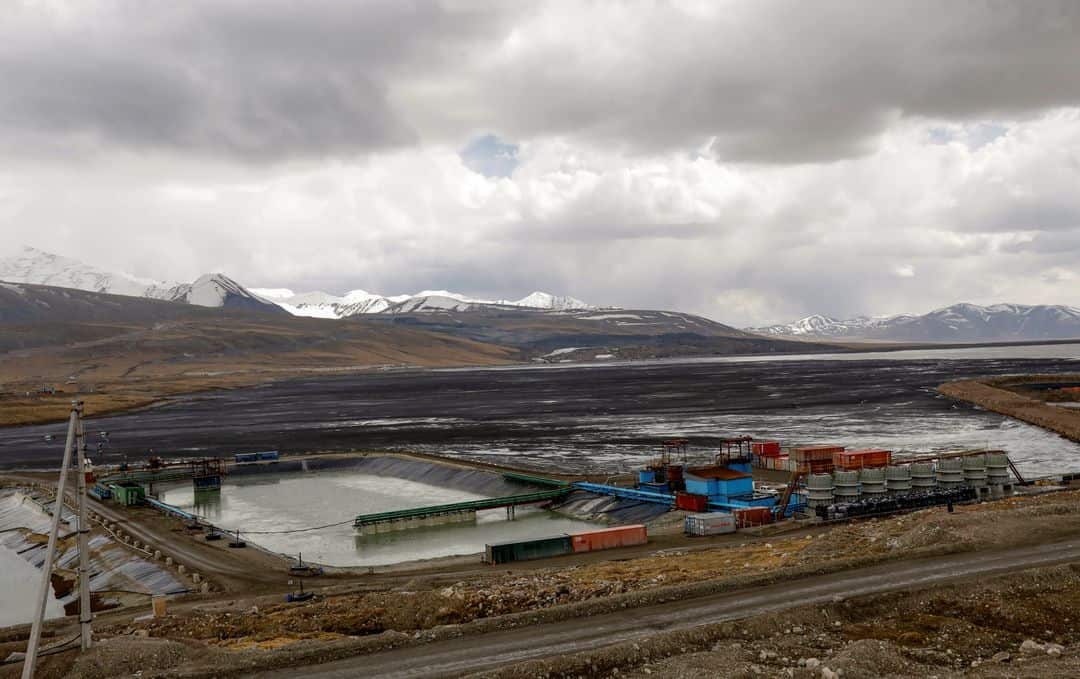
Central Asia is home to some of the most colossal and challenging gold mining operations on the planet. From the world's largest open-pit gold mine in Uzbekistan (Muruntau) to the massive metallurgical complexes in Katatānga , and the high-altitude, glaciated operations in Kyrgyzstan (Kumtor) a Tajikistan , the region is an absolute powerhouse. However, extreme continental climates—characterized by scorching desert summers and brutally freezing alpine winters—combined with complex, landlocked cross-border logistics, demand industrial chemicals of unparalleled stability and specialized logistics expertise.
United Chemical serves as a direct manufacturing lifeline for Central Asia's precious metal sector. We provide industry-leading extraction chemicals delivered seamlessly through the Sino-Central Asia railway corridors, ensuring uninterrupted production for large-scale CIL, CIP, and Heap Leaching plants.
The Core Trio: Engineered for Central Asia's Complex Ores
1. AuCyan™ NaCN Konutai Cyanide ≥98.3%
Central Asian operations process massive tonnages daily, often dealing with refractory ores that require precise and powerful leaching parameters. We supply AuCyan™ NaCN Konutai Cyanide ≥98.3% in ultra-pure solid briquette form. This high-purity baseline guarantees aggressive dissolution kinetics and minimizes the formation of scale or inert cyanates, even when processing challenging ores in the Kyzylkum Desert or the Tien Shan mountains. (Cross-border rail transit requires strict EAEU/CIS dangerous goods permits and valid End-User Certificates).
2. Waro Whakahohe Anga Kokonati AuCarb™ Whakaora Koura (Kei te wātea ngā tauira whakamātautau kore utu mēnā ka tonoa)
For giant CIL circuits where mechanical agitation causes severe waro attrition, superior hardness is mandatory to prevent massive downstream gold losses. Waro Whakahohe Anga Kokonati AuCarb™ Whakaora Koura (Kei te wātea ngā tauira whakamātautau kore utu mēnā ka tonoa) is manufactured to uncompromising ASTM a AARL ngā paerewa keri.
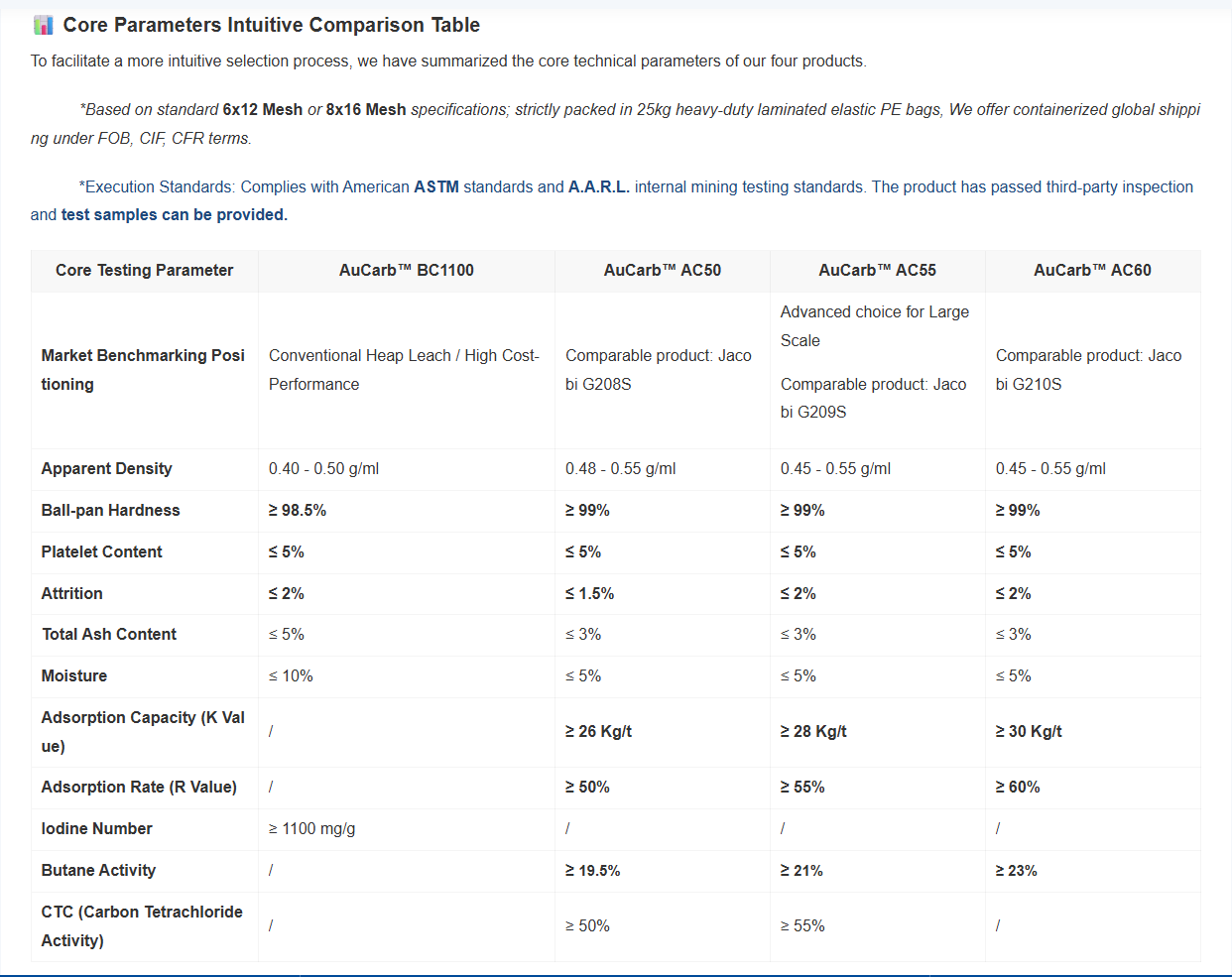
To provide seamless, high-performance substitutes for Western imported carbons that are often delayed by complex landlocked logistics, we offer a dedicated drop-in replacement matrix:
Tawhā Matua | AuCarb™ BC1100 | AuCarb™ AC50 | AuCarb™ AC55 | AuCarb™ AC60 |
Market Fit (Central Asia) | Arid Heap Leach / ADR | CIL Kounga (208-Raupapa Whārite) | CIL Matatau (209-Raupapa Whārite) | Tino-Kōeke (210-Raupapa Whārite) |
Te mārō o te paraharaha-pōro | ≥ 98.5% | ≥ 99% | ≥ 99% | ≥ 99% |
Te mimiti (Uara K) | Teitei o te Iodine (≥ 1100 mg/g) | ≥ 26 kg/t | ≥ 28 kg/t | ≥ 30 kg/t |
Kinetika (Uara R) | Te mimiti tere | ≥ 50% | ≥ 55% | ≥ 60% |
Pereti me te Pungarehu | Peretā ≤ 5%, Pungarehu ≤ 5% | Peretā ≤ 5%, Pungarehu ≤ 3% | Peretā ≤ 5%, Pungarehu ≤ 3% | Peretā ≤ 5%, Pungarehu ≤ 3% |
Disclaimer: All third-party brand designations are used solely for technical compatibility and to assist local engineers in procurement transitions.
Manatoko Taiwhanga Kore-Mōrearea: We invite metallurgical labs in Tashkent, Almaty, or Bishkek to run their own kinetic tests. Kei te wātea ngā tauira whakamātautau kore utu ina tonoa to verify our exceptional ball-pan hardness (≥99%) and minimal ash content prior to placing a full wagon order.
3. AuLeach™ Ākena Horoi Koura Ā-Taiao (GDA) (Kei te wātea ngā tauira whakamātautau kore utu mēnā ka tonoa)
The bottleneck for supplying landlocked Central Asia is often the border (eg, Khorgos or Alashankou), where Class 6.1 Dangerous Goods face severe scrutiny, long queues, and complex EAEU transit permits. AuLeach™ Kaihoroi Koura Ā-Taiao (GDA) (Kei te wātea ngā tauira whakamātautau kore utu mēnā ka tonoa) represents a major logistical breakthrough. As a 100% non-hazardous product, it is classified as general cargo. This allows it to cross borders rapidly without hazardous chemical restrictions, slashing freight time, eliminating expensive security escorts, and significantly lowering environmental risks for operations near sensitive alpine water systems.
Conquering Landlocked Logistics: Direct Railway & TIR Corridors
Because Central Asian nations lack direct seaport access, overland logistics must be flawless. United Chemical has mastered the trans-continental supply chain originating from China.
Sino-Central Asia Railway & Trucks: We utilize direct block trains and international TIR trucks passing through major Xinjiang land ports like Khorgos a Alahankou , delivering straight to rail heads in Tashkent, Almaty, and Bishkek.
Climate-Resilient Packaging: Cargo travelling through the continental interior faces dramatic temperature swings—from 40°C in desert summers to -30°C in high-altitude winters—alongside intense physical vibration during railway bogie changes at borders. AuCyan™ is secured in heavy-duty UN-certified steel drums, while AuCarb™ a AuLeach™ are packed in highly durable, extreme-temperature-resistant laminated elastic PE bags, ensuring total protection against both freezing tearing and moisture ingress.
Anga Tauhokohoko: To optimize rail wagon payloads and long-distance trucking costs, our Minimum Order Quantity (MOQ) is strictly 1 Full Container Load (1 FCL) or its rail-wagon equivalent.
Pātai Auau
Q1: Which Central Asian countries do you deliver mining chemicals to?
We supply major gold and polymetallic mining operations across the entire region, primarily focusing on Uzbekistan , Katatānga , Kehitāna , a Tajikistan , utilizing established China-Central Asia land corridors.
Q2: How do you transport chemicals into landlocked Central Asian nations?
Since there are no seaports, we rely on robust overland logistics. We ship via the international railway network (block trains) a TIR heavy-duty trucking routes via major Chinese border crossings such as Khorgos and Alashankou, ensuring direct delivery to inland terminals in Tashkent, Almaty, and Bishkek.
Q3: How does AuLeach™ GDA solve border delays at Khorgos or Alashankou?
Importing Class 6.1 hazardous chemicals (like tina) through land borders requires strict EAEU/CIS transit permits, armed escorts, and often results in long delays. Because AuLeach™ Kaihoroi Koura Ā-Taiao (GDA) (Kei te wātea ngā tauira whakamātautau kore utu mēnā ka tonoa) is officially certified as 100% non-hazardous, it crosses borders as standard general cargo, completely bypassing dangerous goods queues and drastically reducing overall transit time and freight costs.
Q4: Can AuCarb™ withstand the intense mechanical agitation of giant CIL plants in Central Asia?
Absolutely. Plants like Muruntau process colossal volumes of ore, requiring extremely tough carbon. Our Waro Whakahohe Anga Kokonati AuCarb™ Whakaora Koura (Kei te wātea ngā tauira whakamātautau kore utu mēnā ka tonoa) (AC50/AC55/AC60) acts as a high-performance equivalent to Western 208/210-series grades. With a certified ball-pan hardness of ≥ 99% , it resists mechanical attrition, preventing gold loss in giant CIL/CIP tanks.
Q5: How does your packaging handle Central Asia's extreme continental climate?
The temperature in transit can range from blazing desert heat to freezing alpine cold, which can shatter standard plastics. We utilize extreme-climate packaging: UN-certified reinforced steel drums for AuCyan™ and freeze-resistant, heavy-duty laminated elastic PE bags for AuCarb™ a AuLeach™ , ensuring zero moisture ingress or physical tearing during cross-border railway bogie transfers.
Q6: What documentation is provided for Eurasian Economic Union (EAEU) customs clearance?
We provide a comprehensive, multi-language documentation suite (including English and Russian translations where necessary for CIS countries). This includes Certificates of Analysis (COA), Safety Data Sheets (MSDS), Technical Data Sheets (TDS), and ISO certificates, ensuring your local customs broker can clear the cargo smoothly through EAEU and national regulatory checkpoints.
Q7: Can our metallurgical engineers in Uzbekistan or Kazakhstan test your reagents first?
Yes. We prioritize scientific validation for complex Central Asian ores. We provide ngā tauira whakamātautau kore utu ina tonoa mo te rua Waro Whakahohe Anga Kokonati Whakaora AuCarb™ a AuLeach™ Kaihoroi Koura Ā-Taiao (GDA) , allowing your on-site laboratory to confirm kinetics and recovery rates before committing to a commercial FCL/rail-wagon order.
- Ihirangi Matapōkere
- Ihirangi wera
- Te ihirangi arotake wera
- Konutai Ethyl Xanthate 90% SEX
- IPETC 95%Metal sulfide kohuke kohikohi Z-200
- Triethanolamine(TEA)
- wHiTEnINg hauwai
- Maleic Anhydride - MA
- Benzonitrile
- Konukura Sulfate Monohydrate (CuSO4-H2O) Paura (Cu:34% Min)
- 1Ko te Sodium Cyanide kua whakahekehia (CAS: 143-33-9) mo te Maina - Kounga teitei me te Utu Whakataetae
- 2Konutai Cyanide 98.3% CAS 143-33-9 NaCN, he mea nui mō ngā ahumahi matū keri
- 3Nga Ture Hou a Haina mo te Kaweake i te Sodium Cyanide me te Arataki mo nga Kaihoko Ao
- 4Sodium Cyanide (CAS: 143-33-9) Tiwhikete kaiwhakamahi mutunga (Putanga Hainamana me te reo Ingarihi)
- 5Waehere Whakahaere - Paerewa Whakaaetanga Maina Koura
- 6Haina wheketere Waikawa Sulfuric 98%
- 7Waikawa Oxalic Anhydrous 99.6% Koeke Ahumahi
- 1Konutai Cyanide 98.3% CAS 143-33-9 NaCN, he mea nui mō ngā ahumahi matū keri
- 2Te Maamaa Teitei · Te Mahinga Pumau · Te Whakaora Teitei — te konutai cyanide mo te riihi koura hou
- 3Tāpiritanga Kai Kai Te Sarcosine 99% min
- 4Nga Ture Kawemai me te Tautukunga o te Sodium Cyanide - Te Whakapumau i te Kawemai Haumaru me te Whakaritea ki Peru
- 5United ChemicalKo te Rōpū Rangahau e whakaatu ana i te mana ma roto i nga tirohanga a te Raraunga
- 6AuCyan™ Konutai Cyanide Mahi-Teitei | 98.3% Parakore mō te Keri Koura o te Ao
- 7Mamati Hiko Detonator(Wā whakaroa 0~ 16000ms)


Te whakawhitiwhiti korero i runga ipurangi
Tāpiri kōrero: