
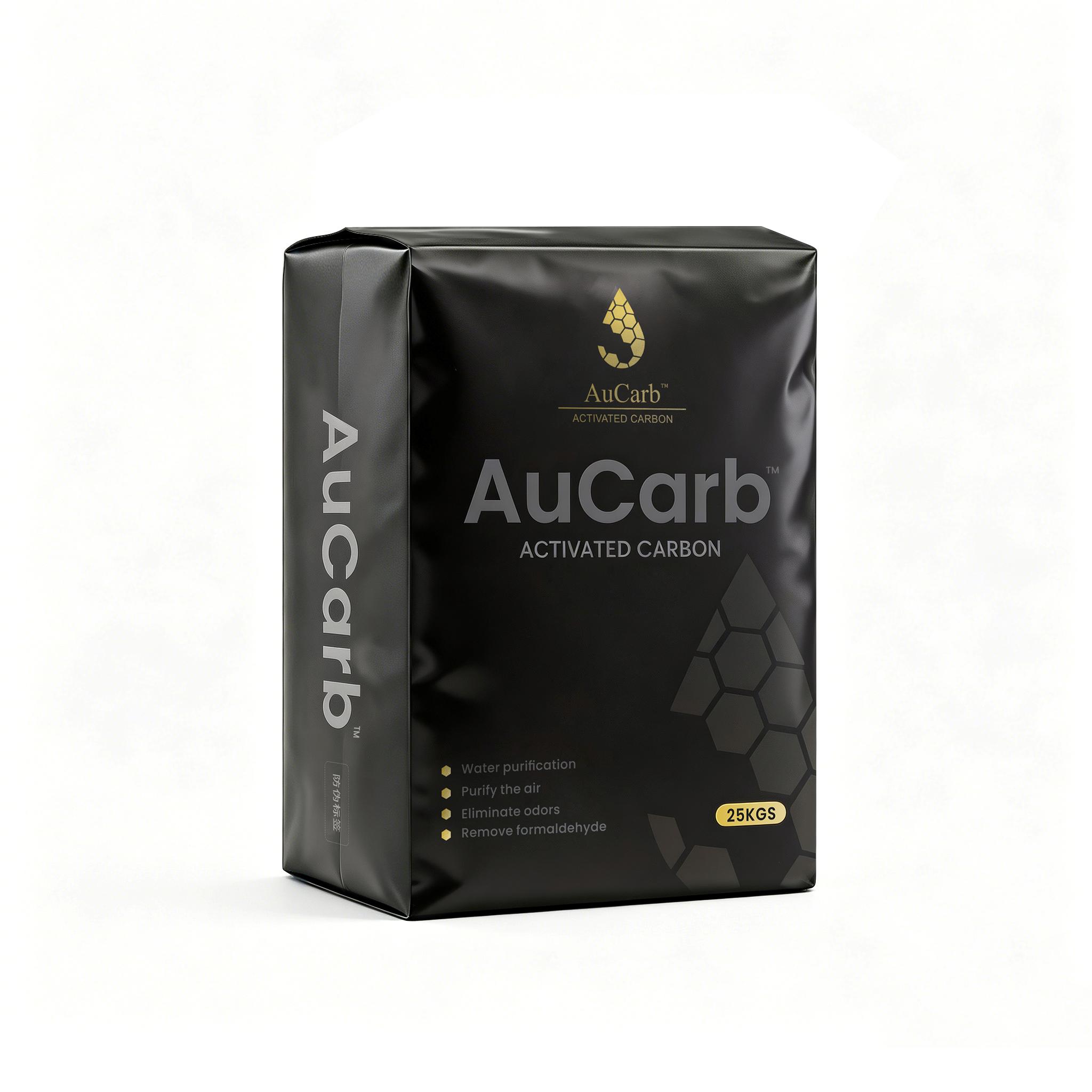
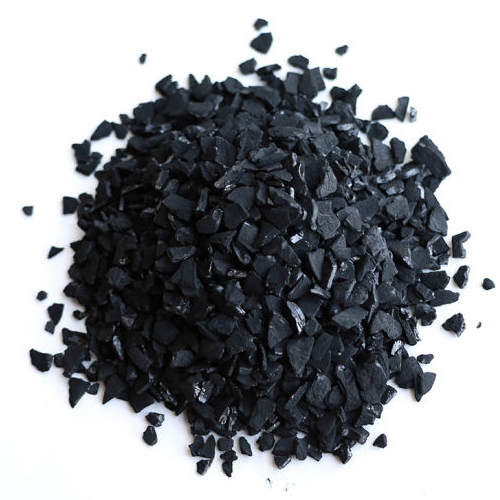
The decline in activated Karbon adsorption performance is usually not caused by a single factor, but rather by the combined effects of multiple factors such as chemical contamination, mechanical wear, and process control. With continuous use of Karbon sing diaktifake in the adsorption-desorption-regeneration cycle, its specific surface area, pore structure, and surface activity gradually change, ultimately leading to a decrease in adsorption capacity, adsorption rate, and mechanical strength. The main factors causing activated carbon performance decline include:
1. Inorganic Scaling and Organic Contamination
Soluble minerals in the ore, process reagents, water impurities, and organic pollutants gradually deposit on the pores and surface of activated carbon, forming scale or covering active sites, blocking the microporous structure, and reducing the effective specific surface area and adsorption capacity.
2. Pre-Robbing Effect
Some ores contain natural carbonaceous materials or other minerals with adsorption capacity, which preferentially adsorb gold-sianida complexes, competing with activated carbon for adsorption, thereby reducing the gold loading efficiency and gold recovery rate of the activated carbon.
3. Mechanical Wear and Particle Crushing
During the stirring, activated carbon lifting, screening, conveying, and circulation processes, activated carbon particles are continuously subjected to friction, collision, and shearing, leading to particle wear, increased fine powder, and decreased mechanical strength, ultimately causing activated carbon loss and system carbon runoff.
4. Insufficient Acid Washing Effect
Acid washing is a crucial step in removing inorganic contaminants. If the acid concentration, reaction time, temperature, or liquid-solid ratio is not properly controlled, inorganic deposits such as calcium, magnesium, iron, copper, and silicon will not be fully removed, affecting subsequent thermal regeneration and continuously reducing the adsorption performance of activated carbon.
5. Improper Control of Thermal Regeneration Process
During thermal regeneration, if the regeneration temperature, residence time, throughput, or furnace atmosphere is not properly controlled, organic contaminants cannot be fully decomposed and removed, some adsorption channels are difficult to restore, leading to a continuous decline in the adsorption activity of activated carbon.
6. Temperature Shock During Regeneration and Cooling (Quenching) Processes
After high-temperature regeneration, if the cooling rate is too rapid or the temperature change is too drastic, activated carbon will generate significant thermal stress, leading to increased particle cracking, breakage, and wear, thereby reducing mechanical strength and shortening the service life of the activated carbon.
Activated Carbon Performance Optimization Recommendations
To maintain the optimal adsorption performance of activated carbon, a comprehensive activated carbon performance monitoring and regeneration process control system should be established, focusing on optimizing the following key aspects:
1. Continuously monitor the regeneration kiln temperature, throughput, residence time, and furnace atmosphere to ensure sufficient and stable thermal regeneration;
2. Optimize acid washing process parameters to improve the removal efficiency of inorganic pollutants and reduce pore blockage;
3. Rationally control the cooling (quenching) rate after regeneration to reduce particle breakage caused by thermal stress;
4. Optimize the design of activated carbon conveying, screening, and circulation systems to reduce mechanical wear and fine powder generation;
5. Regularly test key performance indicators of activated carbon such as iodine value, abrasion value, particle size distribution, ash content, and adsorption kinetics, and adjust process parameters in a timely manner.
By continuously optimizing the pickling, thermal regeneration, and activated carbon conveying systems, and by precisely controlling the key operating parameters of the regeneration kiln, the pore structure and surface activity of activated carbon can be effectively restored, significantly improving its adsorption efficiency, mechanical strength, and cycle life. This maintains stable gold adsorption performance, reduces activated carbon consumption, and enhances gold recovery rate and overall production economic benefits.
- Konten Acak
- Konten panas
- Konten review panas
- Metanol Metil alkohol 99.9% Kelas Industri Cairan tanpa warna sing cetha
- kalsium klorida anhidrat kanggo panganan
- hidrogen peroksida
- Asam adipat 99% digunakake minangka bahan nilon 66
- Seng sulfat monohidrat 98% Industrial & Feed Grade
- Kobalt Sulfat 98% Coklat kuning utawa kristal abang
- Kepiye Sodium Ferrocyanide mbantu ing proses flotasi mineral?
- 1Diskon Sodium Cyanide (CAS: 143-33-9) kanggo Pertambangan - Kualitas Tinggi & Rega Kompetitif
- 2Natrium Sianida 98.3% CAS 143-33-9 NaCN agen pembalut emas Penting kanggo Industri Kimia Pertambangan
- 3Peraturan Anyar China babagan Ekspor Sodium Sianida lan Pandhuan kanggo Pembeli Internasional
- 4Sodium Cyanide (CAS: 143-33-9) Sertifikat pangguna akhir (versi Cina lan Inggris)
- 5Kode Manajemen Sianida Internasional (Sodium sianida) - Standar Penerimaan Tambang Emas
- 6Pabrik China Asam Sulfat 98%
- 7Asam oksalat anhidrat 99.6% Kelas Industri
- 1Natrium Sianida 98.3% CAS 143-33-9 NaCN agen pembalut emas Penting kanggo Industri Kimia Pertambangan
- 2Kemurnian Tinggi · Kinerja Stabil · Pemulihan sing luwih dhuwur - sodium sianida kanggo leaching emas modern
- 3Suplemen Nutrisi Pangan Adiktif Sarcosine 99% min
- 4Peraturan & Kepatuhan Impor Sodium Sianida - Njamin Impor sing Aman lan Mathuk ing Peru
- 5United ChemicalTim Riset Nduduhake Wewenang Liwat Wawasan sing Didorong Data
- 6Natrium Sianida Kinerja Tinggi AuCyan™ | Kemurnian 98.3% kanggo Pertambangan Emas Global
- 7Detonator Elektronik Digital (Waktu tundha 0 ~ 16000ms)


Konsultasi pesen online
Tambah komentar: