
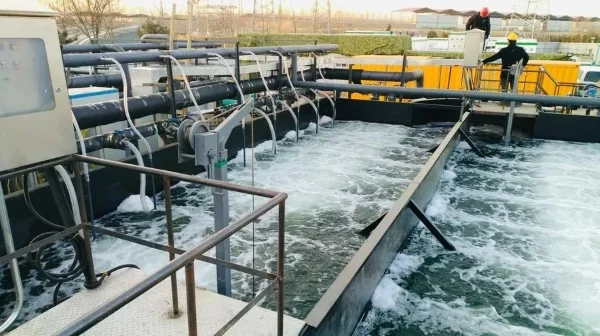
In the realm of environmental protection, the treatment of cyanide - containing wastewater and Sodium cyanide wastewater has long been a crucial topic. With the rapid development of industrial production, especially in industries such as electroplating, metallurgy, and chemicals, the discharge of cyanide - containing wastewater has been increasing year by year, posing a serious threat to the environment. Thus, the exploration of efficient, economical, and environmentally friendly treatment technologies for cyanide - containing wastewater is of utmost importance.
Characteristics and Hazards of Cyanide - Containing Wastewater
Cyanide - containing wastewater usually contains high - concentration cyanide substances, which exist in the water in free or complex forms. Among them, metal - cyanide complexes, such as copper - cyanide complexes and zinc - cyanide complexes, are more stable and difficult to remove through conventional treatment methods. In addition, the wastewater may also contain other heavy metal ions, organic matter, acids, alkalis, and other substances, with a complex composition, which increases the difficulty of treatment. The discharge of cyanide - containing wastewater not only pollutes water bodies but also accumulates through the food chain, posing a long - term threat to the ecological environment and human health.
Treatment Technologies for Cyanide - Containing Wastewater
In view of the characteristics of cyanide - containing wastewater, the currently mainly used treatment technologies include oxidation treatment methods, electrolytic treatment methods, ion - exchange methods, biological treatment methods, and the combined application of multiple technologies.
Oxidation Treatment Methods
Alkaline Chlorination Method
Under alkaline conditions (usually with a pH value between 10 and 11), oxidants such as chlorine or sodium hypochlorite are added to oxidize cyanide substances into non - toxic nitrogen and Carbon dioxide. This method is easy to operate, has stable treatment effects, and the medicaments are readily available and relatively inexpensive. However, it may cause secondary pollution and has a certain corrosive effect on equipment.
Hydrogen Peroxide Oxidation Method
Under acidic or alkaline conditions, hydrogen peroxide is used as an oxidant to oxidize cyanide substances into nitrogen and water. It is especially suitable for treating wastewater with high - concentration cyanide substances, but the treatment cost is high, and the reaction conditions need to be strictly controlled.
Ozone Oxidation Method
Using the strong oxidizing property of ozone, cyanide substances are oxidized into non - toxic substances. The treatment efficiency is high and there is no secondary pollution, but the equipment investment and operating costs are high.
Fenton Oxidation Method
The Fenton reagent composed of hydrogen peroxide and iron salts is used for chemical oxidation to efficiently degrade cyanide substances.
Electrolytic Treatment Method
The electrochemical oxidation reaction is used to destroy the cyanide substances in the wastewater. Under certain conditions, the cyanide ions in the wastewater are oxidized into carbon dioxide, nitrogen, and ammonia. It is suitable for treating wastewater with high - concentration cyanide ions, but it consumes electrical energy and may produce toxic cyanogen chloride gas.
Ion - Exchange Method
Strong - base anion - exchange resins are used to exchange with cyanide ions in the solution, achieving the removal of cyanide ions. It is suitable for the treatment of cyanide - containing wastewater with medium and low concentrations, has a high treatment efficiency, and can recover valuable metal ions, but the treatment cost is relatively high.
Biological Treatment Method
Through the degradation of microorganisms, cyanide substances are converted into non - toxic or low - toxic substances. It is environmentally friendly and sustainable, but it requires suitable environmental conditions (such as temperature, pH value, etc.) and a long treatment time. Common biological treatment methods include the activated sludge method and the biofilm method.
Combined Processes
In view of the complexity of cyanide - containing wastewater, the combined application of multiple technologies is usually adopted. For example, "alkaline chlorination method + ion - exchange method", "electrolytic treatment method + ion - exchange method", "hydrogen peroxide oxidation method + biological treatment method", etc. Through combined processes, in - depth treatment of wastewater can be achieved, and the effluent quality can be improved
- Random Content
- Hot content
- Hot review content
- Collector BLK-301/Composite Flotating Active Matter ≥60%
- Expanded AN explosive
- 99.5% min Ammonium Chloride For Industrial Use
- Sodium Peroxide
- Toluene
- Anhydrous Ammonia 99% Liquid
- Cyanoacetic acid 99% Powder
- 1Discounted Sodium Cyanide (CAS: 143-33-9) for Mining - High Quality & Competitive Pricing
- 2Sodium Cyanide 98.3% CAS 143-33-9 NaCN gold dressing agent Essential for Mining Chemical Industries
- 3China's New Regulations on Sodium Cyanide Exports and Guidance for International Buyers
- 4Sodium Cyanide (CAS: 143-33-9) End user certificate (Chinese and English version)
- 5International Cyanide(Sodium cyanide) Management Code - Gold Mine Acceptance Standards
- 6China factory Sulfuric Acid 98%
- 7Anhydrous Oxalic acid 99.6% Industrial Grade
- 1Sodium Cyanide 98.3% CAS 143-33-9 NaCN gold dressing agent Essential for Mining Chemical Industries
- 2High Purity · Stable Performance · Higher Recovery — sodium cyanide for modern gold leaching
- 3Nutritional Supplements Food Addictive Sarcosine 99% min
- 4United Chemical's Research Team Demonstrates Authority Through Data-Driven Insights
- 5AuCyan™ High-Performance Sodium Cyanide | 98.3% Purity for Global Gold Mining
- 6Digital Electronic Detonator(Delay time 0~ 16000ms)
- 7High-strength, High-precision Shock Tube Detonator



Online message consultation
Add comment: