
Advanced Gold Extraction Chemicals for Mexican Metallurgy
Conquering High-Silver Epithermal Ores, Arid Kinetics, and Inland Security
United Chemical supplies guaranteed purity AuCyan™ Sodium Cyanide NaCN (≥98.3%), AuCarb™ Gold Recovery Coconut Shell Activated Carbon (≥99% Hardness), and non-hazardous AuLeach™ Gold Leaching Agent (GDA) to empower Heap leaching, Vat leaching, CIP, CIL, and CIC operations across the Sierra Madre mining belts.
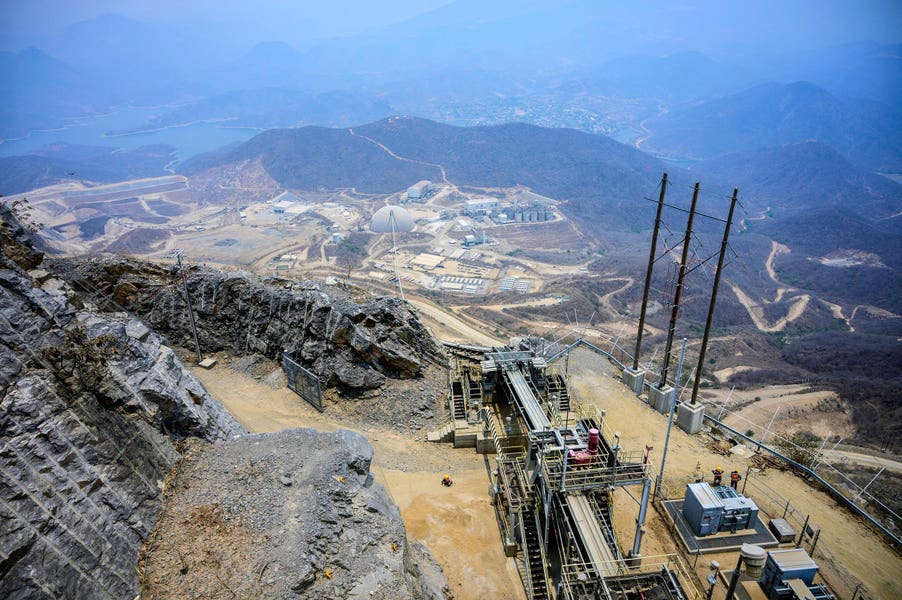
The Mexican Mining Landscape: The Silver-Gold Behemoth
Mexico is a global titan in precious metal extraction. The legendary Sierra Madre Occidental and Oriental belts traverse key mining states such as Sonora, Chihuahua, Zacatecas, and Guerrero. These epithermal deposits are exceptionally rich, but they present three distinct metallurgical and operational hurdles. First, the massive presence of silver acts as an aggressive cyanicide, demanding highly concentrated reagents. Second, northern operations (like those in the Sonora desert) battle extreme water scarcity, forcing the use of highly saline process water. Finally, navigating inland logistics requires extreme security measures.
As an elite manufacturing supplier proudly exporting to 77+ countries worldwide, United Chemical equips Mexican operators with custom-engineered chemical infrastructures. By providing both ultra-pure conventional cyanidation reagents and revolutionary non-hazardous alternatives, we eliminate logistical bottlenecks and maximize recovery in Carbon-in-Pulp (CIP), Carbon-in-Leach (CIL), Carbon-in-Column (CIC), and massive Heap leaching circuits.
To ensure absolute supply chain security, we operate entirely via maritime ocean freight. We transact under FOB (China ports) or CIF terms directly to vital Mexican gateways such as the Port of Manzanillo, Port of Lázaro Cárdenas (Pacific), and Port of Veracruz (Gulf). We strictly exclude international railway transport across the Pacific. Backed by a Minimum Order Quantity (MOQ) of 1x20' FCL, we deliver factory-direct efficiency straight to your plant.
1. Conquering Mexican Operational Bottlenecks
Massive Silver Cyanicide Ratios
Mexico is the world's largest silver producer, and gold is almost always co-mined with it. Silver requires nearly double the stoichiometric amount of cyanide to dissolve. Low-purity reagents will be rapidly exhausted by the silver, causing gold recovery to crash.
Arid Desert Kinetics (Sonora)
Northern Mexico's deserts experience severe water scarcity, necessitating the use of highly saline or recycled process water. High salinity lowers dissolved oxygen, retards leaching kinetics, and causes severe scaling in Heap Leach drip irrigation lines.
Inland Security & Transit Risks
Transporting DG Class 6.1 (Highly Toxic) Sodium Cyanide across certain Mexican states poses extreme security risks. Armed escorts and rigorous federal permits drive up OPEX. A legally compliant, non-hazardous alternative is a massive strategic advantage.
2. The Golden Triangle: United Chemical's Solutions for Mexico
AuCyan™ Sodium Cyanide NaCN (≥98.3%)
Purity Standard: ≥98.3%To overpower the massive silver cyanicide consumption in the Sierra Madre and survive the high salinity of Sonoran process water, AuCyan™ Sodium Cyanide NaCN provides an industrial sledgehammer. We strictly guarantee a minimum purity of ≥98.3% (routinely testing at 98.5%). This unrivaled concentration ensures an explosive release of free CN⁻ ions upon dissolution, rapidly dissolving both gold and heavy silver loads simultaneously.
📊Technical Specification: The 98.3% Purity Standard
Surpassing industry benchmarks, our latest production batches consistently achieve "Superior Quality" grades. Below is the certified performance data (Ref: Batch C050030HS251101).
| Testing Items | Standard (GB/T 19306-2003) | AuCyan™ (Typical) | Operational Impact |
|---|---|---|---|
| Sodium Cyanide (NaCN) | ≥ 98.0% | 98.3% | Maximum gold dissolution kinetics and recovery rates. |
| Sodium Hydroxide (NaOH) | ≤ 0.5% | 0.13% | Superior pH stability; prevents premature hydrolysis. |
| Sodium Carbonate (Na2CO3) | ≤ 0.5% | 0.18% | Minimized impurity interference in the leaching solution. |
| Moisture (H2O) | ≤ 0.9% | 0.3% | Enhanced solid stability during long-term storage and sea transit. |
| Insoluble Substances | ≤ 0.05% | 0.02% | Anti-clogging formula; protects critical pumps and nozzles. |
Applicable Metallurgy Processes: Heap Leaching, Vat Leaching, Carbon-in-Leach (CIL), Carbon-in-Pulp (CIP), Carbon-in-Column (CIC)
AuCarb™ Gold Recovery Coconut Shell Activated Carbon
Ball-Pan Hardness: ≥99%High silver loads mean that your activated Carbon must possess massive loading capacity and extreme structural durability. AuCarb™ Activated Carbon is forged from ultra-dense Coconut Shells via intense steam activation. We guarantee an elite ball-pan hardness of ≥99%, ensuring the carbon granules never shatter under the heavy weight of massive gold/silver complexes in CIL and CIC columns.
📊 AuCarb™ Series: Core Parameters Intuitive Comparison Table
To facilitate a more intuitive selection process tailored to your specific metallurgy circuit, we have summarized the core technical parameters of our four flagship AuCarb™ variants.
| Core Testing Parameter | AuCarb™ BC1100 | AuCarb™ AC50 | AuCarb™ AC55 | AuCarb™ AC60 |
|---|---|---|---|---|
| Market Benchmarking Positioning | Conventional Heap Leach / High Cost-Performance | Comparable product: Jacobi G208AS | Comparable product: Jacobi G209AS | Advanced choice for Large Scale / Comparable: Jacobi G210AS |
| Apparent Density | 0.40 - 0.50 g/ml | 0.48 - 0.55 g/ml | 0.45 - 0.55 g/ml | 0.45 - 0.55 g/ml |
| Ball-pan Hardness | ≥ 98.5% | ≥ 99% | ≥ 99% | ≥ 99% |
| Platelet Content | ≤ 5% | ≤ 5% | ≤ 5% | ≤ 5% |
| Attrition | ≤ 2% | ≤ 1.5% | ≤ 2% | ≤ 2% |
| Total Ash Content | ≤ 5% | ≤ 3% | ≤ 3% | ≤ 3% |
| Moisture | ≤ 10% | ≤ 5% | ≤ 5% | ≤ 5% |
| Adsorption Capacity (K Value) | / | ≥ 26 Kg/t | ≥ 28 Kg/t | ≥ 30 Kg/t |
| Adsorption Rate (R Value) | / | ≥ 50% | ≥ 55% | ≥ 60% |
| Iodine Number | ≥ 1100 mg/g | / | / | / |
| Butane Activity | / | ≥ 19.5% | ≥ 21% | ≥ 23% |
| CTC (Carbon Tetrachloride Activity) | / | ≥ 50% | ≥ 55% | / |
* Execution Standards: Complies with American ASTM standards and A.A.R.L. internal mining testing standards. The product has passed third-party inspection and test samples can be provided upon request.
AuLeach™ Gold Leaching Agent (GDA) - Non-Hazardous
Non-Hazardous ReagentFor mining projects facing extreme inland security risks and the massive OPEX of armed DG transport across Mexican states, AuLeach™ Gold Leaching Agent (GDA) is the ultimate strategic key. Officially classified globally as a Non-Hazardous chemical, AuLeach™ entirely circumvents toxic goods legislation. It can be trucked safely as general cargo from Manzanillo to Sonora, eliminating the costs and dangers of DG Class 6.1 permits.
📊 AuLeach™ Technical Information & Specifications
| Parameter | Units | Guaranteed Specification |
|---|---|---|
| Appearance | - | Solid Powder |
| Operational pH Range | - | 10.5 - 12 |
| Leaching Agent Concentration | % | 30 |
| Standard Packaging | Kgs | Net 25Kgs bag |
Broad Application Spectrum: Highly effective across primary ores, oxide ores, semi-oxide ores, sulfide ores, gold concentrates, and cyanide tailings in both Carbon-in-Pulp and Pool/Vat leaching circuits.
Zero Equipment CAPEX: Fully compatible with existing Chilean Heap leaching and CIL infrastructure. Requires absolutely no mechanical retrofitting.
Unrestricted Logistics: Shipped and trucked as general cargo, eliminating the exorbitant costs of hazardous goods import permits at ports like Antofagasta and specialized DG escorts across the Atacama.
Validate Performance on Your Mexican Ore Samples
Are massive silver cyanicides inflating your reagent OPEX? Are inland logistics jeopardizing your plant's security? We invite Mexican Metallurgists and Plant Managers to evaluate our chemical superiority independently.
📌 Complimentary Laboratory Sample Availability:
United Chemical proudly provides free laboratory test samples strictly for AuCarb™ Gold Recovery Coconut Shell Activated Carbon and the AuLeach™ Gold Leaching Agent (GDA) - Non-Hazardous. Run comprehensive bottle roll and column tests to verify our kinetic advantages before placing a bulk order.
* Commercial bulk shipments globally commence at a factory Minimum Order Quantity (MOQ) of 1x20' FCL via FOB or CIF maritime terms.
Frequently Asked Questions: Mexican Metallurgy & Logistics
Find clear, expert-driven answers to the most common technical and logistical queries regarding our gold extraction chemicals in Mexico.
1. How does AuCyan™ handle the extreme silver-to-gold ratios in Mexico?
AuCyan™ handles high silver-to-gold ratios by providing an ultra-high purity concentration (≥98.3%) of active sodium cyanide. Silver requires nearly double the stoichiometric amount of cyanide to dissolve compared to gold. If reagent purity is low, silver aggressively consumes the active ions, leaving gold un-leached. Our guaranteed ≥98.3% purity ensures an overwhelming surplus of free CN⁻ ions to dissolve both metals simultaneously, maximizing total recovery.
2. Which Mexican maritime ports do you utilize for CIF deliveries?
We primarily utilize the Port of Manzanillo, Port of Lázaro Cárdenas, and Port of Veracruz for CIF maritime deliveries to Mexico. Ports on the Pacific coast (Manzanillo) are ideal for operations in the Sierra Madre, while Veracruz serves eastern states. Once cleared through customs, your appointed local logistics firm handles the inland trucking to the mine site.
3. How does AuLeach™ GDA solve inland security and transport risks in Mexico?
AuLeach™ solves security risks because it is officially classified globally as a Non-Hazardous chemical. Transporting DG Class 6.1 toxic cyanide across Mexican highways poses extreme security risks and requires expensive military or federal escorts. AuLeach™ can be trucked as general cargo, eliminating massive security overhead and transit dangers.
4. Does AuCyan™ perform well in highly saline or recycled water in the Sonora desert?
Yes, AuCyan™ performs exceptionally well in highly saline or recycled water. High ionic strength in desert water retards oxygen solubility. Because AuCyan™ has extremely low impurities (like NaOH ≤0.13%), it dissolves rapidly without causing severe calcium scaling in Heap Leach drip emitters, sustaining aggressive leaching in arid environments.
5. Why is a ≥99% hardness rating critical for Activated Carbon in high-silver CIL plants?
A ≥99% hardness rating prevents activated carbon from shattering under the immense weight of adsorbed gold and silver complexes. In CIL operations, mechanical agitation combined with heavy silver loads will grind soft carbon into fine dust. AuCarb™'s extreme structural integrity ensures zero attrition loss, preventing your precious metals from washing into the tailings.
6. Are there any capital expenditure (CAPEX) costs to switch to AuLeach™?
There are zero CAPEX costs required because AuLeach™ is engineered as a 100% drop-in replacement. Plant managers do not need to purchase new leaching tanks, alter their Heap leach irrigation systems, or modify their carbon elution circuits. You simply substitute the cyanide with AuLeach™ directly into the process.
7. What types of ores can be processed using the AuLeach™ Non-Hazardous reagent?
AuLeach™ has a very broad application spectrum for various ore types. According to its Technical Data Sheet, it is highly effective on primary ores, oxide ores, semi-oxide ores, sulfide ores, gold concentrates, and cyanide tailings across both Carbon-in-Pulp and pool leaching operations.
8. How do Mexican metallurgical labs test the concentration of AuLeach™?
Laboratories test AuLeach™ concentration via a standard chemical titration method. This involves using an analytical grade silver nitrate complexing agent and a rhodanine indicator. During titration, the solution changes from yellow to red, and the milliliters of complexing agent consumed precisely indicates the reagent's active concentration.
9. What is the optimal pH range for utilizing AuLeach™ in leaching circuits?
The guaranteed operational pH range for AuLeach™ is between 10.5 and 12. This aligns perfectly with traditional cyanidation circuits, meaning plant operators can continue using standard hydrated lime to manage slurry alkalinity without altering their current procedures.
10. Do you provide international railway transport directly into Mexico from overseas?
No, we strictly prohibit the use of international railway transport for our overseas chemical exports. Due to severe international safety regulations governing hazardous chemicals across the Pacific, we secure our supply chain exclusively via maritime ocean container shipping (FOB or CIF) to Mexican seaports.
11. What is the Minimum Order Quantity (MOQ) for exporting to Mexico?
Our strict Minimum Order Quantity (MOQ) is 1x20' FCL (Full Container Load). This policy applies universally to AuCyan™, AuCarb™, and AuLeach™ to guarantee factory-direct pricing, protect packaging integrity, and optimize maritime freight costs across the Pacific Ocean.
- Random Content
- Hot content
- Hot review content
- Sodium Amyl Xanthate (SAX) 90%, Mining chemical, mining flotation reagent
- Magneto Electric Detonator(Anti stray current)
- Thiourea 99% high activity Professional Producer
- Ammonium Persulfate Industrial Grade 98.5%
- Triethanolamine(TEA)
- Phthalic anhydride
- lithium Carbonates 99.5% Battery Level or 99.2% Industry grade 99%
- 1Discounted Sodium Cyanide (CAS: 143-33-9) for Mining - High Quality & Competitive Pricing
- 2Sodium Cyanide 98.3% CAS 143-33-9 NaCN gold dressing agent Essential for Mining Chemical Industries
- 3China's New Regulations on Sodium Cyanide Exports and Guidance for International Buyers
- 4Sodium Cyanide (CAS: 143-33-9) End user certificate (Chinese and English version)
- 5International Cyanide(Sodium cyanide) Management Code - Gold Mine Acceptance Standards
- 6China factory Sulfuric Acid 98%
- 7Anhydrous Oxalic acid 99.6% Industrial Grade
- 1Sodium Cyanide 98.3% CAS 143-33-9 NaCN gold dressing agent Essential for Mining Chemical Industries
- 2High Purity · Stable Performance · Higher Recovery — sodium cyanide for modern gold leaching
- 3Nutritional Supplements Food Addictive Sarcosine 99% min
- 4United Chemical's Research Team Demonstrates Authority Through Data-Driven Insights
- 5AuCyan™ High-Performance Sodium Cyanide | 98.3% Purity for Global Gold Mining
- 6Digital Electronic Detonator(Delay time 0~ 16000ms)
- 7High-strength, High-precision Shock Tube Detonator


Online message consultation
Add comment: