

Gold Extraction Chemicals for Türkiye: Specifying Reagents for Anatolian Heap Pads & CIL Circuits
As the largest gold-producing jurisdiction in West Asia and Europe, Türkiye operates high-tonnage heap leach pads, agitated CIL/CIP plants, and ADR Carbon columns under rigorous environmental and ADR road-transport oversight. ShaanXi United Chemical Co., Ltd. supplies AuCyan™ Sodium Cyanide NaCN (≥98.3%) for permitted cyanidation plants, AuCarb™ Gold Recovery Coconut Shell Activated Carbon (≥99% Hardness) to lock in dissolved gold with minimal attrition, and AuLeach™ Gold Leaching Agent (GDA) – Non-Hazardous as a common-chemical leaching alternative.
Türkiye Gold Mining Landscape: High-Tonnage Heap Leaching, Abrasive CIL Circuits & Strict Oversight
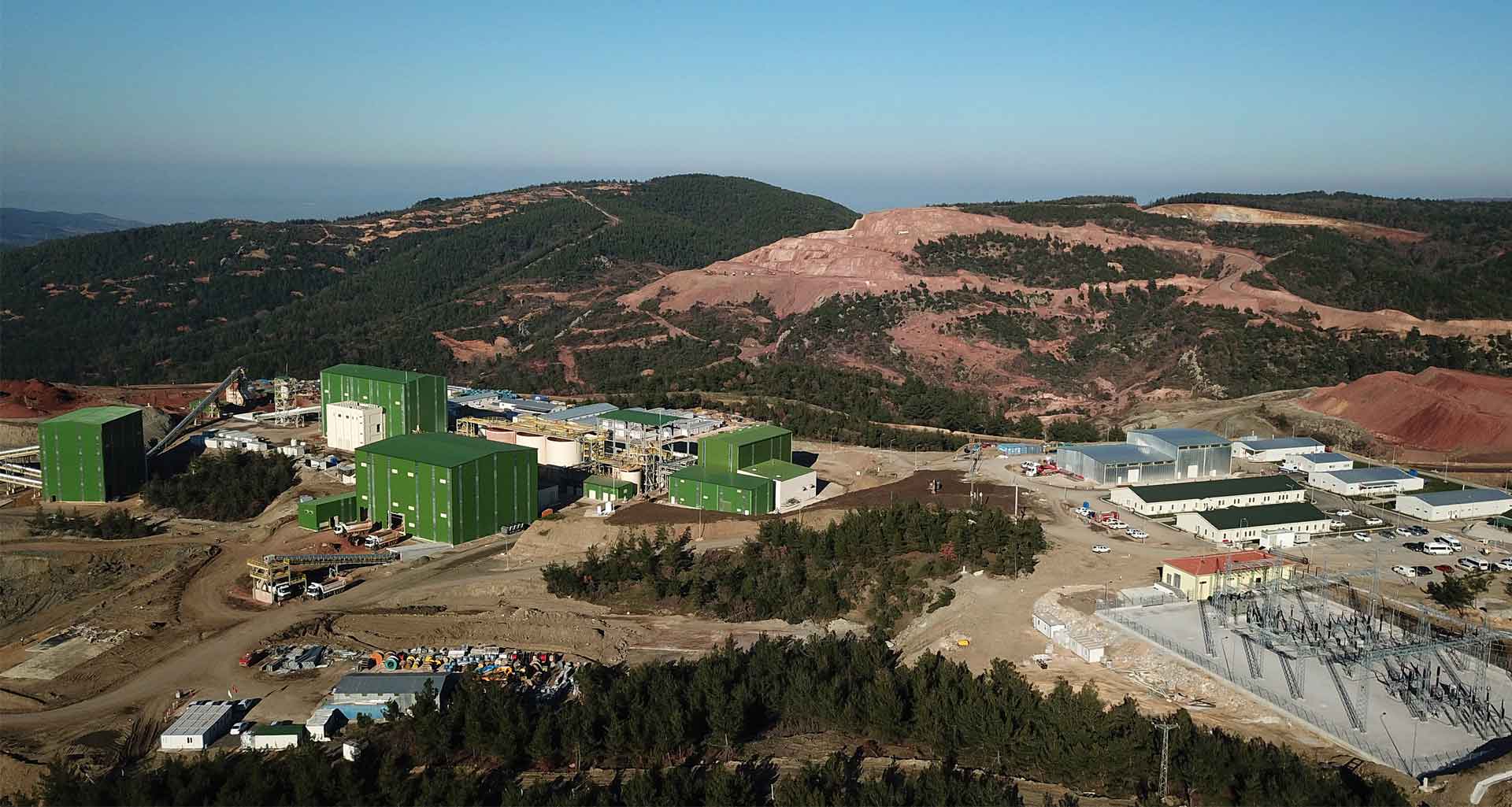
Türkiye is the leading commercial gold producer in West Asia and Europe, anchored by diverse porphyry, epithermal, and skarn deposits stretching from the Aegean coast to Central and Eastern Anatolia. Operations range from massive low-grade open-pit heap leaches like Kışladağ (Uşak) and Öksüt (Kayseri) to high-grade quartz-vein CIP/CIL plants such as Ovacık (İzmir), polymetallic/refractory districts like Çöpler (Erzincan), and modern western heap leach facilities in Lapseki and İvrindi. Across this industrial base, reagent quality directly governs recovery economics, pipeline uptime, and environmental compliance.
Metallurgical teams in Türkiye manage four distinct operational pressures. First, vast low-grade heap leach pads with whole-ore agglomeration and expanding Carbon-in-Column (CIC) trains demand ultra-clean leaching solutions and tight-cut 6×12 mesh carbon so drip emitters stay open and column pressure drop stays predictable. Second, calcareous karst groundwater across western and central Anatolia drives carbonate scaling unless reagent alkalinity and insolubles are tightly controlled. Third, high-elevation plateau sites such as Öksüt (~1,800 m) face cold continental winters where dissolution kinetics slow markedly below 10 °C. Fourth, heightened regulatory scrutiny under Turkish EIA (ÇED) reviews, KKDİK chemical compliance, and ADR dangerous-goods highway regulations makes verified documentation—or a Non-Hazardous common-chemical leaching option—a board-level procurement priority.
United Chemical supplies Turkish mining groups and regional processors across 77+ countries strictly via ocean container freight under FOB (major Chinese loading ports) or CIF terms to İzmir / Aliağa, Mersin, İskenderun, or Trabzon. Commercial minimums are stated plainly by product—AuCarb™ 15 MT, AuCyan™ 18 MT, and AuLeach™ 28 MT—with every shipment backed by factory-issued batch COA, TDS, and MSDS documentation.
1. Solving Türkiye's Four Core Metallurgical & Compliance Bottlenecks
Reagent selection in Türkiye must match both the geology of the Anatolian belt and the regulatory framework governing hazardous chemical import and inland ADR road carriage.
Low-Grade Pads & Emitter Scaling
High-tonnage heap leaches like Kışladağ and Lapseki recirculate huge solution volumes over calcareous rock and agglomerated fines. High-insoluble reagents clog drip emitters, while weak carbon creates fines that blind column screens and carry gold to waste.
ÇED, KKDİK & Hazmat Permitting
Following strict national oversight of cyanide facilities, Turkish mines face rigorous ÇED environmental permitting, mandatory EUC documentation, and ADR Class 6.1 road regulations. Having a proven Non-Hazardous common-chemical alternative provides critical operational flexibility.
Carbon Attrition in Quartz-Vein CIL
Silica-rich epithermal ores in Western Anatolia and Pontide districts produce abrasive slurries in agitated CIP/CIL tanks. Every 1% of excess carbon attrition translates directly into unrecovered gold lost to the tailings facility.
Highland Cold & Hard Groundwater
Central and Eastern Anatolian mines operate in freezing winter conditions and hard, calcium-rich water. Consistent reagent purity, controlled NaOH alkalinity, and low carbonate impurities protect leach kinetics and heat-exchanger efficiency.
2. Major Turkish Gold Districts & Circuit-Matched Reagent Strategy
Mapping Türkiye's representative gold processing districts to the technical priorities that dictate reagent grade selection and maritime port routing.
| District / Mine | Province / Region | Primary Circuit | Key Metallurgical Priority | Target Reagent Fit |
|---|---|---|---|---|
| Kışladağ (Kisladag) | Uşak · Aegean | HPGR Heap Leach + ADR / CIC | Low grade (~0.66 g/t), massive pad flows, emitter clarity & column pressure drop | AuCyan™ (0.02% insolubles) + AuCarb™ BC1100 / AC50 (6×12) |
| Öksüt & Himmetdede | Kayseri · Central Anatolia | Oxide Heap Leach + ADR | High-altitude (~1,800 m) winter kinetics & calcareous water scaling | AuCyan™ (low Na₂CO₃) or AuLeach™ + AuCarb™ AC50 |
| Ovacık & Çukuralan | İzmir · Western Anatolia | Epithermal CIP / CIL | Abrasive quartz-vein slurry & high-grade loaded-carbon retention | AuCyan™ (≥98.3%) + AuCarb™ AC55 / AC60 (≥99% hardness) |
| Lapseki & İvrindi | Çanakkale / Balıkesir | Heap Leach + CIC / ADR | Fast adsorption kinetics, tight mesh grading & Aliağa port replenishment | AuCarb™ BC1100 / AC50 + AuCyan™ or AuLeach™ |
| Çöpler & Eastern Belt | Erzincan · Eastern Anatolia | Oxide Heap & Refractory CIL | Strict ÇED / ADR compliance, sulfide/arsenic feeds & long inland haulage | AuLeach™ GDA (Non-Hazardous) or UN-sealed AuCyan™ + AC60 |
| Mastra & Pontide Belt | Gümüşhane / Black Sea | CIL / Flotation-Leach | Mountainous Black Sea logistics via Trabzon & sulfide concentrate leaching | AuLeach™ GDA or AuCyan™ + AuCarb™ AC55 |
District profiles reflect public operator disclosures and geological literature. Final reagent choice and dosage must always be confirmed through site-specific bottle-roll and column testing on your ore and process water.
3. The Golden Triangle: Core Reagents & Full Specifications for Türkiye
Our three flagship products address distinct metallurgical stages—permitted cyanidation leaching, low-attrition carbon adsorption, and a Non-Hazardous common-chemical leaching alternative—selected independently to match your circuit and compliance requirements.
01. AuCarb™ Gold Recovery Coconut Shell Activated Carbon (≥99% Hardness)
General Cargo · Free Sample Available · MOQ 15 MTAuCarb™ Coconut Shell Activated Carbon — Precision Adsorption & Minimal Attrition Loss
Positioning: Four purpose-built coconut-shell Activated Carbon grades covering heap leaching ADR columns, CIC circuits, and abrasive CIP/CIL tanks.
Core Selling Points: Ball-Pan Hardness ≥99% (ASTM D3802) | Rapid Adsorption Kinetics (K ≥26–30 kg/t, R ≥50–60%) | Low Attrition (≤1.5% on AC50)
AuCarb™ is a high-hardness (≥99%) coconut-shell activated carbon tested to American ASTM (including ASTM D3802 ball-pan hardness and ASTM D4607 iodine methods) and A.A.R.L. metallurgical standards. High hardness and low attrition keep gold-loaded carbon fines inside the circuit rather than losing them through inter-stage screens to tailings. Packed strictly in 25 kg heavy-duty laminated PE bags.
Large low-grade Turkish heap leach pads (such as Kışladağ, Öksüt, Lapseki, and İvrindi) pump huge pregnant-solution volumes through Carbon-in-Column (CIC) and ADR vessels—requiring a uniform 6×12 mesh cut and ≤5% platelet content so column pressure drop stays low and screens never blind. Meanwhile, silica-rich epithermal CIP/CIL plants like Ovacık demand ≥99% ball-pan hardness and ≤1.5% attrition (AC50) so carbon withstands abrasive agitation and repeated acid-wash, elution, and thermal regeneration cycles with minimal gold loss.
Ultra-High Hardness & Attrition Resistance: Special hardening and de-dusting deliver ≥99% ball-pan hardness and ≤1.5% attrition (AC50), minimizing costly loaded-carbon fines loss.
Engineered Pore Architecture (High K & R Values): Balanced micro- and meso-pores promote fast diffusion and firm entrapment of gold complexes, raising eluted gold grade while keeping barren tails low.
Complete Grade Lineup: Select BC1100 for Heap leaching/CIC, AC50 or AC55 for standard CIP/CIL, and AC60 for high-duty industrial CIL plants.
AuCarb™ Series: Complete Core Parameters Comparison Table
| Testing Parameter | AuCarb™ BC1100 | AuCarb™ AC50 | AuCarb™ AC55 | AuCarb™ AC60 |
|---|---|---|---|---|
| Circuit Positioning | Heap Leach / CIC | CIP / CIL / CIC / Heap | CIP / CIL / CIC | High-Duty CIP / CIL |
| Apparent Density | 0.40 – 0.50 g/ml | 0.48 – 0.55 g/ml | 0.45 – 0.55 g/ml | 0.45 – 0.55 g/ml |
| Ball-Pan Hardness (ASTM) | ≥ 98.5% | ≥ 99% | ≥ 99% | ≥ 99% |
| Platelet Content (A.A.R.L.) | ≤ 5% | ≤ 5% | ≤ 5% | ≤ 5% |
| Attrition (A.A.R.L.) | ≤ 2% | ≤ 1.5% | ≤ 2% | ≤ 2% |
| Total Ash Content | ≤ 5% | ≤ 3% | ≤ 3% | ≤ 3% |
| Moisture (As Packed) | ≤ 10% | ≤ 5% | ≤ 5% | ≤ 5% |
| Adsorption Capacity (K Value) | — | ≥ 26 kg/t | ≥ 28 kg/t | ≥ 30 kg/t |
| Adsorption Rate (R Value) | — | ≥ 50% | ≥ 55% | ≥ 60% |
| Iodine Number (Brochure Ref.) | ≥ 1100 mg/g | — | — | — |
| Butane Activity | — | ≥ 19.5% | ≥ 21% | ≥ 23% |
| CTC Activity | — | ≥ 50% | ≥ 55% | — |
Packing & Standards: Standard 6×12 mesh or 8×16 mesh in 25 kg heavy-duty laminated PE bags; tested to ASTM and A.A.R.L. methods.
Resources:Coconut Shell Carbon Category · AuCarb™ Selection Guide · Compare Grades → · MOQ: 15 MT (Free sample available).
02. AuCyan™ Sodium Cyanide NaCN (≥98.3%)
Class 6.1 Dangerous Goods (UN 1689 · MOQ 18 MT)AuCyan™ Sodium Cyanide ≥98.3% — The Purity Benchmark for Permitted Turkish Cyanidation Circuits
Positioning: High-purity solid briquette Sodium Cyanide engineered for permitted medium-to-large scale CIL, CIP, CIC, Heap leaching, and Vat leaching plants.
Core Selling Points: ≥98.3% High Purity | Ultra-Low Insolubles (0.02% Typical) | UN-Certified Factory-Sealed Briquette Packaging
AuCyan™ Sodium Cyanide NaCN (≥98.3%) is a high-purity solid briquette leaching reagent manufactured to exceed GB/T 19306-2003 superior-grade benchmarks for established cyanidation circuits. Valid Turkish import permits, End-User Certificates (EUC), and compliance due diligence are mandatory prerequisites before production is scheduled.
Turkish heap leach operations across calcareous western and central Anatolian basins depend on clean, low-impurity leach liquor to prevent emitter scaling and pump wear. AuCyan™ maintains strong free cyanide activity while its tightly controlled NaOH (0.13% typical), low Na₂CO₃ (0.18% typical), and ultra-low insolubles (0.02% typical) help control alkalinity to inhibit scaling across miles of drip-irrigation lines and heat exchangers. Every container ships in UN-certified factory-sealed packaging (50 kg steel drums or 1,000 kg reinforced wooden boxes with heat-sealed PE inner liners), ensuring zero dust exposure and smooth handoff to buyer-appointed ADR road carriers at İzmir, Aliağa, or Mersin.
≥98.3% High-Purity Standard: High active NaCN concentration sustains free cyanide ions (CN⁻) across heap pads and CIL tanks, supporting predictable dissolution kinetics even in cold plateau seasons.
Controlled Alkalinity & Scale Inhibition: Tightly managed NaOH and low carbonate/insoluble levels limit calcium carbonate precipitation and protect dosing pumps, pipelines, and irrigation nozzles.
UN-Certified Factory-Sealed Integrity: Supplied in factory-sealed UN-certified packaging under FOB China or CIF Turkish port terms with factory-issued batch COA, TDS, and MSDS.
Technical Specification: The 98.3% Purity Standard (GB/T 19306-2003)
| Testing Item | Standard (GB/T 19306-2003) | AuCyan™ Typical | Operational & Circuit Effect |
|---|---|---|---|
| Sodium Cyanide (NaCN) | ≥ 98.0% | 98.3% | Supports strong free cyanide activity and dissolution kinetics. |
| Sodium Hydroxide (NaOH) | ≤ 0.5% | 0.13% | Controls alkalinity to inhibit scaling and premature hydrolysis. |
| Sodium Carbonate (Na₂CO₃) | ≤ 0.5% | 0.18% | Limits carbonate scale buildup in hard karst process water. |
| Moisture (H₂O) | ≤ 0.9% | 0.5% | Preserves briquette stability across sea transit and warehouse storage. |
| Insoluble Substances | ≤ 0.05% | 0.02% | Protects slurry pumps, pipelines, and heap leach drip emitters. |
Processes: Carbon-in-Pulp (CIP), Carbon-in-Leach (CIL), Carbon-in-Column (CIC), Heap leaching, Vat leaching. · MOQ: 18 MT · Technical hub →
03. AuLeach™ Gold Leaching Agent (GDA) – Non-Hazardous
Non-Hazardous Common Chemical · Free Sample Available · MOQ 28 MTAuLeach™ Gold Leaching Agent (GDA) — Common-Chemical Drop-In Alternative
Positioning: A Non-Hazardous common-chemical leaching reagent that operates in existing CIP, CIL, CIC, Heap leaching, and Vat leaching flows without equipment modification.
Core Selling Points: General Cargo Common Chemical | Zero Circuit Redesign | Broad Oxide, Sulfide & Tailings Applicability
AuLeach™ Gold Leaching Agent (GDA) – Non-Hazardous is a drop-in alternative for plants where Class 6.1 permitting, community review, or ADR hazardous road transport creates operational friction. It ships and clears as a common chemical (confirm against batch MSDS and Turkish regulatory requirements) and runs with standard lime or caustic soda alkalinity control.
For Turkish developers navigating sensitive ÇED environmental hearings, agricultural buffer zones in Western Anatolia, or mountain road haulage in Eastern Anatolia and the Pontides, AuLeach™ offers a Non-Hazardous common-chemical leaching pathway that removes Class 6.1 dangerous-goods handling from port discharge through inland transport. Applicable across oxide ores, primary ores, high-sulfur and high-arsenic gold ores, gold concentrates, and cyanide tailings at pH 10.5–12—validate kinetics on your ore via bottle-roll testing and maintain pulp temperature above 10 °C during Anatolian winters.
Zero Equipment CAPEX: Operates directly in existing agitation tanks, heap pads, and carbon adsorption circuits with standard pH 10.5–12 alkalinity control.
Streamlined General-Cargo Logistics: Declared Non-Hazardous, easing vessel booking into İzmir, Mersin, or Trabzon and simplifying inland trucking compared to Class 6.1 dangerous goods.
Closed-Loop Solution Reuse: Both pregnant and lean solutions can be recycled in production, pairing directly with AuCarb™ coconut-shell activated carbon downstream.
AuLeach™ Technical Information & Specifications
| Parameter | Specification | Operational Note |
|---|---|---|
| Hazard Classification | Non-Hazardous (Common Chemical) | Confirm against batch MSDS and local Turkish import authority before ordering. |
| Appearance & Density | White to grey-white solid powder · 1.20–1.35 g/cm³ | Dissolves in alkaline water at ambient temperature. |
| Active Concentration & Dosage | 30% active · Indicative 0.5–1.0 ‰ (500–1000 g/t) | Validate exact dosage via bottle-roll or column testing on your ore. |
| Operational pH & Temperature | pH 10.5–12 (target 11 ± 1) · Best above 10 °C | Maintain alkalinity with lime or caustic soda; heat or extend retention in winter. |
| Packaging & MOQ | Net 25 kg heavy-duty laminated PE bag · MOQ 28 MT | Free laboratory sample available for qualified technical evaluation. |
Processes: Heap leaching, Vat leaching, Carbon-in-Pulp (CIP), Carbon-in-Leach (CIL), Carbon-in-Column (CIC). · MOQ: 28 MT · Reagent details →
4. Selection Logic by Circuit Stage for Turkish Plants
Products are chosen independently by circuit stage and regulatory constraint, never stacked. Use this matrix when preparing technical tenders or laboratory test programmes.
| Decision Factor | AuCyan™ | AuCarb™ | AuLeach™ |
|---|---|---|---|
| Process Stage | Conventional cyanide leaching | Gold adsorption (CIP / CIL / CIC / ADR) | Alternative common-chemical leaching |
| Factory MOQ | 18 MT | 15 MT | 28 MT |
| Classification | Class 6.1, UN 1689 (ADR regulated) | General cargo | Non-Hazardous common chemical |
| Free Lab Sample | Not provided | Available | Available |
| Permits & Compliance | Import permit + EUC mandatory before scheduling | Standard commercial import | Confirm common-chemical & KKDİK rules locally |
| Choose When | Permitted cyanidation plant with valid EUC & ADR logistics | Carbon top-up or new CIC / CIL / CIP plant | Seeking common-chemical logistics or ÇED/permitting simplification |
Full comparison on the Golden Triangle overview and Combined Circuit Solution.
5. Turkish Ports, Trade Terms & Export Documentation
Transparent factory-direct commercial terms so Turkish mining procurement teams can calculate exact landed costs from Chinese seaports to Aegean, Mediterranean, and Black Sea gateways.
| Commercial Item | Standard Specification & Policy |
|---|---|
| Trade Terms (Incoterms) | Strictly FOB from major Chinese loading ports (Shanghai, Qingdao, Ningbo-Zhoushan, Tianjin, Guangzhou), or CIF to the buyer's nominated Turkish seaport via ocean container freight. |
| Turkish Discharge Ports | İzmir / Aliağa (Nemrut Bay) for Aegean & Marmara operations (Kışladağ, Ovacık, Lapseki, İvrindi); Mersin / İskenderun for Central & Eastern Anatolia (Öksüt, Himmetdede, Çöpler); Trabzon / Samsun for Pontide sites. Final discharge port confirmed at quotation. |
| Factory MOQ | AuCarb™ 15 MT · AuCyan™ 18 MT · AuLeach™ 28 MT. Exact container stowage tonnage is stated separately in the quotation for transparent per-tonne freight budgeting. |
| Packaging | AuCarb™ and AuLeach™: 25 kg heavy-duty laminated PE bags. AuCyan™: UN-certified factory-sealed briquette packaging (50 kg steel drums or 1,000 kg reinforced wooden boxes with heat-sealed PE inner liners). |
| Import Prerequisites | AuCyan™ supply requires verified Turkish hazardous-chemical import permits, an End-User Certificate (EUC) issued by the relevant authority, and compliance due diligence before production scheduling. Confirm KKDİK obligations with your Turkish customs broker. |
| Lead Time & Payment | Production and packing typically take ~2 weeks, with indicative total delivery lead time of 4–6 weeks depending on sailing schedule and destination port. Payment via L/C, D/P, or T/T at buyer's cost, confirmed at quotation. |
| Quality & Export Documents | Factory-issued batch Certificate of Analysis (COA), Technical Data Sheet (TDS), Material Safety Data Sheet (MSDS), packing list, commercial invoice, Bill of Lading, and certificate of origin. |
| Laboratory Test Samples | Free laboratory samples of AuCarb™ activated carbon and AuLeach™ GDA for ore validation. AuCyan™ sodium cyanide samples are not supplied. |
Inland road transport from Turkish discharge ports to mine sites (including ADR-licensed carriage for Class 6.1 goods) is arranged by the buyer's nominated local logistics agent.
Validate Performance on Your Turkish Ore Before Committing a Container
Operating a heap leach pad in Western Anatolia, a high-altitude circuit in Central Anatolia, or a CIL plant in the east? Share your ore assay, mesh requirement, and preferred Turkish discharge port. We will return a batch COA, written FOB/CIF quotation, and free laboratory samples of AuCarb™ or AuLeach™ for independent metallurgical testing.
Laboratory Sample & Order Policy: Free test samples are provided strictly for AuCarb™ Gold Recovery Coconut Shell Activated Carbon and AuLeach™ Gold Leaching Agent (GDA) – Non-Hazardous. Samples of AuCyan™ Sodium Cyanide NaCN (≥98.3%) are not provided.
* Commercial bulk orders start at factory MOQs of AuCarb™ 15 MT, AuCyan™ 18 MT, and AuLeach™ 28 MT under FOB China or CIF Turkish port ocean freight terms.
Frequently Asked Questions — Türkiye Gold Extraction Reagents & Logistics
Technical, regulatory, and shipping answers tailored specifically to gold processing operations across Türkiye.
1. Which AuCarb™ grade is best suited for large Turkish heap leach ADR / CIC operations like Kışladağ or Lapseki?
For large open-pit heap leach pads feeding Carbon-in-Column (CIC) or ADR circuits, we typically start with AuCarb™ BC1100 or AC50 in 6×12 mesh. Tight particle-size grading and ≤5% platelet content keep column pressure drop stable across high pregnant-solution flow rates, while ≥99% hardness on AC50 minimizes fines generation during carbon transfer and acid washing.
2. How does AuCarb™ prevent gold loss in abrasive Western Anatolian quartz-vein CIP/CIL circuits?
AuCarb™ AC50, AC55, and AC60 deliver ≥99% ball-pan hardness (ASTM D3802) and low A.A.R.L. attrition (≤1.5% on AC50). Silica-rich epithermal slurries grind soft carbon into fines that pass through inter-stage screens carrying adsorbed gold into the tailings; high-hardness Coconut Shell carbon keeps loaded gold securely inside the recovery train.
3. Which Turkish seaports do you use for CIF deliveries to Aegean, Central, and Eastern Anatolian mines?
We quote FOB major Chinese ports or CIF to your nominated Turkish seaport—typically İzmir / Aliağa (Nemrut Bay) for Aegean and Marmara mines, Mersin or İskenderun for Central and Eastern Anatolian corridors, and Trabzon or Samsun for Black Sea Pontide projects. Inland road haulage from the port is coordinated by the buyer's Turkish logistics agent.
4. What permits and compliance documents are mandatory before ordering AuCyan™ Sodium Cyanide into Türkiye?
AuCyan™ (UN 1689, IMDG Class 6.1) requires verified Turkish hazardous-chemical import permits, an End-User Certificate (EUC) issued by the relevant authority, and compliance due diligence before production is scheduled. Buyers should also confirm KKDİK chemical registration and ADR-certified inland road transport requirements with their Turkish broker in advance.
5. How does AuLeach™ GDA help Turkish mines facing stringent ÇED permitting or ADR road restrictions?
AuLeach™ Gold Leaching Agent (GDA) is declared Non-Hazardous and ships as a common chemical rather than Class 6.1 dangerous goods. It drops into existing Heap leaching, Vat leaching, CIP, CIL, and CIC circuits without equipment redesign at pH 10.5–12, simplifying maritime booking and overland road distribution subject to local Turkish chemical-import rules.
6. How should Turkish heap leach plants control drip-emitter scaling in hard karst groundwater?
Maintain free cyanide activity and control alkalinity with carefully dosed, low-impurity NaOH to inhibit calcium carbonate scaling. AuCyan™ features typical NaOH of 0.13%, low Na₂CO₃ of 0.18%, and ultra-low insolubles of 0.02%, reducing solid deposition in dosing pumps, headers, and heap leach drip emitters.
7. How do freezing Central and Eastern Anatolian winters affect leaching kinetics?
Gold leaching kinetics perform best above 10 °C and slow significantly during freezing plateau winters (such as high-elevation sites in Kayseri or Erzincan). Operations typically bury drip lines, heat agitated tanks, or plan longer leach cycles during winter—relying on consistent ≥98.3% NaCN or validated GDA formulations so reagent quality never compounds winter kinetic loss.
8. Can AuLeach™ GDA be tested on refractory sulfide or arsenic-bearing Anatolian ores?
Yes—AuLeach™ GDA is applicable to oxide ores, primary ores, high-sulfur and high-arsenic gold ores, gold concentrates, and cyanide tailings. Because dissolution recovery is strictly ore-dependent, we supply free laboratory samples so your metallurgical lab can run parallel bottle-roll or column tests against your existing leaching reagent before ordering.
9. How do I choose between AuCarb™ BC1100, AC50, AC55, and AC60 for a Turkish mine?
Select by circuit duty and target loading grade: BC1100 for conventional heap leaching/CIC columns; AC50 (≥99% hardness, K ≥26 kg/t, R ≥50%, attrition ≤1.5%) for standard CIP/CIL/heap duty; AC55 (K ≥28 kg/t, R ≥55%) for higher-throughput CIL circuits; and AC60 (K ≥30 kg/t, R ≥60%) for high-loading industrial CIL operations.
10. Which activated carbon mesh size is better for Turkish circuits: 6×12 or 8×16 mesh?
6×12 mesh is the industry standard for most CIP/CIL tanks and high-flow heap leach CIC columns because it minimizes screen blinding and keeps pressure drop low. 8×16 mesh offers faster adsorption kinetics for specific fine-pulp or specialized column designs where inter-stage screen apertures support smaller granules.
11. What are the exact factory Minimum Order Quantities (MOQ) and packaging formats for Türkiye?
Factory MOQs are fixed by product: AuCarb™ 15 MT, AuCyan™ 18 MT, and AuLeach™ 28 MT. AuCarb™ and AuLeach™ are packed strictly in 25 kg heavy-duty laminated PE bags; AuCyan™ is packed in UN-certified factory-sealed 50 kg steel drums or 1,000 kg reinforced wooden boxes with inner PE liners.
12. Can Turkish mining labs request free test samples before bulk procurement?
Yes—free laboratory test samples are available for AuCarb™ Activated Carbon and AuLeach™ Gold Leaching Agent (GDA) – Non-Hazardous for qualified ore evaluation. Samples of AuCyan™ Sodium Cyanide are not provided; commercial AuCyan™ orders start at 18 MT under valid import permits and EUC.
13. What pH range, dosage, and lab titration method apply to AuLeach™ GDA?
Operate at pH 10.5–12 (returning pulp to pH 11 ± 1 after ore feed) with an indicative dosage of 0.5–1.0 ‰ (500–1000 g/t ore), verified by bottle-roll testing. Plant laboratories monitor active concentration using standard analytical-grade silver nitrate titration with a rhodanine indicator.
14. What quality documentation, lead time, and payment terms apply to Türkiye shipments?
Every shipment is accompanied by factory-issued batch COA, TDS, MSDS, packing list, commercial invoice, Bill of Lading, and certificate of origin. Production typically takes ~2 weeks with an indicative total lead time of 4–6 weeks depending on vessel schedule and discharge port. Payment terms include L/C, D/P, or T/T at buyer's cost, confirmed in the quotation.
15. Why is solid briquette Sodium cyanide preferred over powder for Turkish industrial plants?
Solid briquettes (white uniform pillows) minimize airborne dust during dissolution-tank charging, reduce moisture uptake during maritime transit, and provide controlled, predictable dissolution kinetics. Combined with UN-certified factory-sealed drums or 1,000 kg boxes, briquettes support safer handling across industrial mixing stations.
Jinhui Global, Qujiang District, Xi'an, Shaanxi Province, China
Mobile / WhatsApp: +86 17392705576 · Email: info@unitedchemicalcn.com · Web: unitedchemicalcn.com
Focus: Gold Mining & Precious Metal Extraction Solutions · Serving 77+ Countries
© 2026 ShaanXi United Chemical Co., Ltd. All rights reserved. | Terms of Service | Contact Us
- Random Content
- Hot content
- Hot review content
- Sodiumsulfite Technical Grade 96%-98%
- Copper Sulfate Monohydrate (CuSO4-H2O) Powder (Cu:34% Min)
- What are the storage and handling precautions for mining chemicals?
- Factory Supply Lauramine/Dodecanamine 99% Liquid
- Sodium Dibutyldithiophosphate
- 1Discounted Sodium Cyanide (CAS: 143-33-9) for Mining - High Quality & Competitive Pricing
- 2Sodium Cyanide 98.3% CAS 143-33-9 NaCN gold dressing agent Essential for Mining Chemical Industries
- 3China's New Regulations on Sodium Cyanide Exports and Guidance for International Buyers
- 4Sodium Cyanide (CAS: 143-33-9) End user certificate (Chinese and English version)
- 5International Cyanide(Sodium cyanide) Management Code - Gold Mine Acceptance Standards
- 6China factory Sulfuric Acid 98%
- 7Anhydrous Oxalic acid 99.6% Industrial Grade
- 1Sodium Cyanide 98.3% CAS 143-33-9 NaCN gold dressing agent Essential for Mining Chemical Industries
- 2High Purity · Stable Performance · Higher Recovery — sodium cyanide for modern gold leaching
- 3United Chemical's Research Team Demonstrates Authority Through Data-Driven Insights
- 4AuCyan™ High-Performance Sodium Cyanide | 98.3% Purity for Global Gold Mining
- 5Digital Electronic Detonator(Delay time 0~ 16000ms)
- 6High-strength, High-precision Shock Tube Detonator
- 7industry Electric Detonator


Online message consultation
Add comment: