
Zinc chloride is an important raw material for the production of chemical products with a wide range of properties and uses. This article will introduce in detail the properties, production methods and applications of Zinc Chloride in different fields.
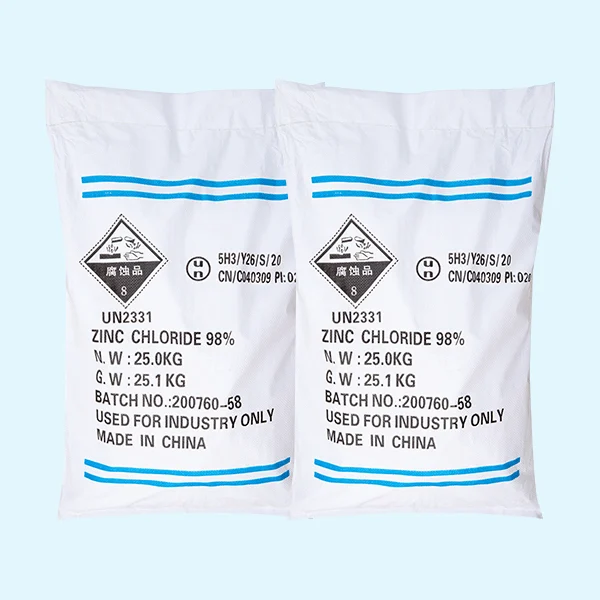
1. Properties of zinc chloride
Zinc chloride is a colorless, transparent, crystalline solid with strong hygroscopicity. It is easily soluble in water, and also in organic solvents such as ethanol, methanol, and acetone. Zinc chloride is very easy to deliquesce in the air, so it needs to be kept dry during storage and use.
Zinc chloride has high chemical reactivity and can react with a variety of metals, non-metals, acids, alkalis and other substances. In addition, zinc chloride also has good thermal stability and corrosion resistance.
2. Production method of zinc chloride
Zinc chloride can be produced by a variety of methods, the most common of which are as follows:
Acid hydrolysis: react zinc oxide or zinc Carbonate with hydrochloric acid to generate zinc chloride and water.
Reaction of metallic zinc with hydrochloric acid: Add metallic zinc directly into hydrochloric acid to react and generate zinc chloride and hydrogen.
Ammonium chloride method: Mix zinc oxide and ammonium chloride and heat them to produce zinc chloride, ammonia and water.
In the actual production process, the appropriate production method can be selected based on factors such as raw material sources and production costs.
3. Uses of zinc chloride
Zinc chloride has a wide range of uses in the field of raw materials for chemical production. The following are some of the main uses:
Catalyst: Zinc chloride can be used as a catalyst for many chemical reactions, such as esterification, condensation, etc.
Desiccant: Zinc chloride can be used as a desiccant to remove moisture from gas or liquid due to its hygroscopicity.
Electroplating solution: Zinc chloride can be used to prepare electroplating solution and is deposited on the metal surface during the electroplating process to improve the corrosion resistance and appearance quality of the metal.
Preservative: Zinc chloride can be used as a preservative for materials such as wood and leather to extend their service life.
In short, zinc chloride plays an important role in the field of raw materials for chemical production. By understanding its properties, production methods and applications in different fields, we can better play the role of zinc chloride and promote the development of the chemical industry.
- Random Content
- Hot content
- Hot review content
- Industrial Grade Sodium Metabisulfite 96.5%
- High-precision Delay Element( 25ms- 10000ms)
- Calcium Peroxide 60% Assay Yellowish Tablet
- Methanol Methyl alcohol 99.9% Industrial Grade Clear colorless liquid
- Feed Grade 98.0% Calcium Formate
- Sodium Metasilicate Pentahydrate
- Maleic Anhydride - MA
- 1Discounted Sodium Cyanide (CAS: 143-33-9) for Mining - High Quality & Competitive Pricing
- 2Sodium Cyanide 98.3% CAS 143-33-9 NaCN gold dressing agent Essential for Mining Chemical Industries
- 3China's New Regulations on Sodium Cyanide Exports and Guidance for International Buyers
- 4Sodium Cyanide (CAS: 143-33-9) End user certificate (Chinese and English version)
- 5International Cyanide(Sodium cyanide) Management Code - Gold Mine Acceptance Standards
- 6China factory Sulfuric Acid 98%
- 7Anhydrous Oxalic acid 99.6% Industrial Grade
- 1Sodium Cyanide 98.3% CAS 143-33-9 NaCN gold dressing agent Essential for Mining Chemical Industries
- 2High Purity · Stable Performance · Higher Recovery — sodium cyanide for modern gold leaching
- 3Nutritional Supplements Food Addictive Sarcosine 99% min
- 4United Chemical's Research Team Demonstrates Authority Through Data-Driven Insights
- 5AuCyan™ High-Performance Sodium Cyanide | 98.3% Purity for Global Gold Mining
- 6Digital Electronic Detonator(Delay time 0~ 16000ms)
- 7High-strength, High-precision Shock Tube Detonator


Online message consultation
Add comment: