
2026 Industry Research Report on Coconut Shell Activated Carbon for Gold Recovery
1. Industry Overview in 2026
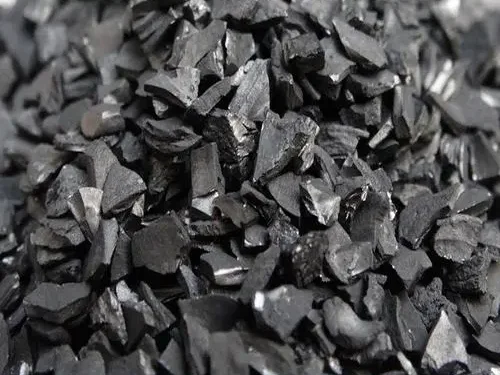
By 2026, coconut shell activated carbon remains the most widely adopted adsorption material in global gold recovery processes, particularly in CIP, CIL, CIC, and heap leaching systems. Despite the emergence of alternative Carbon sources and synthetic adsorbents, fruit shell–based Activated Carbons continue to dominate gold mining applications due to their structural stability, adsorption efficiency, and proven industrial performance.
Among fruit shell carbons, Coconut Shell activated carbon is regarded as the industry benchmark, while apricot shell, peach shell, and other fruit shell carbons are used in limited or specialized scenarios depending on ore characteristics and operating conditions.
2. Role of Activated Carbon in Gold Recovery Processes
In cyanide leaching systems, activated carbon is used to adsorb dissolved gold in the form of the dicyanoaurate complex Au(CN)₂⁻ from leach solutions or pulp.
The performance of activated carbon directly affects:
Gold adsorption rate
Residual gold concentration in tailings
Carbon loading capacity
Elution efficiency and carbon regeneration cycles
High-quality activated carbon enables faster adsorption kinetics, lower gold losses, and longer service life, making it a critical consumable rather than a simple auxiliary material.
3. Main Types of Fruit Shell Activated Carbon Used in Gold Mining
3.1 Coconut Shell Activated Carbon
Produced from coconut shells through high-temperature carbonization and activation, coconut shell carbon features:
Highly developed microporous structure
High mechanical strength
Excellent resistance to abrasion
Stable adsorption behavior over multiple cycles
It is the preferred choice for large-scale, continuous gold recovery operations.
3.2 Apricot Shell Activated Carbon
Apricot shell carbon generally exhibits:
Moderate pore development
Lower hardness compared to coconut shell carbon
Acceptable adsorption performance in low-abrasion systems
It is sometimes used in small-scale or cost-sensitive operations, but requires careful control of operating conditions.
3.3 Peach Shell Activated Carbon
Peach shell carbon is characterized by:
Relatively uneven pore size distribution
Lower mechanical strength
Higher tendency to generate carbon fines
Its application in gold recovery is limited and typically restricted to low pulp density systems.
3.4 Other Fruit Shell Activated Carbons
This category includes activated carbons derived from:
Walnut shells
Palm shells
Mixed agricultural by-products
Their performance varies significantly depending on raw material quality and activation process, making them less standardized for gold mining applications.
4. Product Standards Comparison for Gold Recovery Activated Carbon
4.1 Key Performance Indicators (Typical Industry Ranges)
| Parameter | Coconut Shell Carbon | Apricot Shell Carbon | Peach Shell Carbon | Other Fruit Shell Carbon |
|---|---|---|---|---|
| Iodine number (mg/g) | ≥1000 | 900–1000 | 850–950 | 800–950 |
| Gold loading capacity | ≥25 kg Au/t C | 18–25 | 15–20 | 12–20 |
| Hardness (%) | ≥99 | 95–97 | 92–95 | 90–95 |
| Ash content (%) | ≤3 | 3–5 | 4–6 | 4–7 |
| Carbon fines generation | Very low | Low–medium | Medium | Medium–high |
| Service life | Long | Medium | Short | Variable |
👉 In 2026, high-efficiency gold recovery operations prioritize overall performance balance rather than a single parameter such as iodine number.
5. Interpretation of Gold Recovery Efficiency
5.1 Adsorption Performance
Coconut shell activated carbon consistently demonstrates:
Faster gold adsorption kinetics
Higher equilibrium loading
Better selectivity for gold complexes
Alternative fruit shell carbons may perform adequately under controlled conditions but often show greater sensitivity to pulp chemistry and mechanical stress.
5.2 Impact on Overall Plant Performance
The choice of activated carbon affects:
Carbon inventory turnover
Frequency of carbon replacement
Gold losses in tailings
Stability of elution and electrowinning circuits
In low-grade gold ores, even a small reduction in adsorption efficiency can significantly impact project economics.
6. Coconut Shell Carbon vs Other Fruit Shell Activated Carbons (Summary)
| Aspect | Coconut Shell | Apricot Shell | Peach Shell | Other Fruit Shells |
|---|---|---|---|---|
| Gold adsorption efficiency | Excellent | Good | Moderate | Variable |
| Mechanical strength | Excellent | Good | Fair | Fair |
| Abrasion resistance | Excellent | Good | Moderate | Moderate |
| Consistency | Very high | Medium | Low | Low |
| Suitability for CIP/CIL | Ideal | Conditional | Limited | Limited |
7. Industry Trends and Procurement Considerations in 2026
Industry Trends
Growing emphasis on long-term operating cost rather than unit price
Increased demand for customized activated carbon matched to ore characteristics
Mandatory laboratory adsorption tests before bulk procurement
Procurement Recommendations
Evaluate both hardness and gold loading capacity
Conduct site-specific adsorption and abrasion tests
Avoid selecting products based solely on iodine number
8. Conclusion
In 2026, Coconut Shell Activated Carbon remains the preferred and most reliable adsorption material for gold recovery. While apricot shell, peach shell, and other fruit shell activated carbons may find application in niche scenarios, their limitations in mechanical strength and long-term stability restrict widespread adoption in modern gold processing plants.
For mining operations aiming at high recovery, stable operation, and predictable costs, coconut shell activated carbon continues to represent the industry standard.
- Random Content
- Hot content
- Hot review content
- Sulphuric Acid 98% Industrial Grade
- Feed Grade 98.0% Calcium Formate
- butyl vinyl ether
- Pharmaceutical Intermediate Glycine with High Quality 99%
- Adipic acid 99% used as the material of nylon 66
- Magnesium Sulfate
- Ethyl Methyl Carbonate (EMC) 99%
- 1Discounted Sodium Cyanide (CAS: 143-33-9) for Mining - High Quality & Competitive Pricing
- 2Sodium Cyanide 98.3% CAS 143-33-9 NaCN gold dressing agent Essential for Mining Chemical Industries
- 3China's New Regulations on Sodium Cyanide Exports and Guidance for International Buyers
- 4Sodium Cyanide (CAS: 143-33-9) End user certificate (Chinese and English version)
- 5International Cyanide(Sodium cyanide) Management Code - Gold Mine Acceptance Standards
- 6China factory Sulfuric Acid 98%
- 7Anhydrous Oxalic acid 99.6% Industrial Grade
- 1Sodium Cyanide 98.3% CAS 143-33-9 NaCN gold dressing agent Essential for Mining Chemical Industries
- 2High Purity · Stable Performance · Higher Recovery — sodium cyanide for modern gold leaching
- 3Nutritional Supplements Food Addictive Sarcosine 99% min
- 4United Chemical's Research Team Demonstrates Authority Through Data-Driven Insights
- 5AuCyan™ High-Performance Sodium Cyanide | 98.3% Purity for Global Gold Mining
- 6Digital Electronic Detonator(Delay time 0~ 16000ms)
- 7High-strength, High-precision Shock Tube Detonator



Online message consultation
Add comment: