

UNITED CHEMICAL · INDUSTRY NEWS · 27 NOVEMBER 2026
A heap-leach ramp, then a CIL plant
Two processing routes on one site means two qualification programmes.
PT Merdeka Gold Resources Tbk (EMAS), majority-owned by PT Merdeka Copper Gold Tbk, recorded US$43 million in EBITDA as gold production surged 69% quarter on quarter, according to Macau Business reporting on the company's release. The Pani Gold Mine in Gorontalo, Indonesia, has mineral resources of 7.0 million ounces and an estimated 15-year mine life. Production is supported by a heap-leach facility with initial capacity of 8 million tonnes a year. The mine began mining in October 2025, achieved first gold in February 2026 and made its first sales in March 2026.
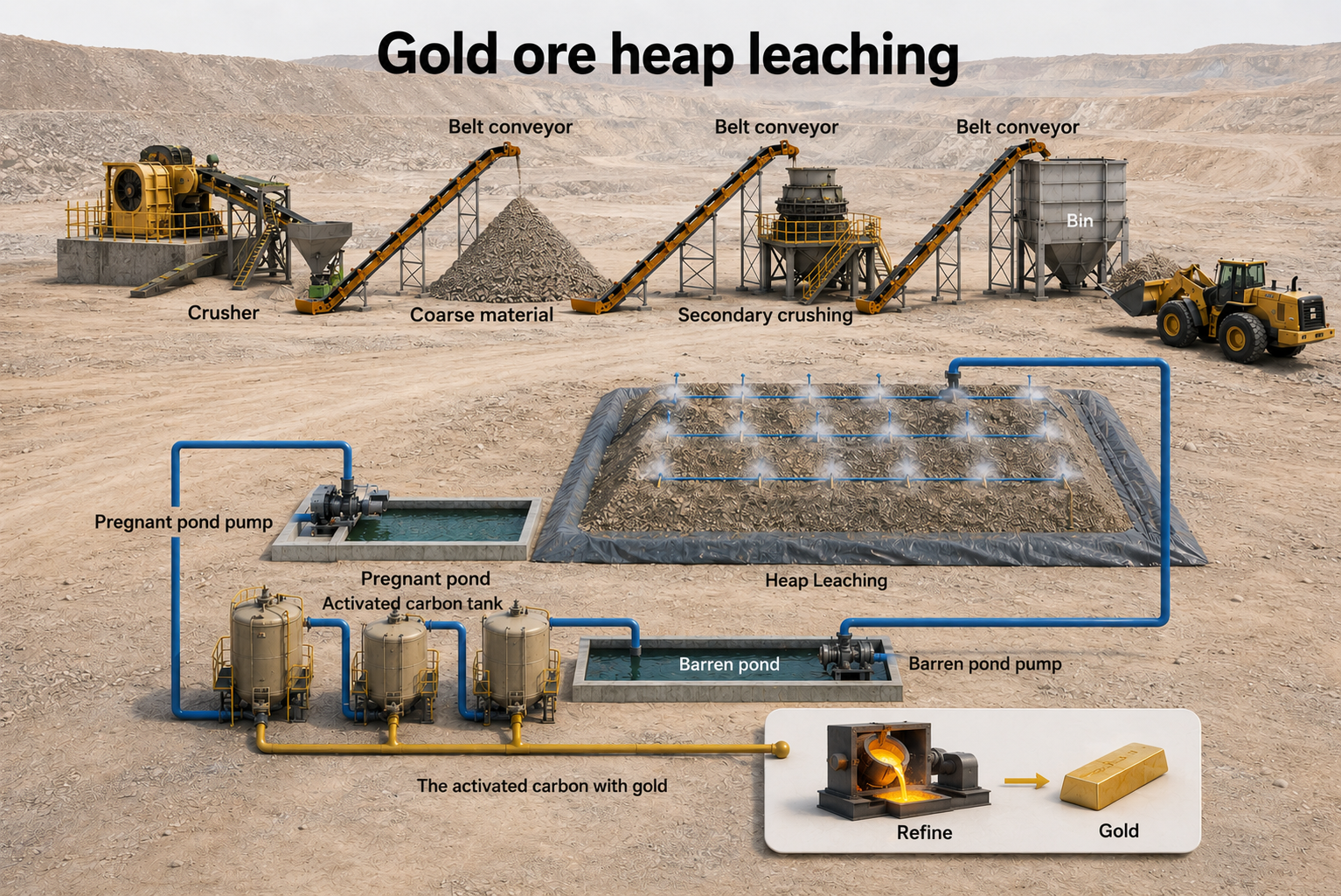
1. Stage one: heap leaching at 8 Mt/y
A heap-leach facility at this scale is a Carbon-in-column operation in all but name. Gold dissolved in the pad is recovered from pregnant solution on carbon columns, where solution clarity and carbon loading rate dominate. BC1100 is the grade typically evaluated for column and Heap leaching service, selected on K and R values measured with the site's own solution.
2. Stage two: CIL from 2028
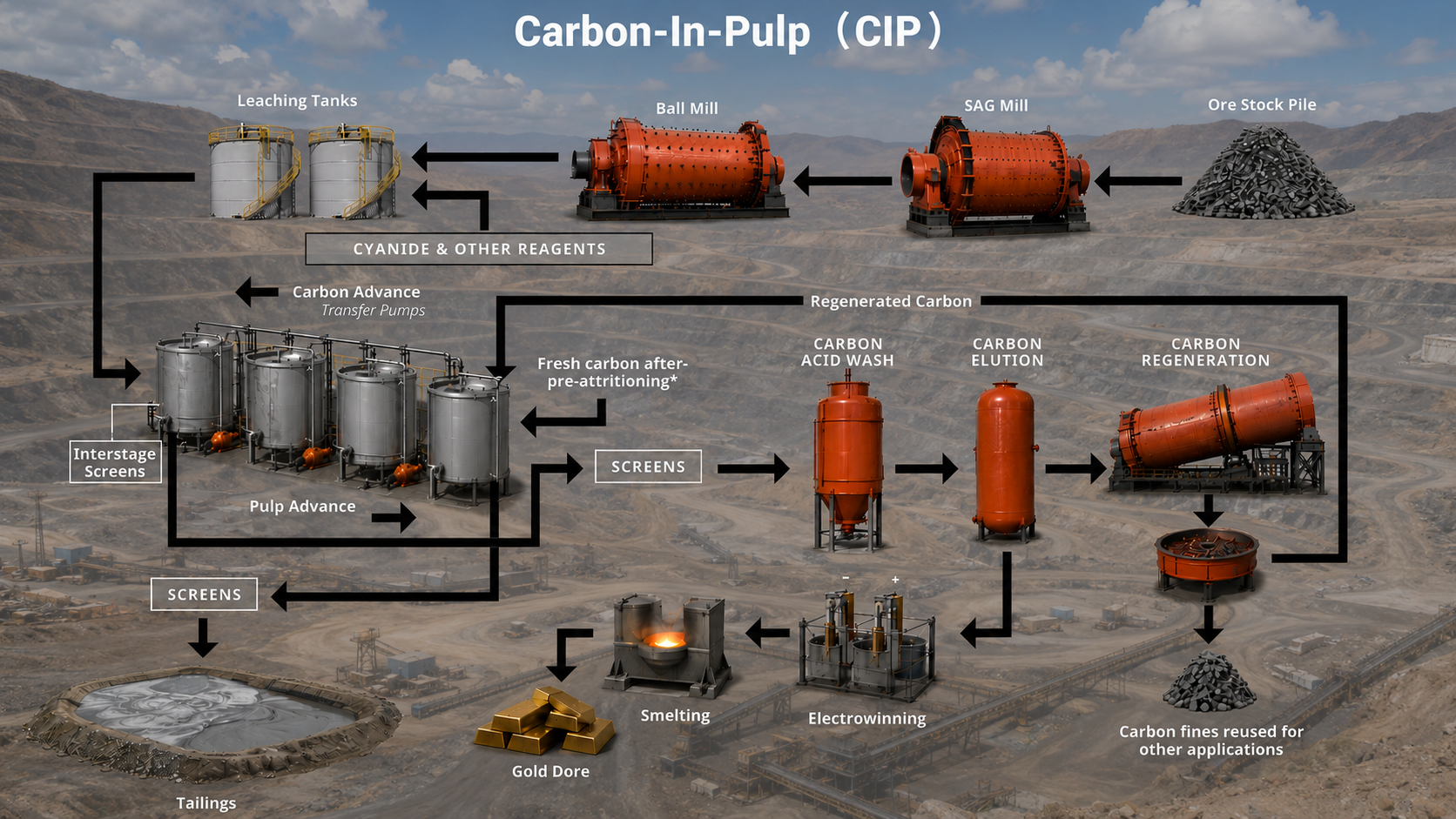
The company plans to develop a Carbon-in-Leach (CIL) facility targeted to start in 2028 and scale to 12 million tonnes a year by 2029, with peak production of roughly 500,000–700,000 ounces a year by 2031. A CIL plant is a different reagent environment: carbon sits in agitated tanks, so ball-pan hardness and AARL attrition become as important as activity. The two stages therefore need two carbon specifications and two qualification dossiers, even if the same supplier serves both.
The Golden Triangle — three products, one supplier
AuCyan™ Sodium Cyanide NaCN (≥98.3%) · AuCarb™ Gold Recovery Coconut Shell Activated Carbon (≥99% Hardness) · AuLeach™ Gold Leaching Agent (GDA) – Non-Hazardous
3. Worked scale check
At 8 million tonnes a year through the heap leach, a cyanide demand of 0.15 kg/t implies about 1,200 tonnes a year of NaCN. At the planned 12 Mt/y CIL plant, demand at 0.25 kg/t would be about 3,000 tonnes a year. Even allowing for estimate error, the move from stage one to stage two multiplies reagent volumes by roughly two to three times. Qualifying the second-stage specification during stage one is the only sensible sequence.
Heap leach, 8 Mt/y at 0.15 kg/t: ≈ 1,200 t NaCN/year
CIL, 12 Mt/y at 0.25 kg/t: ≈ 3,000 t NaCN/year
4. Product fit across both stages
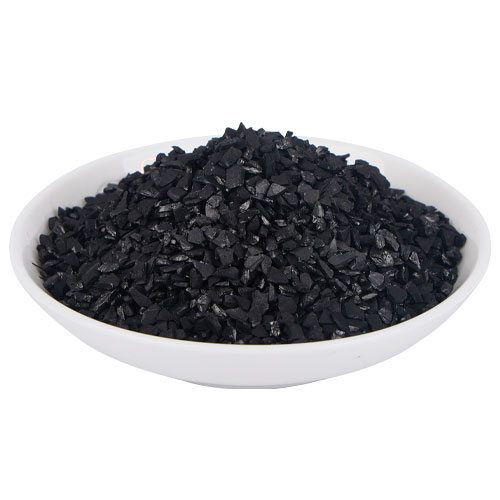
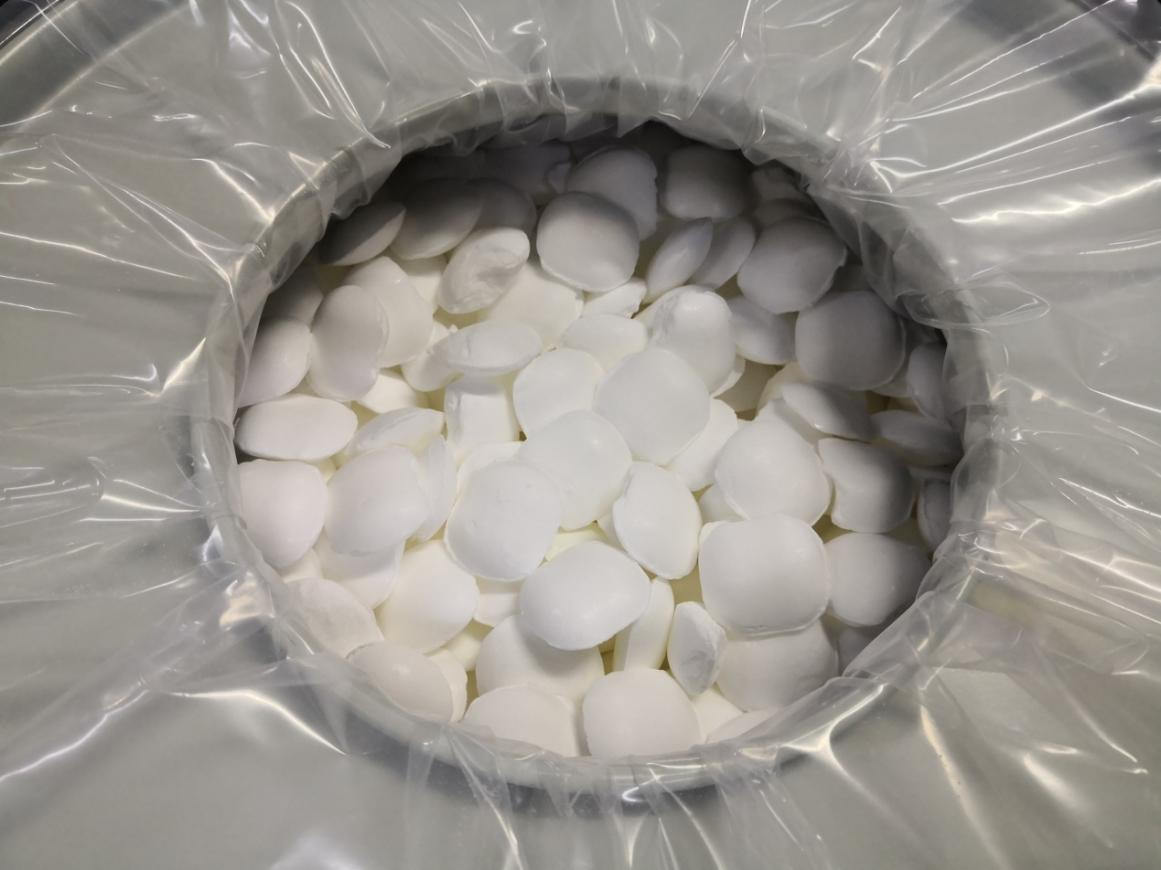
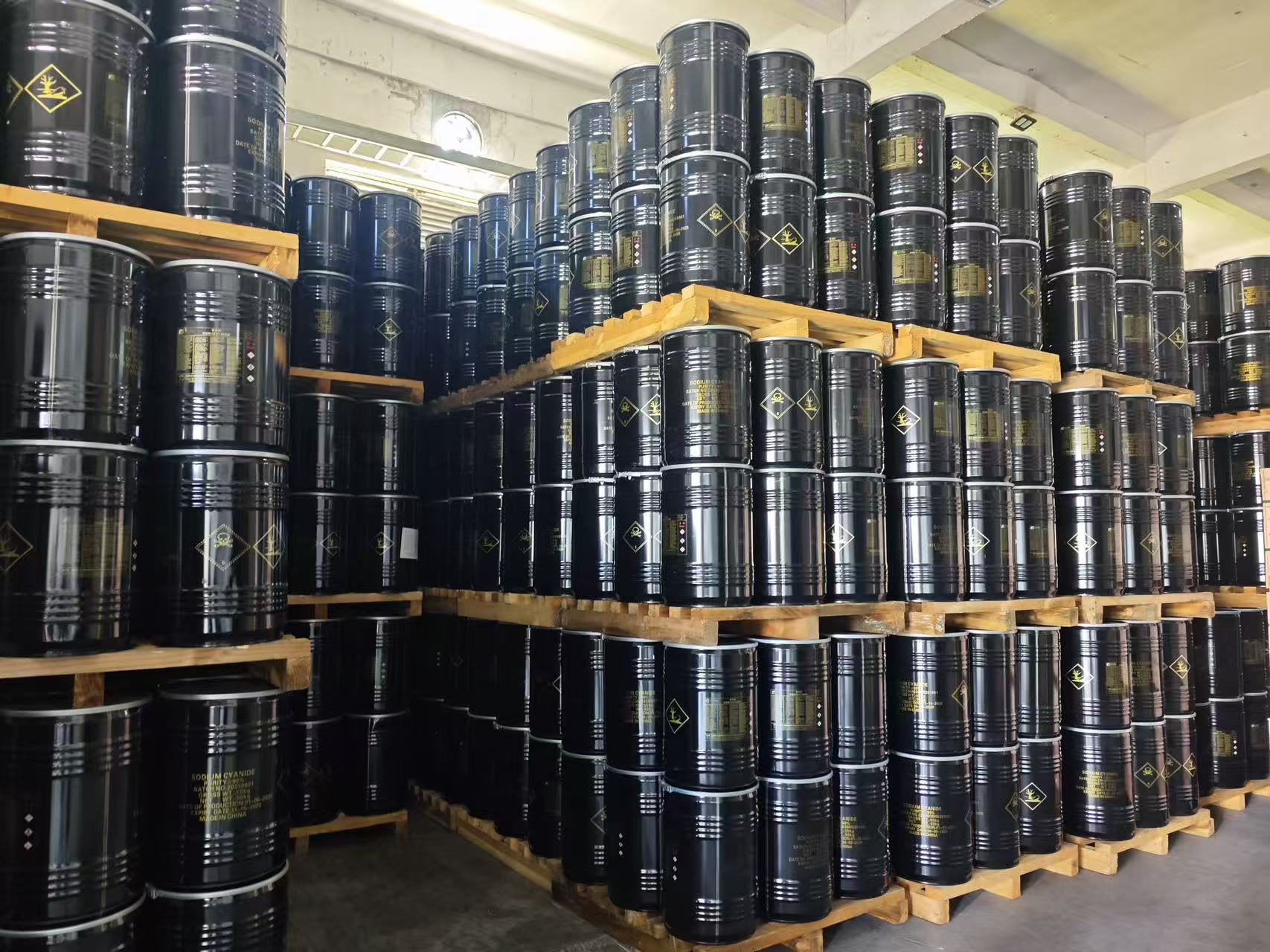
AuCyan™ Sodium Cyanide NaCN (≥98.3%) supplies leaching at 18 MT per container. AuCarb™ Gold Recovery Coconut Shell Activated Carbon (≥99% Hardness) is specified differently for column and agitated service at 15 MT per container. AuLeach™ Gold Leaching Agent (GDA) – Non-Hazardous is evaluated where permitted at 28 MT. All ship with batch COA, TDS and MSDS in 25 kg heavy-duty laminated PE bags under FOB/CIF terms.
3b. Ramp-up is where carbon is lost
A 69% quarter-on-quarter production increase is good news with a hidden cost: ramp-up is the period when consumables are least controlled. Solution grades swing as new pad areas come online, irrigation rates are adjusted, and carbon is moved between columns to balance loading. Each change creates a window in which gold-bearing fines can leave the circuit or carbon can be loaded unevenly before elution. The mitigation is unglamorous but effective — log column inlet and outlet grades daily, sample carbon loading weekly, and keep a running mass balance rather than relying on monthly averages. When the 2028 CIL plant starts, the same discipline transfers directly, with the added variable of tank abrasion. Qualifying both grades during the current heap-leach phase is the only way to avoid a second learning curve in 2028.
3c. Ramp-up is where carbon is lost
A 69% quarter-on-quarter increase is good news with a hidden cost: ramp-up is the period when consumables are least controlled. Solution grades swing as new pad areas come online, irrigation rates are adjusted and carbon is moved between columns to balance loading. Each change creates a window in which gold-bearing fines can leave the circuit or carbon can load unevenly before elution. The mitigation is unglamorous but effective: log column inlet and outlet grades daily, sample carbon loading weekly and keep a running mass balance instead of relying on monthly averages. When the 2028 CIL plant starts, the same discipline transfers directly with the added variable of tank abrasion. Qualifying both grades during the current heap-leach phase is the only way to avoid a second learning curve.
5. FAQ
Q1 — What did EMAS report?
US$43 million EBITDA with gold production up 69% quarter on quarter.
Q2 — What is Pani's resource?
7.0 million ounces of gold with an estimated 15-year mine life.
Q3 — What is planned for 2028?
A CIL facility scaling to 12 Mt/y by 2029.
Q4 — Does carbon spec change between stages?
Yes — column service favours activity; CIL favours hardness and low attrition.
Q5 — What terms are available?
FOB or CIF with batch COA, TDS and MSDS.
Q6 — Can carbon be tested first?
Yes — complimentary AuCarb™ and AuLeach™ samples for laboratory testing.
Qualify stage two during stage one
Send both flowsheets. We return a two-stage carbon and reagent specification with staged delivery terms.
Contact Us · BC1100 · Golden Triangle overview · Industry News
WhatsApp +86 173 9270 5576 · info@unitedchemicalcn.com
Source: Macau Business, reporting on PT Merdeka Gold Resources Tbk (EMAS) results, November 2026.
- Random Content
- Hot content
- Hot review content
- How do I choose the right flocculant?
- Etidronic acid | HEDP
- Cyanuric acid
- Alkyl Hydroxamic Acid 60%
- Kerosene (petroleum) hydrodesulfurized
- 1Discounted Sodium Cyanide (CAS: 143-33-9) for Mining - High Quality & Competitive Pricing
- 2Sodium Cyanide 98.3% CAS 143-33-9 NaCN gold dressing agent Essential for Mining Chemical Industries
- 3China's New Regulations on Sodium Cyanide Exports and Guidance for International Buyers
- 4Sodium Cyanide (CAS: 143-33-9) End user certificate (Chinese and English version)
- 5International Cyanide(Sodium cyanide) Management Code - Gold Mine Acceptance Standards
- 6China factory Sulfuric Acid 98%
- 7Anhydrous Oxalic acid 99.6% Industrial Grade
- 1Sodium Cyanide 98.3% CAS 143-33-9 NaCN gold dressing agent Essential for Mining Chemical Industries
- 2High Purity · Stable Performance · Higher Recovery — sodium cyanide for modern gold leaching
- 3United Chemical's Research Team Demonstrates Authority Through Data-Driven Insights
- 4AuCyan™ High-Performance Sodium Cyanide | 98.3% Purity for Global Gold Mining
- 5Digital Electronic Detonator(Delay time 0~ 16000ms)
- 6High-strength, High-precision Shock Tube Detonator
- 7industry Electric Detonator


Online message consultation
Add comment: