
UNITED CHEMICAL · PRODUCT TECHNOLOGY · 20 NOVEMBER 2026
A non-cyanide route is only as good as its control logic
Operations evaluate a leaching agent on peak recovery and stop there. In practice the operating cost is set by three variables that move together.
Operations evaluate a gold leaching agent on peak recovery and stop there. In practice the operating cost is set by pH, reagent dosage and solution chemistry moving together. AuLeach™ Gold Leaching Agent (GDA) – Non-Hazardous ships as a common chemical and is used in Heap leaching and Vat leaching circuits where permissible cyanide use is constrained or permitting is difficult. This guide shows how to tune it without rebuilding the plant.
1. Where the non-cyanide route fits
Three situations favour a non-cyanide lixiviant: jurisdictions where cyanide permitting is constrained; sites located far from licensed cyanide supply chains; and ores where cyanide consumption is uneconomic because of base-metal demand. In each case the decision should be made on test work, not on assumption. The comparison is straightforward: run the same ore through a conventional Carbon-in-Leach bottle roll and a GDA bottle roll, then compare extraction, consumption and solution chemistry.
For projects where cyanide remains the preferred route, AuCyan™ Sodium Cyanide NaCN (≥98.3%) remains the reference reagent. The two routes are complementary, not competing, and a technical team should be able to model both.
2. Bottle-roll test design
Start with the ore, not the reagent. Characterise each ore domain separately. A typical programme uses 1 kg of pulverised ore at 40% solids, with three dosage levels and a control, sampled at 2, 6, 12 and 24 hours. Record gold extraction, reagent consumption and pH drift at every point. The shape of the extraction curve tells you whether the circuit is reagent-limited or kinetics-limited.
| Test variable | Typical range | What it reveals |
|---|---|---|
| Solids content | 35–45% | Mixing and reagent contact |
| Dosage levels | Low / mid / high | Economical dose |
| pH setpoints | Site-specific band | Stability window |
| Sample times | 2 / 6 / 12 / 24 h | Kinetics curve |
The Golden Triangle — three products, one supplier
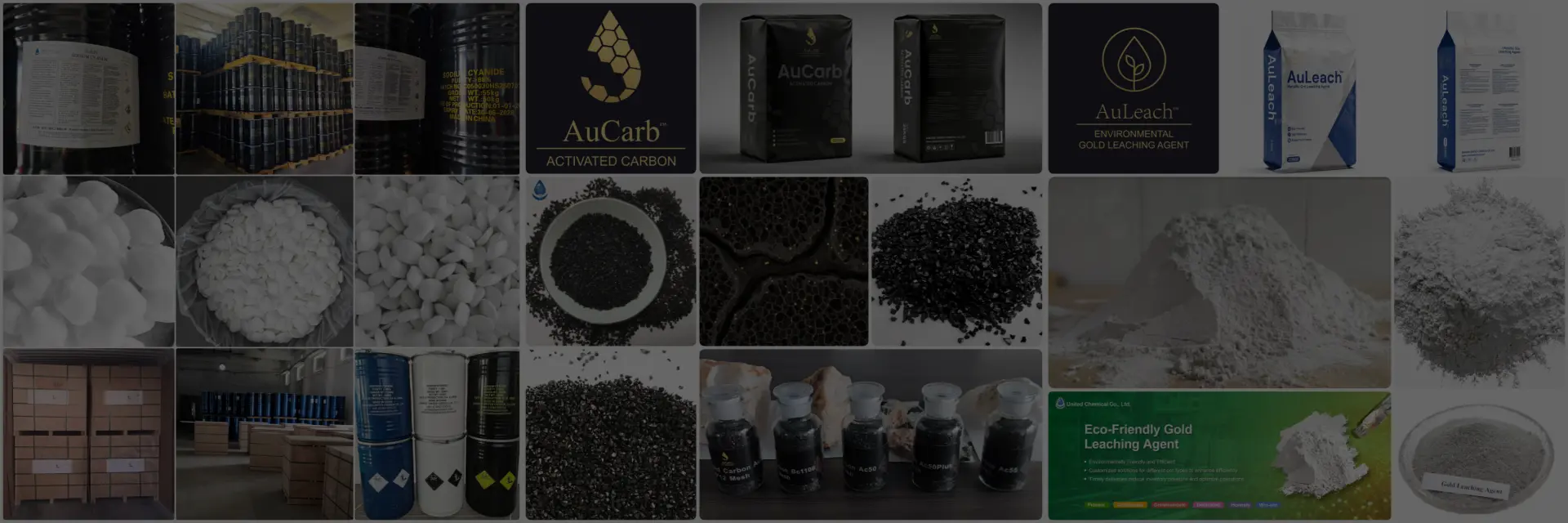
AuCyan™ Sodium Cyanide NaCN (≥98.3%) · AuCarb™ Gold Recovery Coconut Shell Activated Carbon (≥99% Hardness) · AuLeach™ Gold Leaching Agent (GDA) – Non-Hazardous
3. pH control — the master variable
pH governs reagent stability, gold surface chemistry and the behaviour of interfering species. Establish a site-specific setpoint from bottle-roll work and hold it with automatic control. Drift outside the agreed band shows up first as slower extraction, then as higher consumption. In a Vat leaching circuit, pH should be logged at the top, middle and bottom of each vat to detect stratification.
4. Split dosing and the knee of the curve
If the first half of the dose delivers 80% of extraction and the second half delivers 4%, the second half is not buying recovery — it is buying inventory. Split dosing with measurement lets you stop at the knee of the curve. On a 2,000 t/day Vat leaching circuit, trimming an unproductive 0.15 kg/t saves around 300 kg/day, or roughly 110 t/year, with no change in gold output.
Unproductive dose: 0.15 kg/t
Daily saving at 2,000 t/day: 300 kg/day
Annual saving: ≈ 110 t/year
5. Heap leaching versus Vat leaching commissioning
| Step | Heap leaching | Vat leaching |
|---|---|---|
| 1 — Characterise | Column tests per ore domain | Bottle roll per ore domain |
| 2 — Set pH | Irrigation solution control | Vat solution control |
| 3 — Dose | Split across irrigation stages | Split across leach cycles |
| 4 — Recover | Carbon-in-Column from pregnant solution | Carbon-in-Pulp or solution wash |
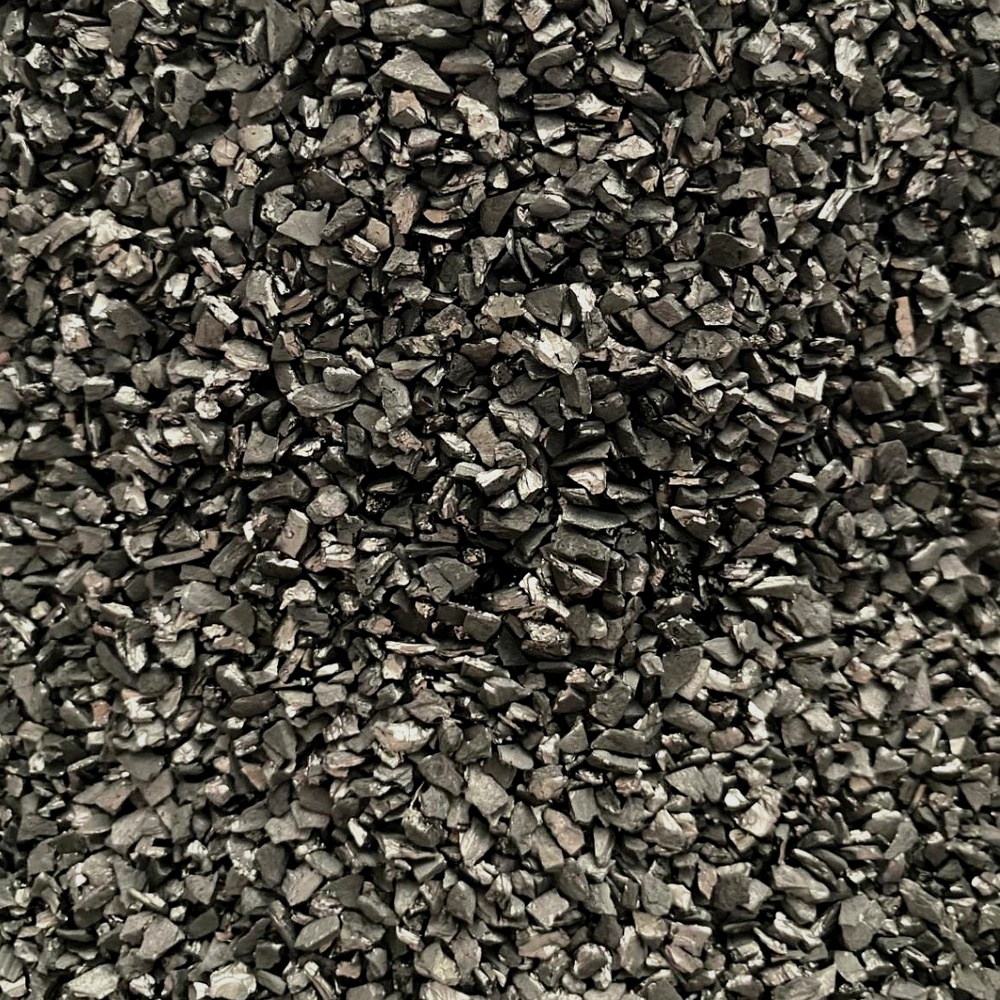
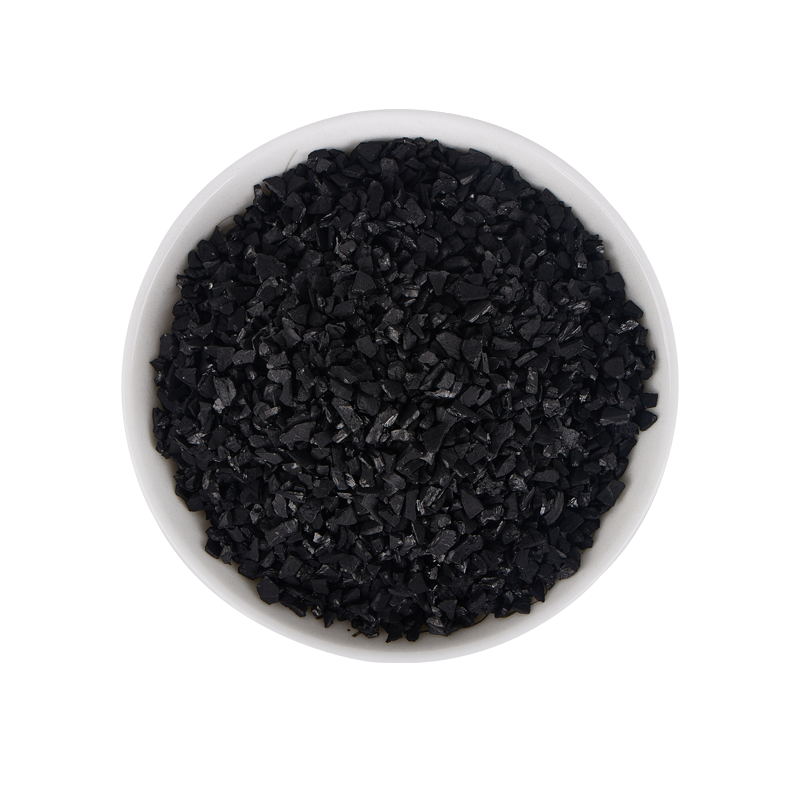
Recovery of dissolved gold from the pregnant solution is a separate design step. AuCarb™ Gold Recovery Coconut Shell Activated Carbon (≥99% Hardness) is used in Carbon-in-Column service for clarified heap-leach solutions, selected on K and R values from the same test programme.
6. Consumption tracking
Log reagent consumption per tonne, per pad or per vat, and compare against the test-work band every shift. A divergence of more than 10% from the bottle-roll expectation should trigger a review of pH control, ore blending and dosing equipment before any additional reagent is ordered.
7. Supply and documentation
AuLeach™ GDA ships as a common chemical with a batch COA, TDS and MSDS, in 25 kg heavy-duty laminated PE bags. MOQ is 1×20' FCL ≈ 28 MT under FOB/CIF terms. United Chemical serves more than 77 countries. Complimentary samples of AuLeach™ and AuCarb™ are available for independent laboratory testing before commercial supply.
8. FAQ
Q1 — Is this a non-cyanide system?
Yes. AuLeach™ GDA is a non-cyanide gold leaching agent supplied as a common chemical.
Q2 — Do I need to rebuild my circuit?
Typically no. The route is designed for existing Heap leaching and Vat leaching circuits, subject to test work.
Q3 — How is the reagent described for handling?
It is described as Non-Hazardous, with a batch COA, TDS and MSDS. No stronger characterisation is made.
Q4 — How do I choose the dose?
From a three-level bottle-roll programme, stopping at the knee of the extraction curve.
Q5 — What MOQ and terms apply?
1×20' FCL ≈ 28 MT, FOB or CIF.
Q6 — Can the gold be recovered on Carbon?
Yes. AuCarb™ carbon in Carbon-in-Column or Carbon-in-Pulp service is selected from the same test programme.
Commission a leach trial
Send ore grade, pH data and circuit configuration. We will return a bottle-roll protocol, a dosing curve and a landed-cost estimate.
Contact Us · Leaching reagents · Three-product overview · Chemical FAQs · Industry News
WhatsApp +86 173 9270 5576 · info@unitedchemicalcn.com
- Random Content
- Hot content
- Hot review content
- industry Electric Detonator
- 99.5% min Ammonium Chloride For Industrial Use
- Sodium alpha olefin sulfonate (AOS)
- What are the storage and handling precautions for mining chemicals?
- Calcium hydroxide Industrial Grade 90%
- 1Discounted Sodium Cyanide (CAS: 143-33-9) for Mining - High Quality & Competitive Pricing
- 2Sodium Cyanide 98.3% CAS 143-33-9 NaCN gold dressing agent Essential for Mining Chemical Industries
- 3China's New Regulations on Sodium Cyanide Exports and Guidance for International Buyers
- 4Sodium Cyanide (CAS: 143-33-9) End user certificate (Chinese and English version)
- 5International Cyanide(Sodium cyanide) Management Code - Gold Mine Acceptance Standards
- 6China factory Sulfuric Acid 98%
- 7Anhydrous Oxalic acid 99.6% Industrial Grade
- 1Sodium Cyanide 98.3% CAS 143-33-9 NaCN gold dressing agent Essential for Mining Chemical Industries
- 2High Purity · Stable Performance · Higher Recovery — sodium cyanide for modern gold leaching
- 3United Chemical's Research Team Demonstrates Authority Through Data-Driven Insights
- 4AuCyan™ High-Performance Sodium Cyanide | 98.3% Purity for Global Gold Mining
- 5Digital Electronic Detonator(Delay time 0~ 16000ms)
- 6High-strength, High-precision Shock Tube Detonator
- 7industry Electric Detonator


Online message consultation
Add comment: