
UNITED CHEMICAL · INDUSTRY NEWS · 20 NOVEMBER 2026
Depth extension turns an exploration result into a supply-planning input
A longer mine plan changes the reagent question from campaign economics to specification durability.
OceanaGold Philippines reported a 66-metre intercept grading 8.07 grams per tonne gold equivalent at its Didipio mine, with drilling confirming mineralisation below the current resource shell, according to Context.ph on 18 November 2026. The company has completed 34,562 metres of drilling this year against an expected US$10 million exploration budget, and plans a mineral resource update by year-end. A second drill rig is expected before the end of 2026. For a consumables planner, the significance is not the grade of a single hole — it is the extended horizon over which the circuit must keep performing.
1. Why a drilling result reaches the reagent budget
A deeper resource means a longer mine plan, and a longer mine plan changes the question a procurement team asks. It is no longer "what does this campaign need?" but "what specification will still work when ore geometry changes at depth?" Gold-copper mineralisation also raises the cyanide-demand question: copper consumes cyanide before gold does, so the leach setpoint must be tested against the deeper ore, not assumed from the current one.
Depth brings other changes. Rock stress increases, grinding circuits work harder, and ore abrasiveness can rise. Carbon that survives today's feed may shed fines on tomorrow's. That is why a depth extension is a reason to re-baseline hardness and attrition, not simply to extend an existing purchase order.
2. What to lock in before the resource update
| Work item | Reason | Output |
|---|---|---|
| Bottle-roll on deep ore | Copper changes cyanide demand | Dosage envelope |
| Carbon qualification | Longer life, more abrasion cycles | Hardness and attrition baseline |
| Supply schedule | Multi-year circuit horizon | Staged 1×20' FCL framework |
| Alternative route | Cyanide demand may become uneconomic | GDA comparison test |
The Golden Triangle — three products, one supplier
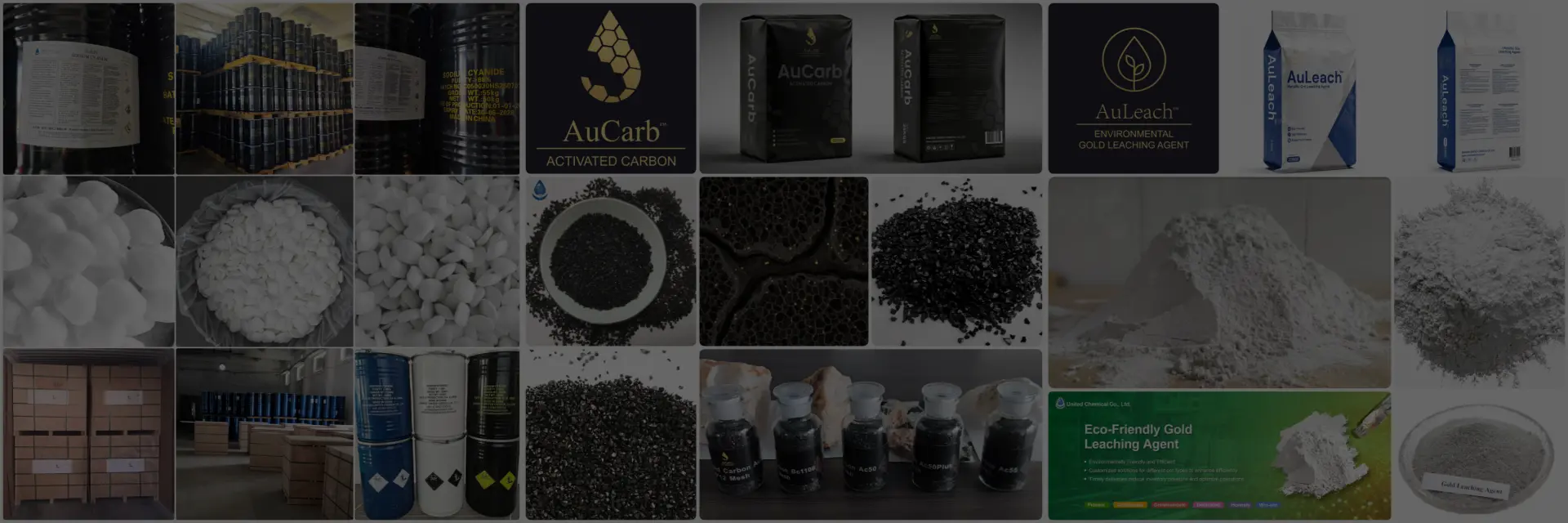
AuCyan™ Sodium Cyanide NaCN (≥98.3%) · AuCarb™ Gold Recovery Coconut Shell Activated Carbon (≥99% Hardness) · AuLeach™ Gold Leaching Agent (GDA) – Non-Hazardous
3. Worked copper-demand calculation
If deeper ore carries 0.25% copper instead of 0.10%, the incremental copper through a 3,000 t/day plant is 3,000 × 0.0015 = 4.5 tonnes per day. Forming copper-cyanide complexes can consume several kilograms of cyanide per kilogram of copper dissolved. Even a fraction of that copper reacting adds hundreds of kilograms of daily demand — a change that no desktop calculation can predict and only bottle-roll work will reveal.
Incremental copper: 3,000 t/day × 0.15% = 4.5 t/day
Implication: cyanide demand must be re-measured on deep ore
4. Specification over volume
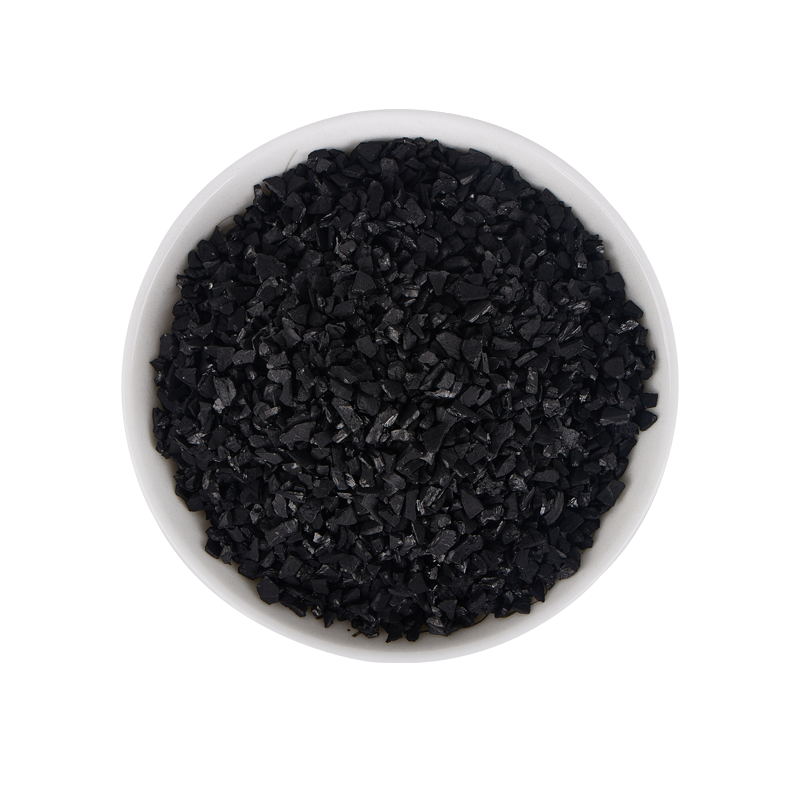
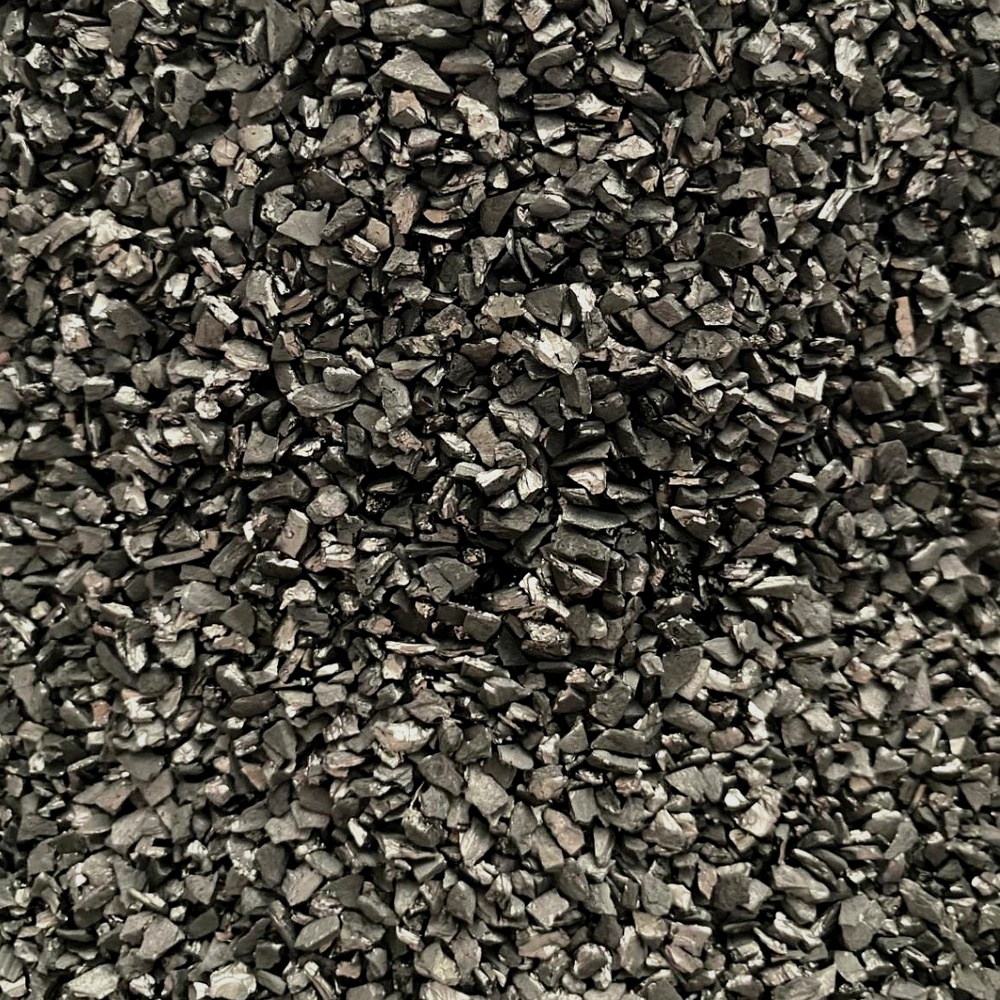
For a long-life circuit, the right Carbon is the one that keeps its structure over repeated adsorption and regeneration cycles. AuCarb™ Gold Recovery Coconut Shell Activated Carbon (≥99% Hardness) is specified at ball-pan hardness ≥99% with AARL attrition ≤1.5%, supplied in 25 kg heavy-duty laminated PE bags with a batch COA, TDS and MSDS. MOQ is 1×20' FCL ≈ 15 MT under FOB/CIF terms. United Chemical serves more than 77 countries.
4b. What the reported financials tell a supplier
The same reporting described a strong nine-month result: net income rose 95.1% to US$95.6 million and revenue climbed 36.9% to US$434.4 million, helped by higher gold and copper prices, even as gold output slipped 3.6% to 64,500 ounces and copper fell 8.8% to 9,300 tonnes. The 2026 guidance of 85,000–105,000 ounces of gold and 13,000–15,000 tonnes of copper remains in place. That combination — higher prices, slightly lower output — is exactly when consumable efficiency becomes visible on the income statement. When the metal price does the heavy lifting, the controllable costs are scrutinised more closely, and reagent consumption per recovered ounce becomes a reporting line rather than an afterthought. It also means a supplier should expect questions about cost stability across the contract term, not just about unit price. A documented carbon specification with predictable attrition gives a procurement team something a spot quote cannot: a defensible forecast of make-up volumes over the life of the resource.
4c. Solution clarity and carbon-in-column fit
Gold-copper operations often clarify their pregnant solution before adsorption, because fine clay and suspended solids foul carbon surfaces and slow loading. Where a circuit uses Carbon-in-Column (CIC) service, solution clarity becomes a design parameter as much as an operating one. The carbon grade should be selected on K and R values measured with the site's own solution, not with a synthetic standard: copper and dissolved salts change loading behaviour. BC1100 is the grade typically evaluated for column and Heap leaching service, while AC50 and its higher-loading siblings serve agitated CIP/CIL duties. That distinction should be settled during the resource-update window, before a long-term purchase specification is locked.
5. FAQ
Q1 — What was reported at Didipio?
A 66 m intercept at 8.07 g/t AuEq and confirmation of mineralisation below the resource shell.
Q2 — Why does gold-copper ore matter for reagents?
Copper forms cyanide complexes, raising reagent demand above what gold alone would require.
Q3 — When is the resource update?
By year-end 2026, according to the reporting.
Q4 — Should carbon be re-qualified?
Yes — deeper ore can be more abrasive, changing hardness and attrition requirements.
Q5 — What is the MOQ?
1×20' FCL ≈ 15 MT of carbon, FOB or CIF.
Q6 — Is a non-cyanide option available?
Yes — AuLeach™ Gold Leaching Agent (GDA) – Non-Hazardous can be evaluated by bottle-roll comparison.
Plan beyond the current resource shell
Send your ore chemistry and mine-life horizon. We will return a carbon and leach specification for the long run.
Contact Us · AC50 · AuCarb™ guide · Industry News
WhatsApp +86 173 9270 5576 · info@unitedchemicalcn.com
Sources: Context.ph, 18 November 2026; Mining.com.au, "OceanaGold unveils gold and copper growth at Didipio".
- Random Content
- Hot content
- Hot review content
- Plastic Shock Tube(VOD≧1600m/s)
- Thiourea 99% high activity Professional Producer
- Featured Poducts Sodium Cyanide
- How do I choose the right flotation reagent?
- Do flotation reagents have environmental impacts?
- 1Discounted Sodium Cyanide (CAS: 143-33-9) for Mining - High Quality & Competitive Pricing
- 2Sodium Cyanide 98.3% CAS 143-33-9 NaCN gold dressing agent Essential for Mining Chemical Industries
- 3China's New Regulations on Sodium Cyanide Exports and Guidance for International Buyers
- 4Sodium Cyanide (CAS: 143-33-9) End user certificate (Chinese and English version)
- 5International Cyanide(Sodium cyanide) Management Code - Gold Mine Acceptance Standards
- 6China factory Sulfuric Acid 98%
- 7Anhydrous Oxalic acid 99.6% Industrial Grade
- 1Sodium Cyanide 98.3% CAS 143-33-9 NaCN gold dressing agent Essential for Mining Chemical Industries
- 2High Purity · Stable Performance · Higher Recovery — sodium cyanide for modern gold leaching
- 3United Chemical's Research Team Demonstrates Authority Through Data-Driven Insights
- 4AuCyan™ High-Performance Sodium Cyanide | 98.3% Purity for Global Gold Mining
- 5Digital Electronic Detonator(Delay time 0~ 16000ms)
- 6High-strength, High-precision Shock Tube Detonator
- 7industry Electric Detonator


Online message consultation
Add comment: