
UNITED CHEMICAL · INDUSTRY NEWS · 20 NOVEMBER 2026
Central Asia's signal: more ore, more reagent qualification
Ore up, concentrate down — the gap is where recovery economics live.
Uzbekistan plans to raise annual gold production to 175 tonnes by 2030, President Shavkat Mirziyoyev said at the first Uzbekistan–Türkiye High-Level Business Support Council on 19 November, according to Daryo.uz. In the same week, Azerbaijan Times reported that Kazakhstan produced 34.58 million tonnes of gold-bearing ore in January–October 2026, up 12.4% year on year, citing the Bureau of National Statistics. Concentrate output fell 18% over the same period to 221,100 tonnes. Two state-level signals in one week point to sustained capacity growth — and to a procurement environment where specification discipline decides who wins the work.
1. Ore up, concentrate down: the recovery question
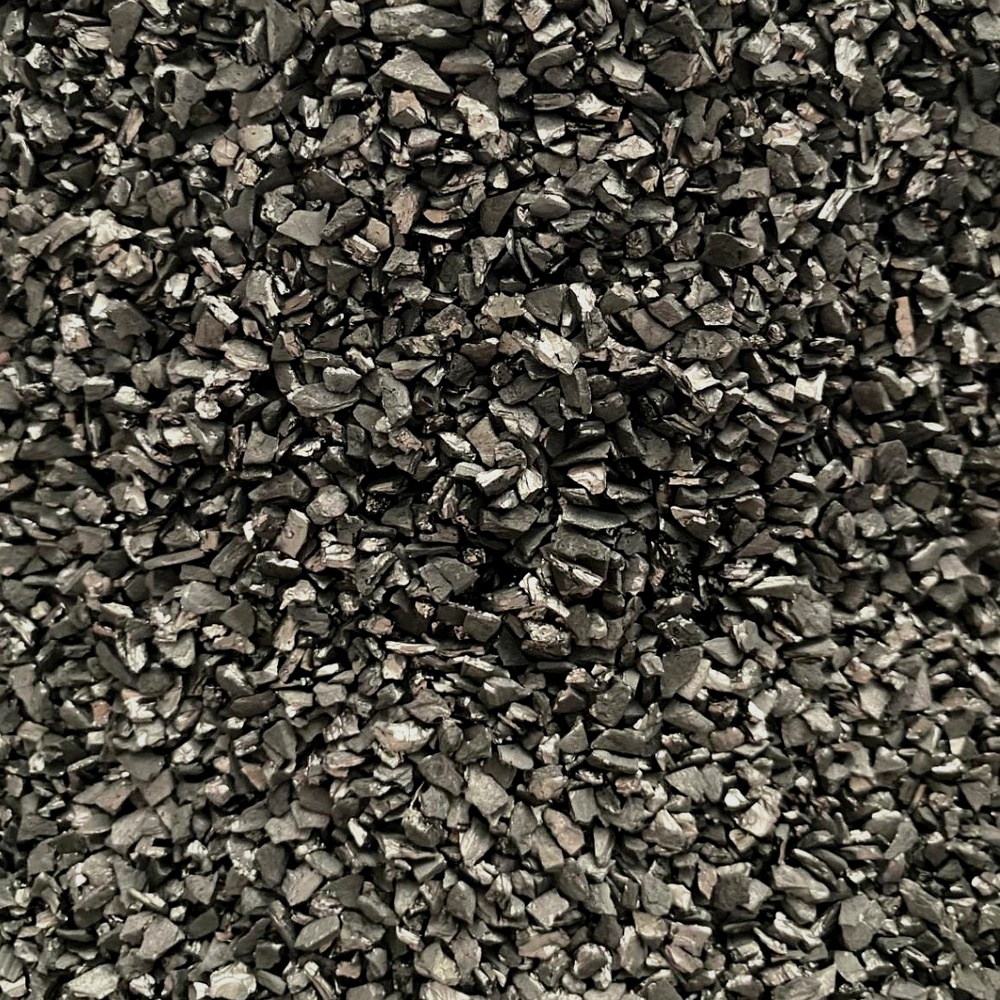
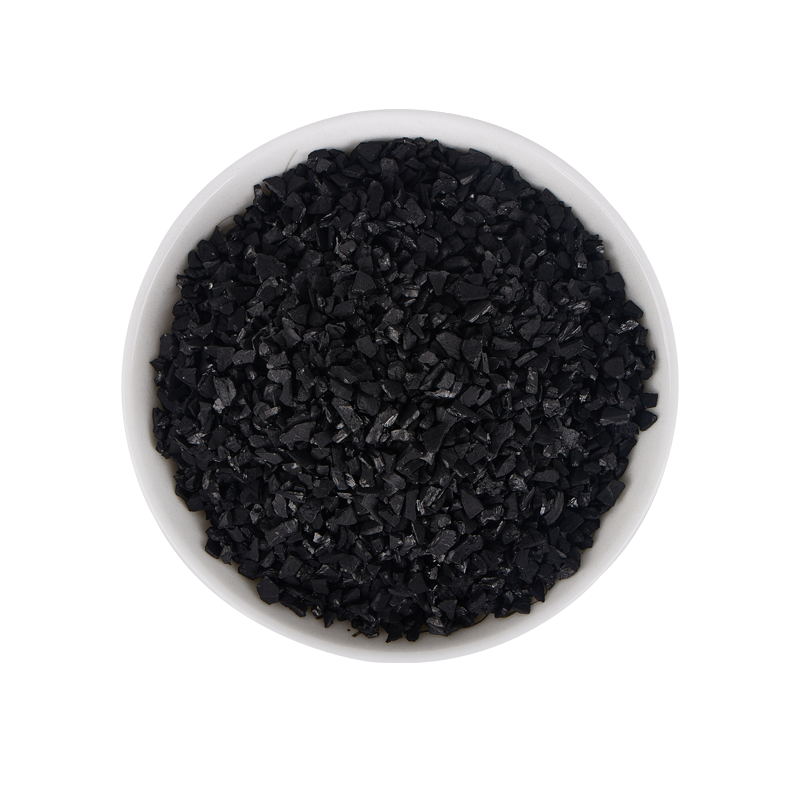
A 12.4% rise in ore alongside an 18% fall in concentrate points to grade and recovery effects, not just volume. For a reagent buyer this is the important part: when head grade softens and recovery matters more, the specification of Carbon and leach chemistry moves up the value chain. Cheap carbon that sheds fines costs more per recovered ounce in exactly this scenario.
The arithmetic is unforgiving. If recovery falls by one percentage point on a 1 g/t ore stream, the lost gold is 0.01 g per tonne. At 10,000 t/day that is 100 g/day, or about 33 ounces per year — revenue that no saving on a cheaper carbon can replace. Recovery is the lever; reagent specification is how you protect it.
2. Three implications for procurement
| Signal | Plant-level reading | Supplier response |
|---|---|---|
| 175 t target by 2030 | Sustained capacity build-out | Qualify consumables early |
| +12.4% ore output | Higher throughput demand | Stage 1×20' FCL deliveries |
| −18% concentrate | Recovery efficiency under focus | Hardness and dosage documentation |
The Golden Triangle — three products, one supplier
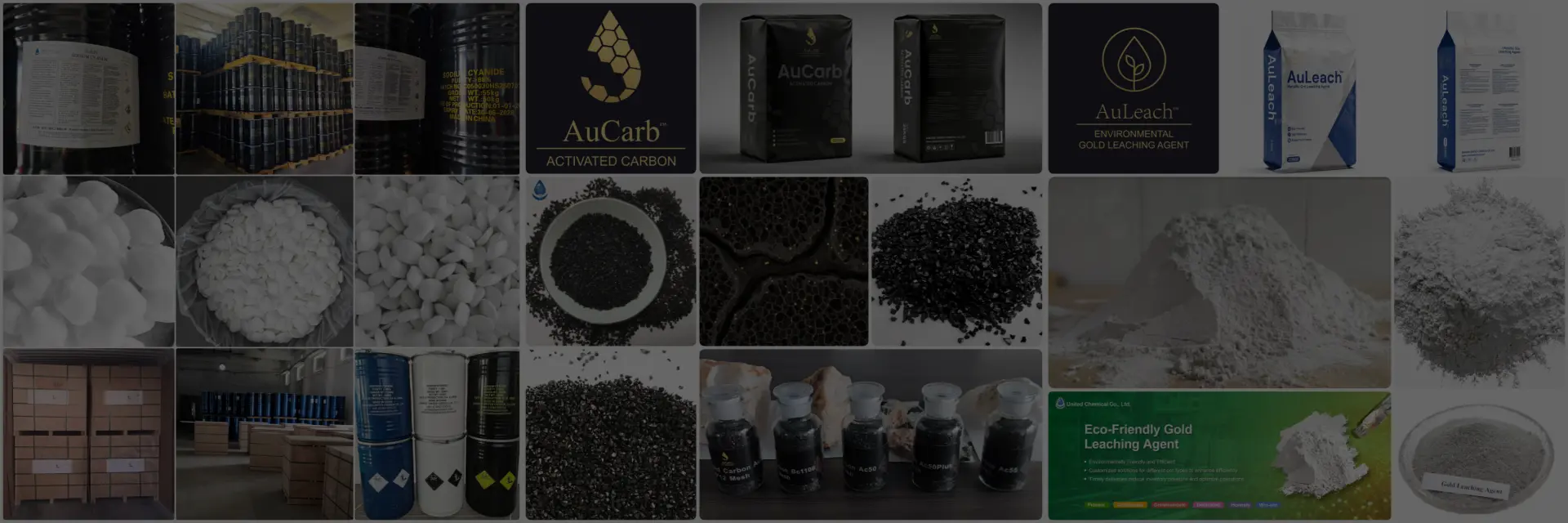
AuCyan™ Sodium Cyanide NaCN (≥98.3%) · AuCarb™ Gold Recovery Coconut Shell Activated Carbon (≥99% Hardness) · AuLeach™ Gold Leaching Agent (GDA) – Non-Hazardous
3. Worked throughput calculation
A 12.4% output increase on a base of 30.77 million tonnes adds roughly 3.8 million tonnes of ore over a comparable ten-month period. If carbon make-up runs at 0.04 kg per tonne, that incremental ore implies about 152 tonnes of additional carbon demand across the sector over the same period — if recovery practice holds constant. If recovery deteriorates, the demand is higher. This is why the concentrate figure deserves as much attention as the ore figure.
Incremental ore: ≈ 3.8 Mt over ten months
Implied carbon make-up: ≈ 152 t at 0.04 kg/t
4. Qualification is the entry ticket
Central Asian buyers are technically sophisticated and specify tightly. A supplier must arrive with documentation, not claims. Every batch of AuCarb™ Gold Recovery Coconut Shell Activated Carbon (≥99% Hardness) carries a COA, TDS and MSDS with ball-pan hardness, attrition and activity. AuCyan™ Sodium Cyanide NaCN (≥98.3%) ships under licensed import with an End-Use Certificate at an 18 MT container; carbon at 15 MT and AuLeach™ Gold Leaching Agent (GDA) – Non-Hazardous at 28 MT. All terms are FOB/CIF; United Chemical serves more than 77 countries.
4b. The permitting and licensing dimension
Central Asia's expansion is state-led, and that changes the shape of a supplier conversation. The Uzbekistan announcement linked the gold target to a wider industrial programme — a US$300 billion GDP ambition, doubled industrial output and 25 GW of renewable capacity by 2030 — and explicitly invited international partners into mining and mineral processing. For a chemical supplier, the practical consequence is that qualification and compliance documentation carry at least as much weight as price. Sodium cyanide is a controlled dangerous good (UN1689, DG Class 6.1) that cannot move without an import licence and End-Use Certificate; the administrative lead time must be built into any delivery schedule for a new or expanded plant. Activated carbon and AuLeach™ Gold Leaching Agent (GDA) – Non-Hazardous follow a different path as ordinary cargo with a batch COA, TDS and MSDS. A supplier who can state that distinction clearly, and quote both routes on FOB/CIF terms, removes a layer of uncertainty from a procurement team's plan. This is not a commercial nicety — in tightly regulated markets, the ability to document a shipment is what determines whether an ore ever reaches a leach tank on schedule.
4c. What a recovery-focused specification includes
If the strategic goal is more recovered ounces from the same ore, the purchase order should reflect it. For carbon, that means specifying ball-pan hardness and AARL attrition alongside K and R values, because a granule that breaks down carries gold into the fines. For the leach reagent, it means specifying a dissolution profile and a documented dosage method rather than assay alone. For both, it means requiring a batch COA so that the twentieth container matches the first. These are the same disciplines used at operations in more than 77 countries, and they scale from a single plant to a national build-out without changing the underlying method.
5. FAQ
Q1 — What is Uzbekistan's target?
175 tonnes of annual gold production by 2030, per Daryo.uz.
Q2 — What happened in Kazakhstan?
Gold-bearing ore output rose 12.4% in January–October 2026; concentrate fell 18%.
Q3 — Why does falling concentrate matter?
It points to grade and recovery effects, which put reagent specification under scrutiny.
Q4 — What documentation is needed?
Batch COA, TDS and MSDS, plus licensed-import papers for Sodium Cyanide.
Q5 — What MOQ and terms?
1×20' FCL — 18 MT cyanide, 15 MT carbon, 28 MT leaching agent — FOB or CIF.
Q6 — Can you support a qualification programme?
Yes. Technical support covers test design and staged supply, with more than 77 countries served.
Plan for the 2030 build-out
Send your throughput and recovery data. We will return a specification dossier and a staged supply schedule.
Contact Us · Three-product overview · Chemical FAQs · Industry News
WhatsApp +86 173 9270 5576 · info@unitedchemicalcn.com
Sources: Daryo.uz, 19 November 2026; Azerbaijan Times, 19 November 2026.
- Random Content
- Hot content
- Hot review content
- How does Sodium Ferrocyanide help in the mineral flotation process?
- How do I choose the right flotation reagent?
- How do I choose the right flocculant?
- Are there specific regulations for the use of mining chemicals?
- Potassium ethylxanthate 90% PEX
- 1Discounted Sodium Cyanide (CAS: 143-33-9) for Mining - High Quality & Competitive Pricing
- 2Sodium Cyanide 98.3% CAS 143-33-9 NaCN gold dressing agent Essential for Mining Chemical Industries
- 3China's New Regulations on Sodium Cyanide Exports and Guidance for International Buyers
- 4Sodium Cyanide (CAS: 143-33-9) End user certificate (Chinese and English version)
- 5International Cyanide(Sodium cyanide) Management Code - Gold Mine Acceptance Standards
- 6China factory Sulfuric Acid 98%
- 7Anhydrous Oxalic acid 99.6% Industrial Grade
- 1Sodium Cyanide 98.3% CAS 143-33-9 NaCN gold dressing agent Essential for Mining Chemical Industries
- 2High Purity · Stable Performance · Higher Recovery — sodium cyanide for modern gold leaching
- 3United Chemical's Research Team Demonstrates Authority Through Data-Driven Insights
- 4AuCyan™ High-Performance Sodium Cyanide | 98.3% Purity for Global Gold Mining
- 5Digital Electronic Detonator(Delay time 0~ 16000ms)
- 6High-strength, High-precision Shock Tube Detonator
- 7industry Electric Detonator


Online message consultation
Add comment: