
UNITED CHEMICAL · INDUSTRY NEWS · 20 NOVEMBER 2026
A new gold zone moves metallurgy onto the critical path
At exploration stage, the right question is which route delivers recovery on the actual ore.
Sierra Nevada Gold reported shallow gold in the first four holes at the Central Gold Zone of its As Safra copper-gold project in Saudi Arabia, with the best intercept 57 metres at 1.15 g/t gold from 4 metres, according to Mining.com.au and Orecast, accessed 20 November 2026. The assays include 20 metres at 1.31 g/t from surface and 48 metres at 0.66 g/t with accompanying silver, lead and zinc. The company has completed 5,700 metres of a planned 25,000-metre phase-two programme, with further assays expected in December.
1. Polymetallic means testwork, not assumptions
Silver, lead and zinc alongside gold change the leaching picture. Base metals can consume reagent and interfere with recovery, so an early result like this is a signal to start bottle-roll and column tests, not to pick a reagent from a catalogue. At this stage the right question is which route — conventional cyanidation or a non-cyanide option — delivers recovery on the actual ore.
Near-surface mineralisation adds a second consideration: oxidation. Weathered material often leaches faster than fresh sulphide ore, but it can also carry clays that complicate solution percolation in a heap. Both factors must be captured in the test programme before a flowsheet is chosen.
2. The early-stage decision sequence
| Stage | Test | Decision it supports |
|---|---|---|
| 1 — Characterise | Head assay, acid/base accounting | Reagent demand envelope |
| 2 — Compare routes | Bottle-roll, cyanide vs alternative | Leach chemistry selection |
| 3 — Confirm | Column tests, Carbon loading | Heap leaching / Vat leaching fit |
| 4 — Document | Specification dossier | Procurement readiness |
The Golden Triangle — three products, one supplier
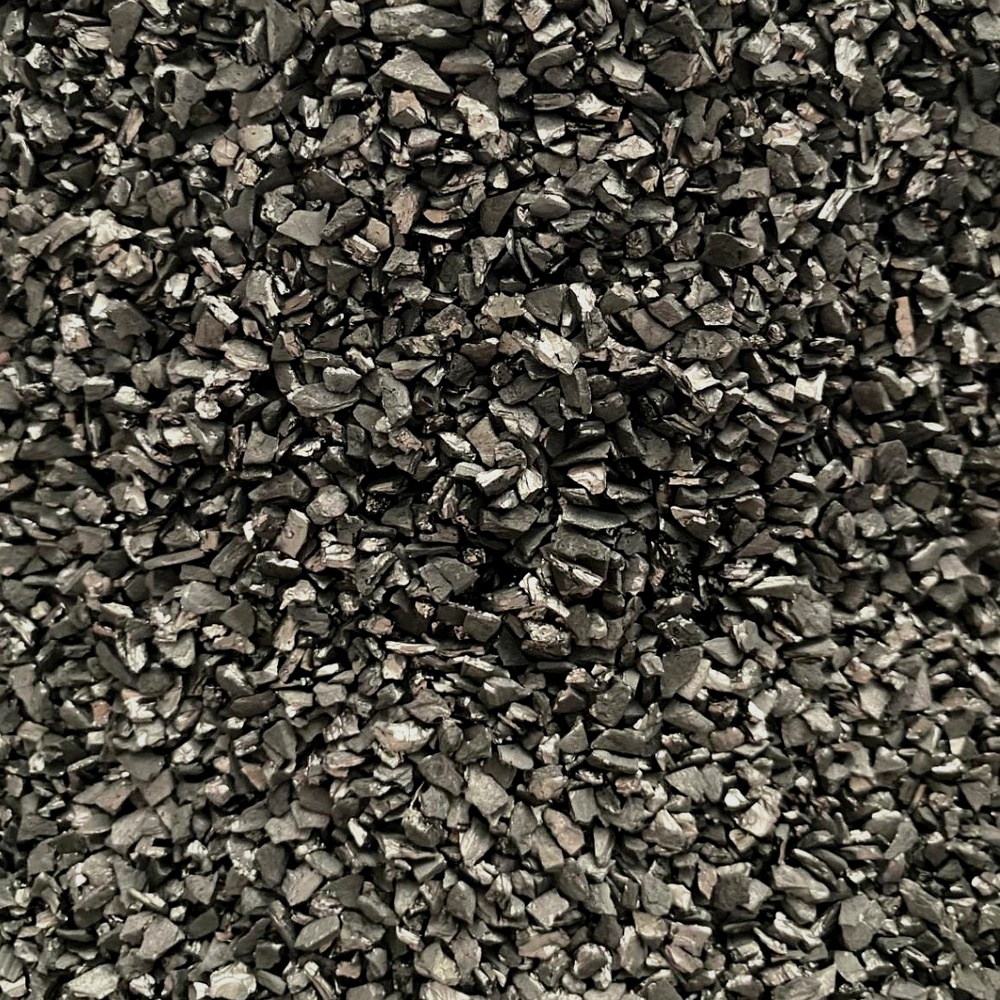
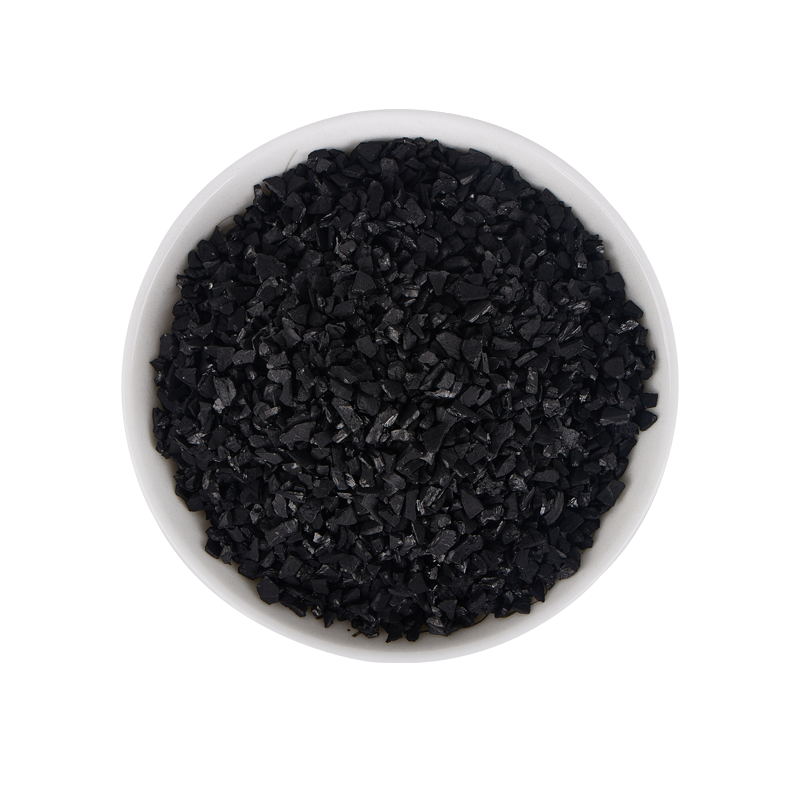
AuCyan™ Sodium Cyanide NaCN (≥98.3%) · AuCarb™ Gold Recovery Coconut Shell Activated Carbon (≥99% Hardness) · AuLeach™ Gold Leaching Agent (GDA) – Non-Hazardous
3. Worked route comparison
Suppose bottle-roll tests on a composite sample show 82% gold extraction with conventional cyanidation at 0.30 kg/t demand, and 74% extraction with a non-cyanide route at 0.45 kg/t demand. The higher-grade route is not automatically the right one. A buyer must value the eight-percentage-point recovery difference against reagent cost, permitting complexity and solution-chemistry risk. In a jurisdiction where cyanide permitting is constrained, the non-cyanide route may still win. The dossier should present both cases side by side.
Conventional route: 82% extraction at 0.30 kg/t demand
Non-cyanide route: 74% extraction at 0.45 kg/t demand
4. Samples before shipments
At exploration stage, scale is small but specification discipline should not be. Complimentary samples of AuLeach™ Gold Leaching Agent (GDA) – Non-Hazardous and AuCarb™ Gold Recovery Coconut Shell Activated Carbon (≥99% Hardness) support independent laboratory testing before any commercial commitment. When a project reaches production, commercial volumes start at 1×20' FCL — 18 MT for AuCyan™ Sodium Cyanide NaCN (≥98.3%), 15 MT for carbon and 28 MT for the leaching agent — under FOB/CIF terms, with a batch COA, TDS and MSDS in 25 kg heavy-duty laminated PE bags. United Chemical serves more than 77 countries.
4b. Sample representativity — the first thing to get right
An early-stage resource is heterogeneous by definition, and a bottle-roll result is only as good as the sample behind it. The reported intersections come from reverse-circulation drilling across a 400-metre-by-100-metre corridor with ancient workings and variable oxidation. A single high-grade interval should never become the metallurgical composite. The correct approach is to build composites by domain — oxide versus fresh, gold-dominant versus polymetallic — and to test each separately before blending a weighted average. Duplicate and blank samples should accompany the programme so that assay precision is known before recovery numbers are trusted. This discipline costs little at exploration stage and prevents a costly error later: designing a plant around a recovery figure that was measured on unrepresentative material. The same principle applies to every later stage, from column tests to the first commercial shipment, which is why a supplier's COA and a client's sampling plan are two halves of the same quality system.
4c. Column tests before a heap decision
Bottle rolls answer whether gold can be leached; column tests answer whether it can be leached at the particle size, irrigation rate and solution chemistry a heap will actually use. For near-surface material with clay, percolation is often the binding constraint rather than dissolution chemistry. A column programme should run at several crush sizes and irrigation rates, tracking pregnant-solution grade over time to build an extraction curve. Only then can a Heap leaching design be sized, and only then can carbon-in-column capacity be specified from the K and R values measured on the real pregnant solution. Rushing this step is the classic way an otherwise sound project arrives at commissioning with a flowsheet that cannot reach its test-work recovery.
5. FAQ
Q1 — What was the best intercept?
57 m at 1.15 g/t gold from 4 m, with silver, lead and zinc present.
Q2 — Why does polymetallic mineralisation matter?
Base metals consume reagent and can interfere with gold recovery, requiring test work.
Q3 — Which leach route should be chosen?
Only bottle-roll and column comparison on the actual ore can answer that.
Q4 — Are samples available?
Yes — complimentary samples of AuLeach™ and AuCarb™ for independent laboratory testing.
Q5 — What MOQ and terms apply at production stage?
1×20' FCL — 18 MT cyanide, 15 MT carbon, 28 MT leaching agent — FOB or CIF.
Q6 — What documentation ships?
Batch COA, TDS and MSDS in 25 kg heavy-duty laminated PE bags.
Start the metallurgy early
Send head assays from your first holes. We will propose a bottle-roll matrix and provide samples for independent testing.
Contact Us · Leaching reagents · Golden Triangle overview · Industry News
WhatsApp +86 173 9270 5576 · info@unitedchemicalcn.com
Sources: Mining.com.au and Orecast, accessed 20 November 2026; company assay results announced week of 18 November 2026.
- Random Content
- Hot content
- Hot review content
- Industrial concentrated nitric acid 55%-68%
- Sodium Isopropyl Xanthate 90% SIPX
- How do I choose the right flocculant?
- TuxingSun United Mining Mineral Research and Testing Center - Ore Element Testing Laboratory
- Anhydrous Oxalic acid 99.6% Industrial Grade
- 1Discounted Sodium Cyanide (CAS: 143-33-9) for Mining - High Quality & Competitive Pricing
- 2Sodium Cyanide 98.3% CAS 143-33-9 NaCN gold dressing agent Essential for Mining Chemical Industries
- 3China's New Regulations on Sodium Cyanide Exports and Guidance for International Buyers
- 4Sodium Cyanide (CAS: 143-33-9) End user certificate (Chinese and English version)
- 5International Cyanide(Sodium cyanide) Management Code - Gold Mine Acceptance Standards
- 6China factory Sulfuric Acid 98%
- 7Anhydrous Oxalic acid 99.6% Industrial Grade
- 1Sodium Cyanide 98.3% CAS 143-33-9 NaCN gold dressing agent Essential for Mining Chemical Industries
- 2High Purity · Stable Performance · Higher Recovery — sodium cyanide for modern gold leaching
- 3United Chemical's Research Team Demonstrates Authority Through Data-Driven Insights
- 4AuCyan™ High-Performance Sodium Cyanide | 98.3% Purity for Global Gold Mining
- 5Digital Electronic Detonator(Delay time 0~ 16000ms)
- 6High-strength, High-precision Shock Tube Detonator
- 7industry Electric Detonator


Online message consultation
Add comment: