
UNITED CHEMICAL · INDUSTRY NEWS · 20 NOVEMBER 2026
Two mines, two ore domains, one consumables problem
Merger integration is discussed in terms of systems and people. For a gold producer it also happens in the leach circuit.
Orezone Gold reported record quarterly production of 59,674 ounces and generated US$71.1 million in operating cash flow in Q3 2026, according to Mining.com.au on 16 November 2026. The Canadian producer acquired Casa Berardi in Québec from Hecla Mining for US$593 million in the first quarter, adding a second jurisdiction to its Bomboré operation in Burkina Faso. Higher grades are expected at both sites in Q4, and the company maintained its 2026 production guidance. For a supplier of leaching and adsorption chemicals, a two-jurisdiction portfolio is not two identical accounts — it is two different specification problems.
1. Integration happens at the reagent level first
Casa Berardi and Bomboré present different mineralogy, different water chemistry and different cyanide demand. A single purchase specification across both sites either over-pays at one or under-performs at the other. The integration work that never appears in the deal announcement is the decision to run two test programmes and hold two setpoints under one supply contract.
Consider copper. Even a small copper content in the ore forms stable copper-cyanide complexes, consuming reagent without producing gold. A site with 0.2% copper can carry a materially higher cyanide demand than a site with 0.02%. Without site-specific bottle-roll work, the higher-demand site runs short and the lower-demand site over-doses.
2. One specification, two test programmes
| Variable | Why it differs by site | Control method |
|---|---|---|
| Carbon demand | Grade and clay content change loading kinetics | Bottle-roll per ore domain |
| Cyanide consumption | Sulphide and copper content drive demand | Free-cyanide setpoint per circuit |
| Reagent logistics | Two countries, two import regimes | Licensed, staged deliveries |
| Carbon grade | Abrasiveness differs between ores | Hardness and attrition baseline |
The Golden Triangle — three products, one supplier
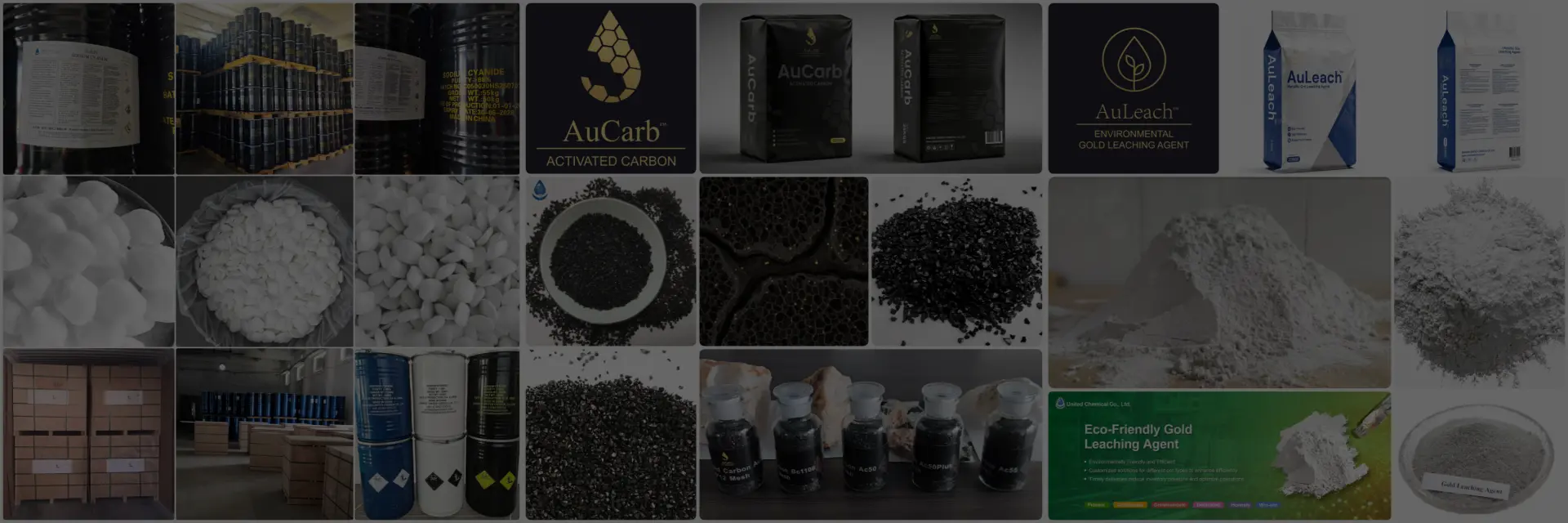
AuCyan™ Sodium Cyanide NaCN (≥98.3%) · AuCarb™ Gold Recovery Coconut Shell Activated Carbon (≥99% Hardness) · AuLeach™ Gold Leaching Agent (GDA) – Non-Hazardous
3. Worked comparison — same tonnes, different demand
Imagine each site treats 2,000 t/day. Site A measures cyanide demand at 0.22 kg/t; Site B, with higher copper, at 0.38 kg/t. Annual consumption at 330 operating days is 2,000 × 330 × 0.22 = 145.2 t at Site A and 250.8 t at Site B — a difference of over 100 tonnes per year. Buying on a single blended specification would either strand 100 tonnes of unused reagent at one site or starve the other. The correct structure is one supplier, one product specification, and two site-specific dosage schedules.
Site A: 2,000 × 330 × 0.22 = 145.2 t/year
Site B: 2,000 × 330 × 0.38 = 250.8 t/year
4. What consistency looks like in practice
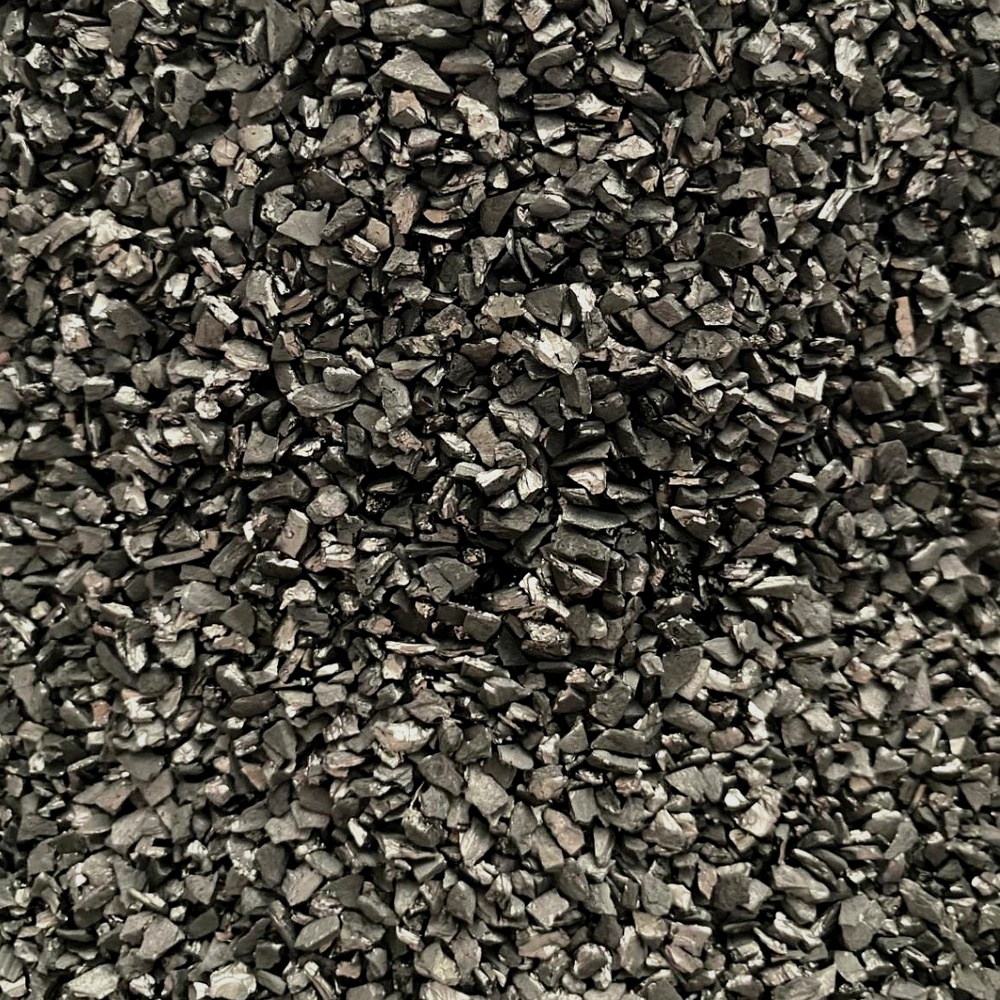
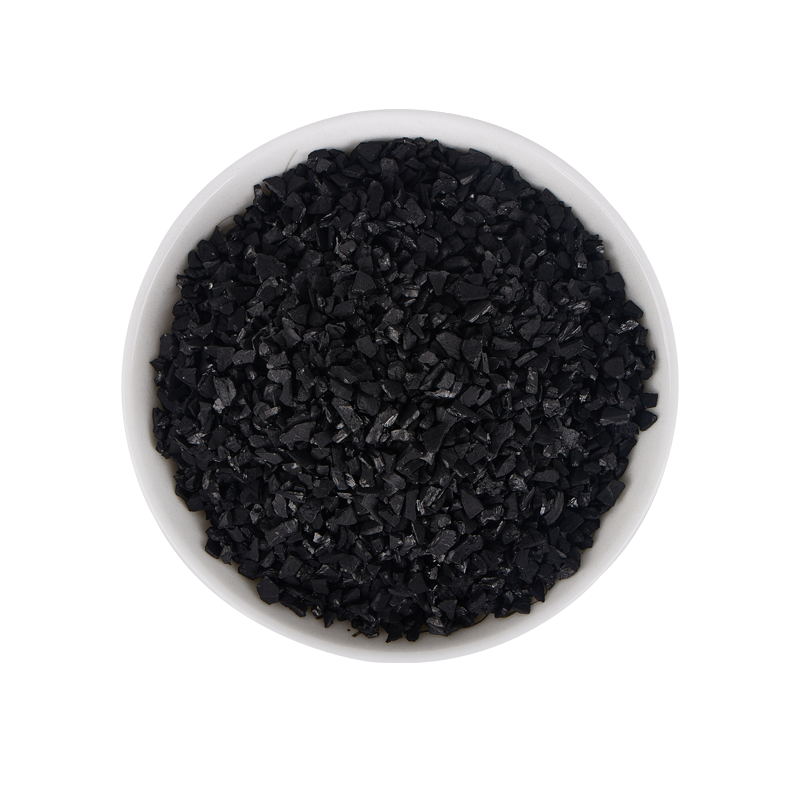
A supplier serving two jurisdictions needs identical product specification and documented batch consistency. AuCarb™ Gold Recovery Coconut Shell Activated Carbon (≥99% Hardness) ships with a batch COA, TDS and MSDS covering hardness, attrition and activity, in 25 kg heavy-duty laminated PE bags. AuCyan™ Sodium Cyanide NaCN (≥98.3%) moves on a licensed-import timetable at an 18 MT container. Commercial terms are FOB/CIF only. United Chemical serves more than 77 countries.
4b. Reading the cash and grade signals
The reported numbers carry a second lesson for consumables planning. Operating cash flow of US$71.1 million in a single quarter against combined cash and bullion of US$147.2 million indicates a producer with the capacity to fund inventory build-up — but also one that will expect tight control on working capital tied up in reagents. The average realised gold price fell to US$4,174 per ounce from US$4,401 in the prior quarter, and management pointed to higher grades at both Casa Berardi and Bomboré in Q4. Higher grades change consumption in two opposing directions: more gold dissolves, which raises the useful cyanide demand slightly, but the reagent per ounce falls because the fixed circuit inventory is spread over more ounces. This is why a buyer should think in cost per recovered ounce rather than cost per tonne. A Carbon that holds its hardness through an extra regeneration cycle reduces replacement spend without touching the leach chemistry — a direct margin contribution when the realised price softens, exactly the condition the Q3 numbers describe.
5. FAQ
Q1 — What were the reported Q3 results?
Record production of 59,674 ounces and US$71.1 million in operating cash flow, per Mining.com.au.
Q2 — What was acquired?
Casa Berardi in Québec, from Hecla Mining, for US$593 million.
Q3 — Why not one reagent spec for both sites?
Because mineralogy, copper content and water chemistry differ; dosage must be site-specific.
Q4 — Can one contract cover both?
Yes — one product specification and documentation set, with two dosage schedules.
Q5 — What documentation is supplied?
Batch COA, TDS and MSDS with FOB/CIF terms.
Q6 — What MOQ applies?
1×20' FCL ≈ 18 MT for Sodium Cyanide, 15 MT for carbon.
Standardise your site specifications
Running two circuits? Send both ore domains. We will return site-specific carbon and dosage recommendations on one supply contract.
Contact Us · Golden Triangle overview · Chemical FAQs · Industry News
WhatsApp +86 173 9270 5576 · info@unitedchemicalcn.com
Source: Mining.com.au, 16 November 2026.
- Random Content
- Hot content
- Hot review content
- Zinc Sulfate Industrial Grade 22%-35%
- Copper Sulfate Monohydrate (CuSO4-H2O) Powder (Cu:34% Min)
- How do I assess the economic viability and effectiveness of mining chemicals?
- TuxingSun United Mining Mineral Research and Testing Center - Ore Element Testing Laboratory
- Acrylamide
- 1Discounted Sodium Cyanide (CAS: 143-33-9) for Mining - High Quality & Competitive Pricing
- 2Sodium Cyanide 98.3% CAS 143-33-9 NaCN gold dressing agent Essential for Mining Chemical Industries
- 3China's New Regulations on Sodium Cyanide Exports and Guidance for International Buyers
- 4Sodium Cyanide (CAS: 143-33-9) End user certificate (Chinese and English version)
- 5International Cyanide(Sodium cyanide) Management Code - Gold Mine Acceptance Standards
- 6China factory Sulfuric Acid 98%
- 7Anhydrous Oxalic acid 99.6% Industrial Grade
- 1Sodium Cyanide 98.3% CAS 143-33-9 NaCN gold dressing agent Essential for Mining Chemical Industries
- 2High Purity · Stable Performance · Higher Recovery — sodium cyanide for modern gold leaching
- 3United Chemical's Research Team Demonstrates Authority Through Data-Driven Insights
- 4AuCyan™ High-Performance Sodium Cyanide | 98.3% Purity for Global Gold Mining
- 5Digital Electronic Detonator(Delay time 0~ 16000ms)
- 6High-strength, High-precision Shock Tube Detonator
- 7industry Electric Detonator


Online message consultation
Add comment: