
UNITED CHEMICAL · INDUSTRY NEWS · 20 NOVEMBER 2026
Nyanzaga moves from construction to commissioning
When a new CIL plant approaches first gold, the longest lead items are often not steel — they are qualification and licensed supply.
Engineering trade reporting published this month points to initial gold at Perseus Mining's Nyanzaga project in north-western Tanzania in January 2027, according to Kalkine Media on 19 November 2026. The project adds a new operating centre to a portfolio that already includes Edikan in Ghana and Yaouré and Sissingué in Côte d'Ivoire. Perseus reaffirmed its full-year production and cost guidance in its September quarter report, released in late October. For suppliers of leaching and adsorption chemicals, the announcement matters less as a headline than as a schedule: commissioning consumables must be qualified and on site before the first ore is introduced.
1. Power is the hidden consumable
Reporting on Nyanzaga has highlighted on-site generation designed to provide reliable supply during start-up. That matters directly to a Carbon-in-Leach (CIL) plant: interruptions depress recovery and slow the ramp toward nameplate throughput. A stable power envelope is a precondition for holding a free-cyanide setpoint and for consistent Carbon loading.
The mechanism is straightforward. Agitated leach tanks rely on continuous mixing to keep ore suspended and carbon in contact with dissolved gold. A power interruption stops both. When the circuit restarts, the operator faces a transient: solution grades have shifted, carbon loading is uneven and the reagent setpoint must be re-established. Each transient costs recovery and consumes reagent.
2. The commissioning bill of materials
| Item | Commissioning role | Lead-time risk |
|---|---|---|
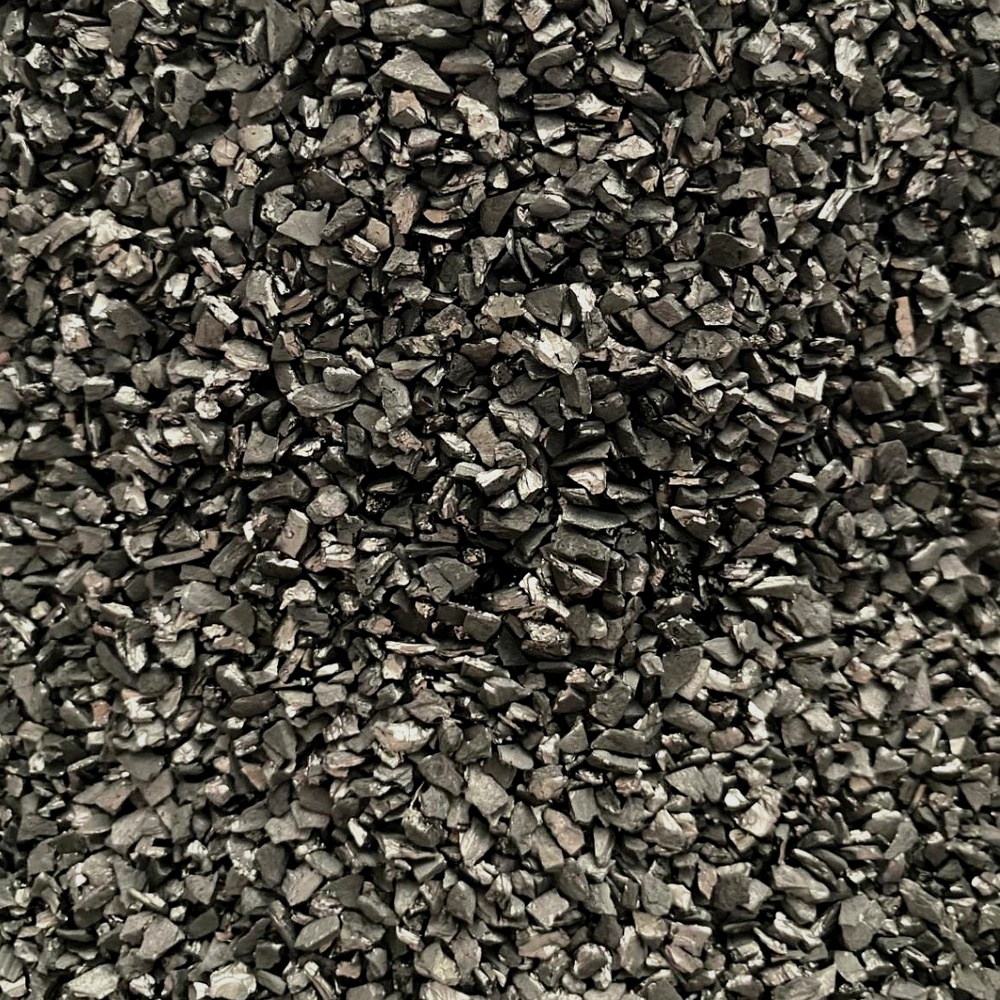
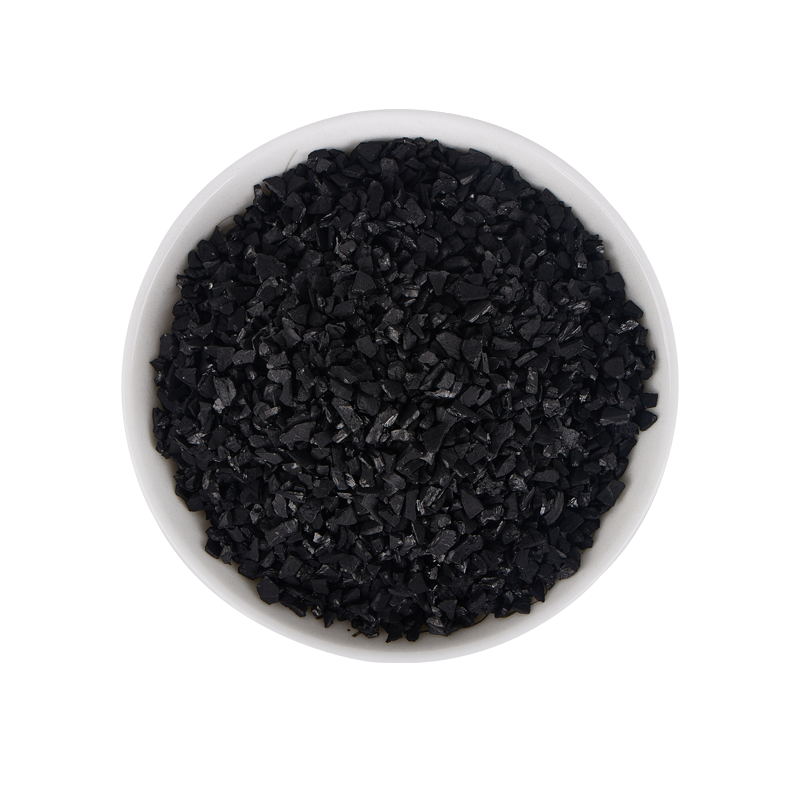
| Activated carbon | Initial charge and make-up for CIL | Grade and hardness qualification |
| Sodium cyanide | Leach reagent, licensed import | EUC and import permit before shipment |
| Leaching agent | Alternative or top-up route | Ore-specific test work |
| Lime and water treatment | Protective alkalinity | Local sourcing specification |
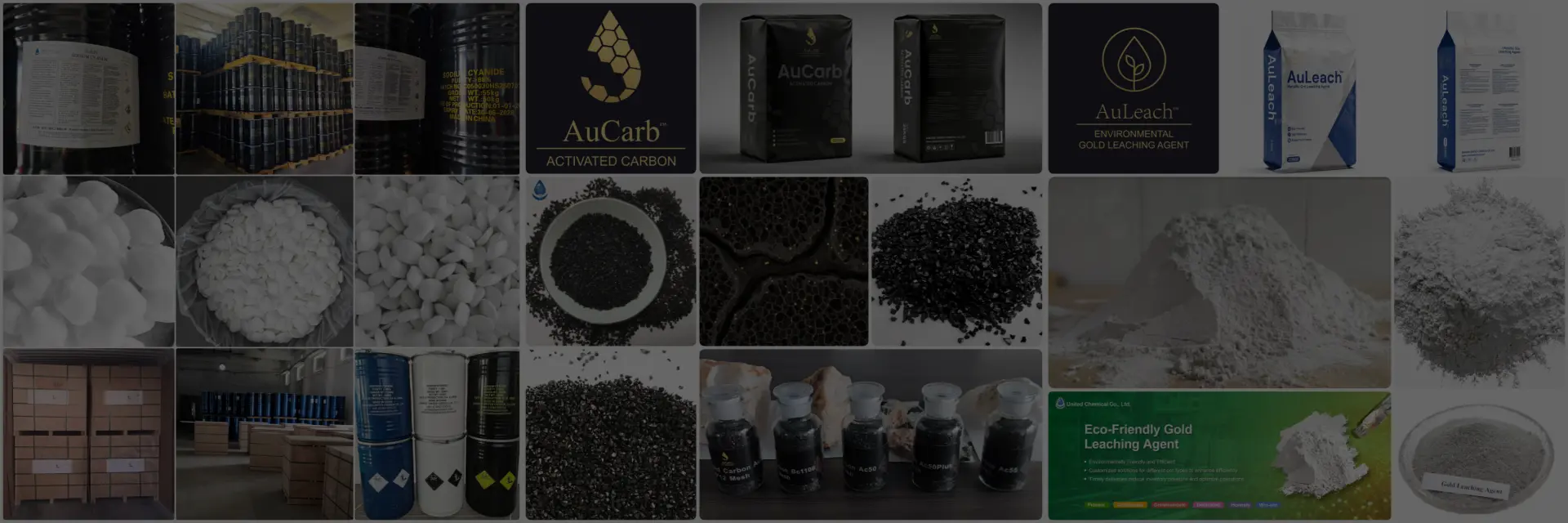
The Golden Triangle — three products, one supplier
AuCyan™ Sodium Cyanide NaCN (≥98.3%) · AuCarb™ Gold Recovery Coconut Shell Activated Carbon (≥99% Hardness) · AuLeach™ Gold Leaching Agent (GDA) – Non-Hazardous
3. Qualification is the long pole
For a greenfield CIL start-up, qualification is the constraint. Carbon needs a hardness and attrition baseline; leaching reagent needs a dissolution profile; and Sodium Cyanide needs its import licence and End-Use Certificate in place before a vessel is nominated. A staged schedule — qualification samples first, then a commercial 1×20' FCL under FOB/CIF terms — reduces the risk of a reagent-driven ramp delay. Every commercial shipment carries a batch COA, TDS and MSDS.
4. Worked ramp calculation
If a 3,000 t/day plant reaches 60% of nameplate in its first month and carbon make-up runs at 0.05 kg per tonne of ore, monthly carbon consumption is 3,000 × 0.60 × 30 × 0.05 = 2,700 kg. At full nameplate that becomes 4,500 kg per month. Ordering on the ramp figure rather than the nameplate figure is a classic commissioning error; the second container arrives after the first has run out.
Ramp consumption: 3,000 × 0.60 × 30 × 0.05 = 2,700 kg/month
Nameplate consumption: 4,500 kg/month
5. Product roles in a new CIL circuit
AuCyan™ Sodium Cyanide NaCN (≥98.3%) is the reference leach reagent, with a defined dissolution profile and licensed import at 18 MT per container. AuCarb™ Gold Recovery Coconut Shell Activated Carbon (≥99% Hardness) provides the adsorption inventory at 15 MT per container. AuLeach™ Gold Leaching Agent (GDA) – Non-Hazardous is the alternative route where permitted, at 28 MT per container, selected only after bottle-roll comparison.
5b. Why commissioning teams run a parallel water-chemistry baseline
Water is the most overlooked input at a new plant. The cyanide circuit is a closed loop in theory but a drifting one in practice: make-up water quality, process-water recycle and seasonal rainfall all change the ionic balance. Hard water raises lime demand and can aggravate scaling; chloride and sulphate accumulate through recycle and affect both leaching and carbon performance. A commissioning team should establish a baseline for pH, alkalinity, hardness, chloride and sulphate before first ore, then sample weekly through the ramp. The baseline is what turns a later recovery dip from a mystery into a measurable deviation. It also determines whether the water treatment plan sized for construction is adequate for steady state — a common source of late, expensive change orders.
6. FAQ
Q1 — When is first gold expected?
Trade reporting this month points to January 2027, according to Kalkine Media.
Q2 — Which circuit is used?
Reporting refers to a carbon-in-leach processing plant with on-site generation.
Q3 — What is the main reagent risk?
Licensed import lead time for sodium cyanide and qualification time for carbon.
Q4 — How should carbon be ordered?
Against nameplate throughput, not the first-month ramp.
Q5 — What documentation ships?
Batch COA, TDS and MSDS with FOB/CIF terms.
Q6 — Do you supply other Perseus operations?
We supply more than 77 countries; site-specific qualification is always required.
Plan your commissioning supply
Share your first-pour date and circuit configuration. We will build a qualification-to-delivery schedule.
Contact Us · Golden Triangle overview · Chemical FAQs · Industry News
WhatsApp +86 173 9270 5576 · info@unitedchemicalcn.com
Source: Kalkine Media, 19 November 2026; Perseus September Quarter report, late October 2026.
- Random Content
- Hot content
- Hot review content
- Collector BLK-301/Composite Flotating Active Matter ≥60%
- Plastic Shock Tube(VOD≧1600m/s)
- How do I choose the right flotation reagent?
- What is a settling agent, and how does it work in mining?
- Etidronic acid | HEDP
- 1Discounted Sodium Cyanide (CAS: 143-33-9) for Mining - High Quality & Competitive Pricing
- 2Sodium Cyanide 98.3% CAS 143-33-9 NaCN gold dressing agent Essential for Mining Chemical Industries
- 3China's New Regulations on Sodium Cyanide Exports and Guidance for International Buyers
- 4Sodium Cyanide (CAS: 143-33-9) End user certificate (Chinese and English version)
- 5International Cyanide(Sodium cyanide) Management Code - Gold Mine Acceptance Standards
- 6China factory Sulfuric Acid 98%
- 7Anhydrous Oxalic acid 99.6% Industrial Grade
- 1Sodium Cyanide 98.3% CAS 143-33-9 NaCN gold dressing agent Essential for Mining Chemical Industries
- 2High Purity · Stable Performance · Higher Recovery — sodium cyanide for modern gold leaching
- 3United Chemical's Research Team Demonstrates Authority Through Data-Driven Insights
- 4AuCyan™ High-Performance Sodium Cyanide | 98.3% Purity for Global Gold Mining
- 5Digital Electronic Detonator(Delay time 0~ 16000ms)
- 6High-strength, High-precision Shock Tube Detonator
- 7industry Electric Detonator


Online message consultation
Add comment: